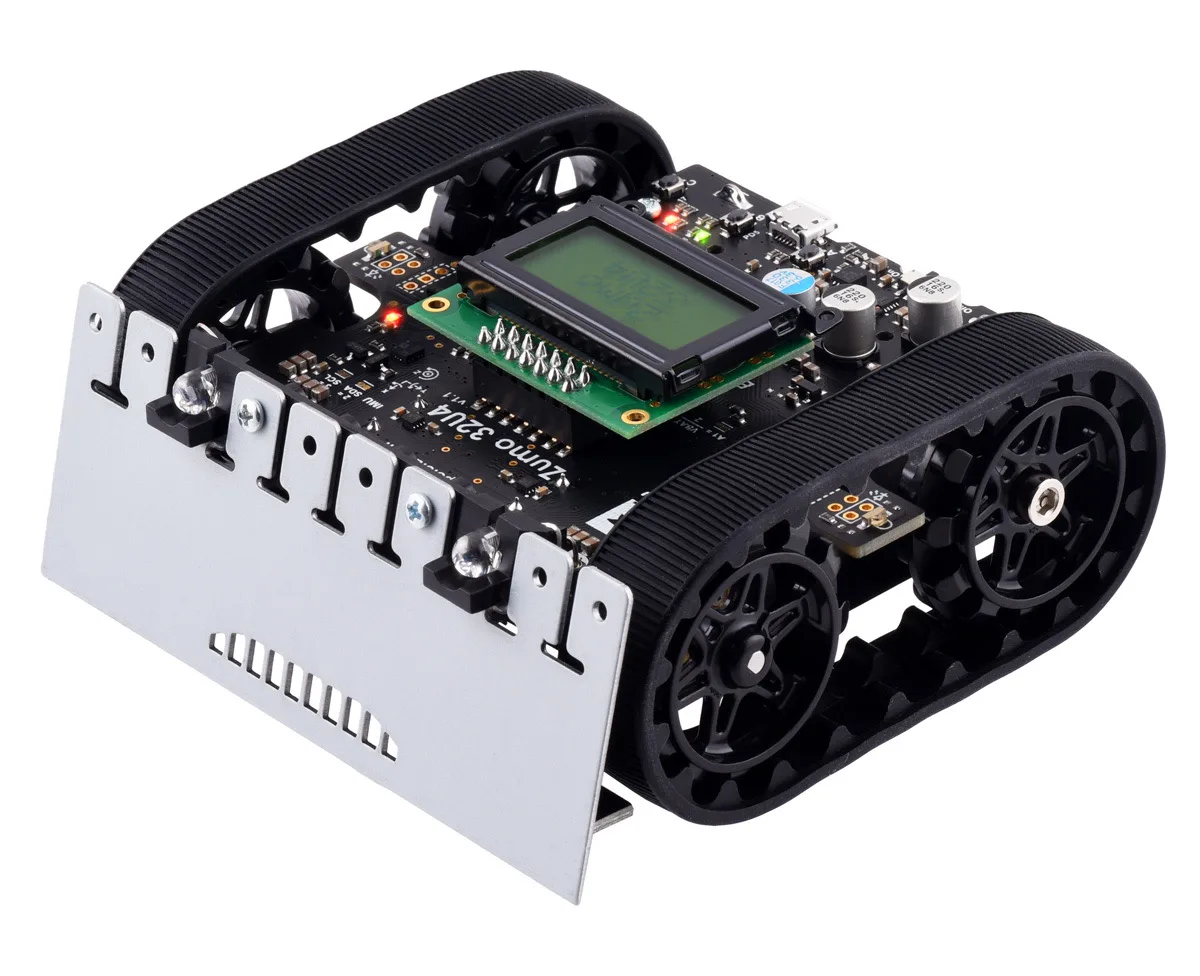
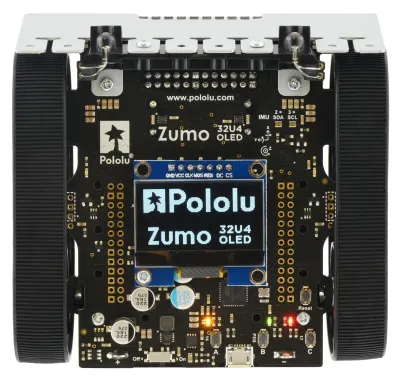
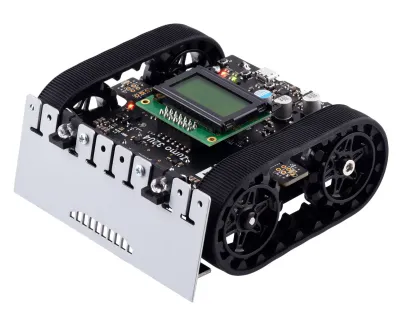
$130 – $195Pololu store, October 2026 check, all in stock. Zumo 32U4 OLED assembled (50:1, 75:1 or 100:1 HP motors) $194.95, kit without motors $129.95. The RP2040-based Zumo 2040 costs the same ($194.95 assembled, $129.95 kit). The original LCD Zumo 32U4 ($204.95) is marked "not recommended for new design". Zumo 32U4 released March 2015, OLED version November 2021, Zumo 2040 November 2023.
AvailableCoded on the robot onlyPalm-sizedMini-SumoTrackedArduinoLine sensors
≤ 1 weekShipping: Ships from Las Vegas, free US shipping. Pololu ships from its own warehouse in Las Vegas, with free US shipping on these robots, and all assembled versions showed dozens of units in stock in an October 2026 check. Batteries (4 AA) and a USB cable are not included. Pololu ↗
Remote control: Programs are written in the Arduino IDE (or with MicroPython files for the Zumo 2040) on a Mac or PC and uploaded over USB. There is no wireless link, so it runs its own code untethered.
Overview
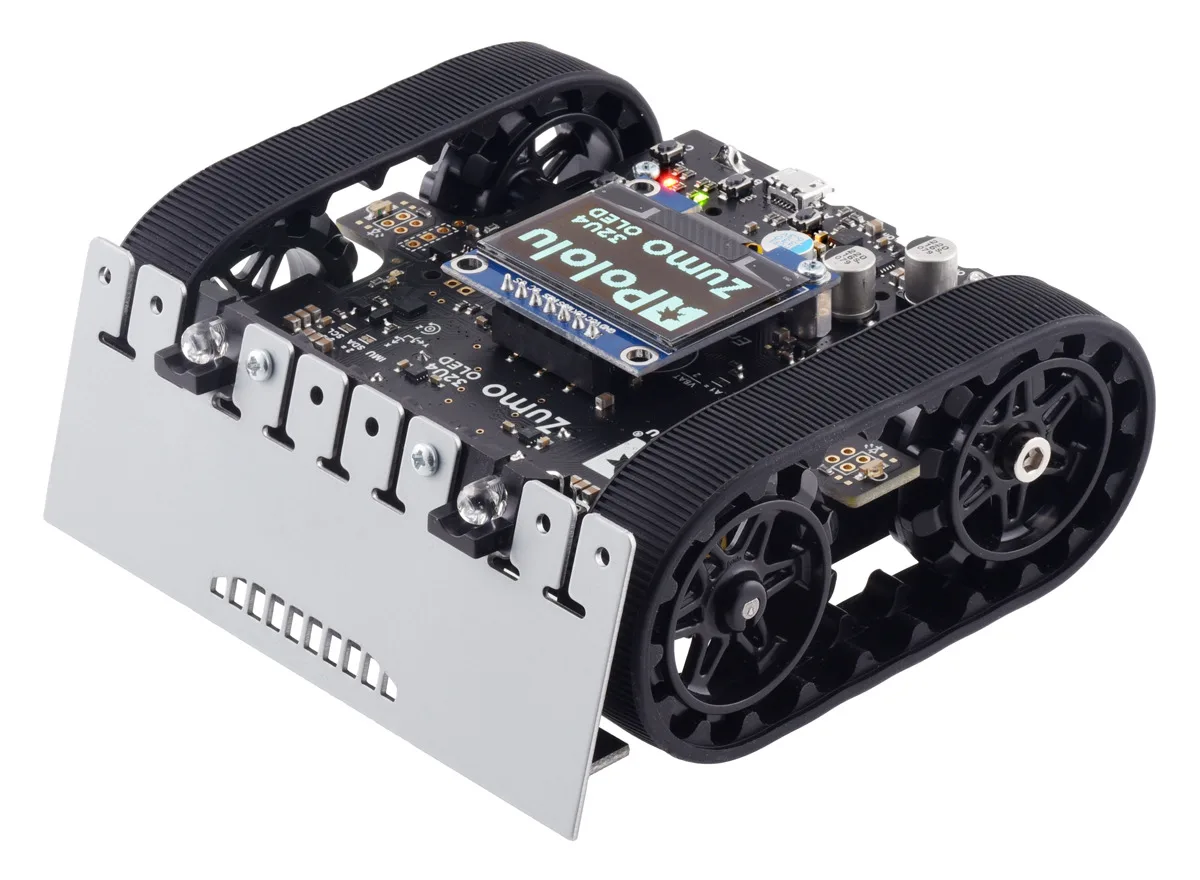
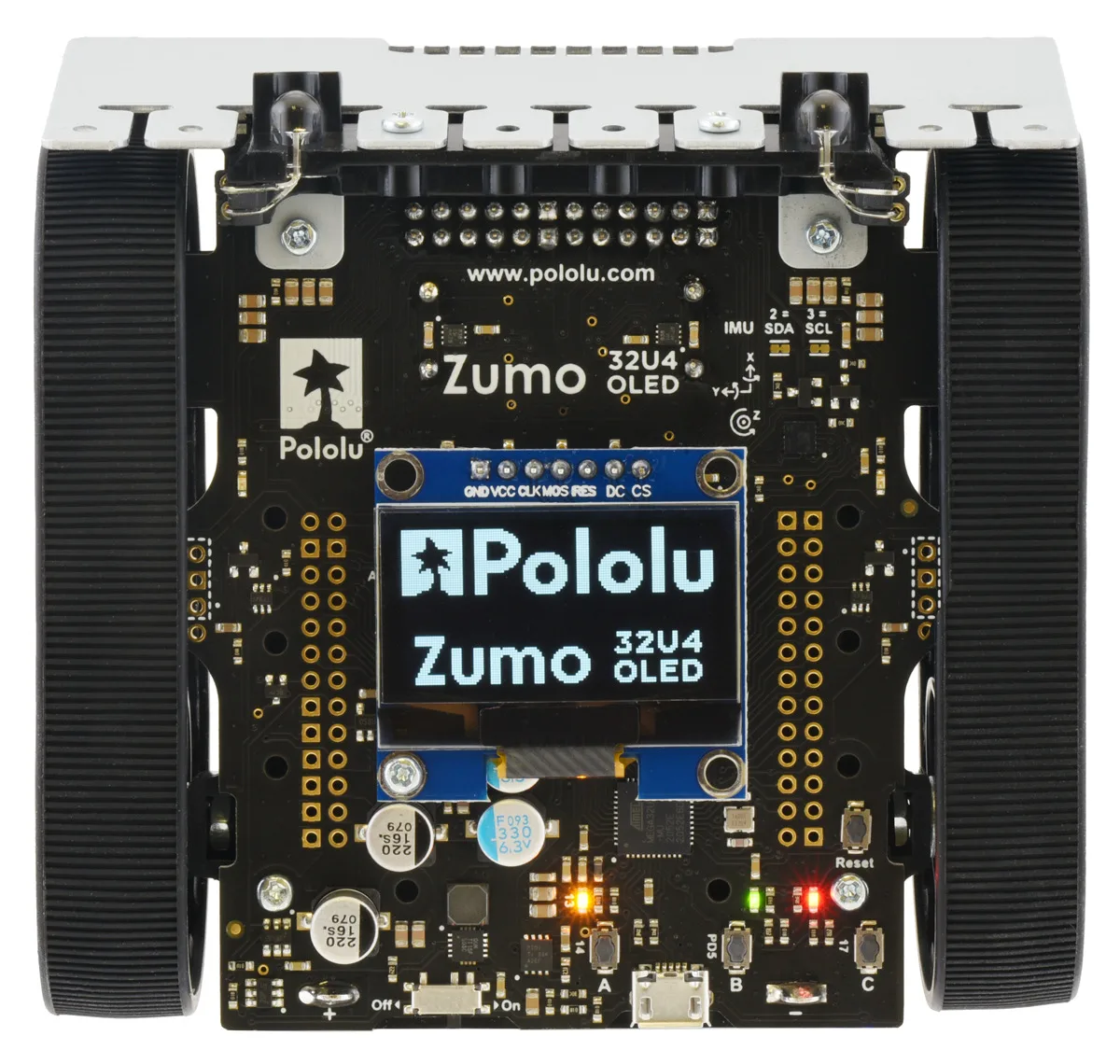
A palm-sized tracked robot built to the 10 × 10 cm, 500 g Mini-Sumo limits, with a blade, line sensors to stay inside the ring, and IR sensors to find opponents. Beyond sumo it is a common university and hobby platform for line following, maze solving and control lessons, since everything sits on one Arduino-compatible board. The Zumo 2040 version keeps the same chassis and sensors but swaps in a Raspberry Pi RP2040 that runs MicroPython. It has no camera or wireless link, so it suits embedded programming more than vision or AI work.
Specifications
| Category | Wheeled rovers · Classroom coding cars |
|---|---|
| Released | 2015 |
| Country | USA |
| Availability | Available |
| Programmability | Open source (hardware + software) |
| Built-in autonomy | None / scripted · Moves only when controlled, or plays preset motions |
| LLM support | Possible via SDK · Programmed in Arduino C++ (Zumo 2040 in MicroPython), with no LLM features. |
| MuJoCo simulation | None found · Nothing found. |
| NVIDIA Isaac simulation | None found · Nothing found. |
| Gazebo simulation | None found · Nothing found. |
| Best for | Ages 14+ (estimated) |
| Vision sensors | No vision sensors |
| Actuators | DC / gear motors |
| Audio | Speaker |
| Compute type | Arduino / ESP32 / microcontroller |
| Remote control | Coded on the robot only |
| Size | 96 × 99 × 39 mm (under 10 × 10 cm), 160 g without batteries, about 275 g with |
| Drive | Two silicone tracks driven by two micro metal gearmotors with encoders, steel front blade |
| Compute | ATmega32U4 at 16 MHz, Arduino-compatible (Zumo 2040 uses an RP2040 at 125 MHz with 16 MB flash) |
| Vision | None |
| Lidar | None |
| Sensors | Five downward reflectance line sensors, front and side IR proximity sensors, 9-axis IMU (accelerometer, gyro, magnetometer), quadrature encoders, 128×64 OLED display, buzzer |
| Runtime | Not published (four AA batteries) |
| Speed | About 1 m/s (40 in/s) with 50:1 motors, 0.65 m/s with 75:1, 0.5 m/s with 100:1 (Pololu's measured speeds at 500 g load) |
| SDK | Arduino library and examples (Zumo 32U4), MicroPython plus C/C++ SDK (Zumo 2040), all open source on GitHub |
Ratings & reviews
Ratings and reviews load on the live site.
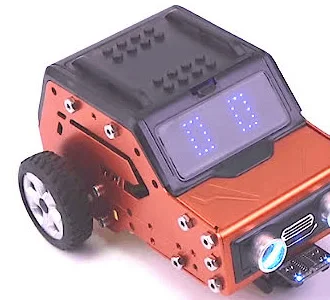 WeeeBot mini
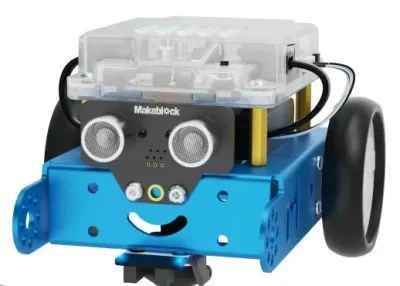 mBot
mBot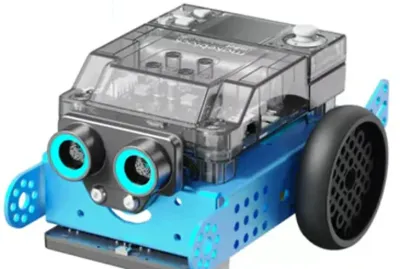 mBot2 / mBot Neo
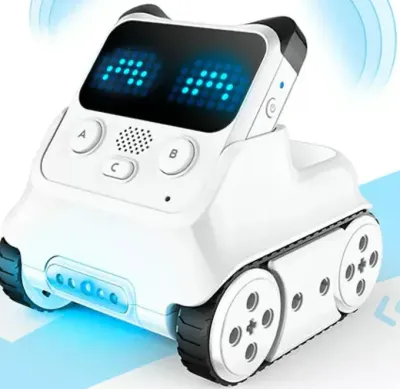 Codey Rocky
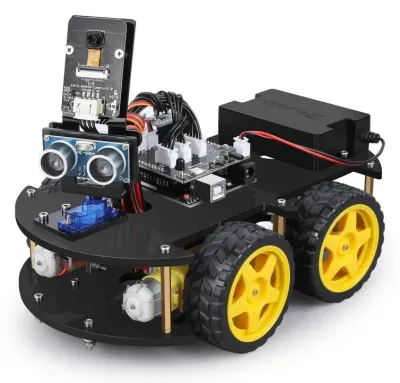 ELEGOO Smart Robot Car Kit V4.0 (with Camera)
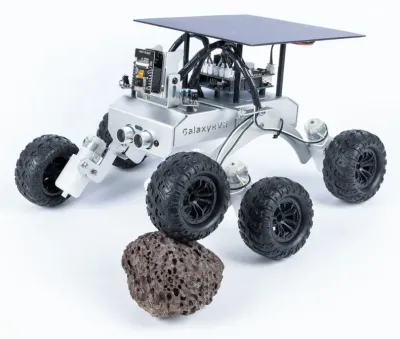 SunFounder GalaxyRVR Mars Rover Kit