Top 10 companion robots for loneliness
Only a few robots have been tested against loneliness with a control group. The list starts with those, then moves to robots with smaller studies or program surveys, and ends with robots backed only by their makers' own surveys. Ranking method has the details. All prices are in US dollars.
- 1
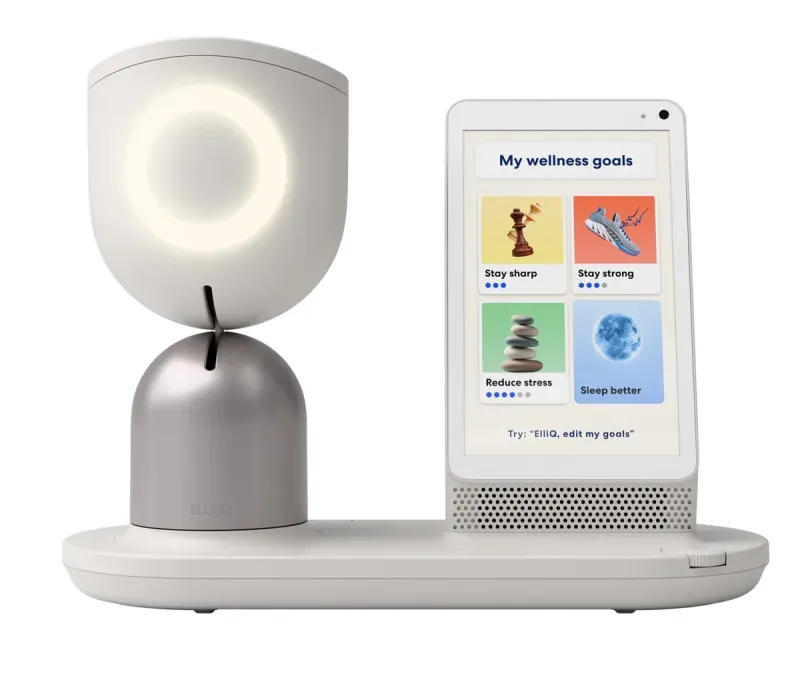
ElliQ
On sale in the USType Talking tabletop companionPrice $249.99 + $49.99–59.99/month
A lamp-like robot with a glowing head that turns toward the person it talks to, paired with a tablet. It starts conversations on its own. It checks in each morning, suggests walks and games, reminds about medication and passes messages and video calls from family. ElliQ 3 adds open-ended chat through a large language model. It arrives set up and needs only power and Wi-Fi.
New York State began giving ElliQ to older adults in 2022. In 2023 it reported a "95% reduction in loneliness" among more than 800 users. In October 2026 it renewed the program, with 94% of users saying they felt less lonely. These figures come from user surveys with no control group. The only peer-reviewed study so far interviewed nine rural users, and seven of them kept the robot.
Pricing is a $249.99 enrollment fee plus $59.99 a month, or $49.99 a month on the annual plan. Several states, including New York, Florida and Washington, supply it free to eligible older adults.
- 2

Joy for All Companion Pets
On sale in the USType Robotic cat or puppyPrice $159.99 (cat), $179.99 (pup)
A soft robotic cat or puppy from Ageless Innovation that purrs or barks, has a heartbeat and turns its head when stroked. It runs on batteries and needs no app, no Wi-Fi and no setup, which makes it the simplest robot on this list. It doesn't walk or talk.
In an AARP and UnitedHealth program, 168 lonely adults aged 65 and older kept one at home. Their loneliness dropped over 60 days, and those who played with it most improved most. The study had no control group. A follow-up interview study found people who lived alone or had few social contacts benefited most. New York has handed out more than 31,000 of these pets, and 75% of recipients reported less loneliness.
- 3

PARO
Sold mainly to care homesType Therapeutic baby sealPrice ~$2,690 – $3,140 (¥423,500 – ¥495,000) in Japan
A furry baby harp seal from Japan's AIST research institute. It responds to touch, voice, light and being held. It learns its name and repeats the behaviors it gets stroked for. In the US it is listed as a Class II medical device for biofeedback. It is sold mostly to nursing homes and dementia care units.
PARO has the strongest evidence of any robot here. In a randomized trial with 40 nursing-home residents, loneliness scores fell by 5.38 points with PARO and rose by 2.29 points in the control group. A larger trial with 415 people with dementia found more pleasure and engagement. Almost all of this research took place in care homes, so the results may not carry over to people living alone. In Japan it costs ~$2,690 (¥423,500) with a one-year warranty. Elsewhere it is sold by quote through distributors, and US prices of about $6,000 were reported when it arrived there.
- 4
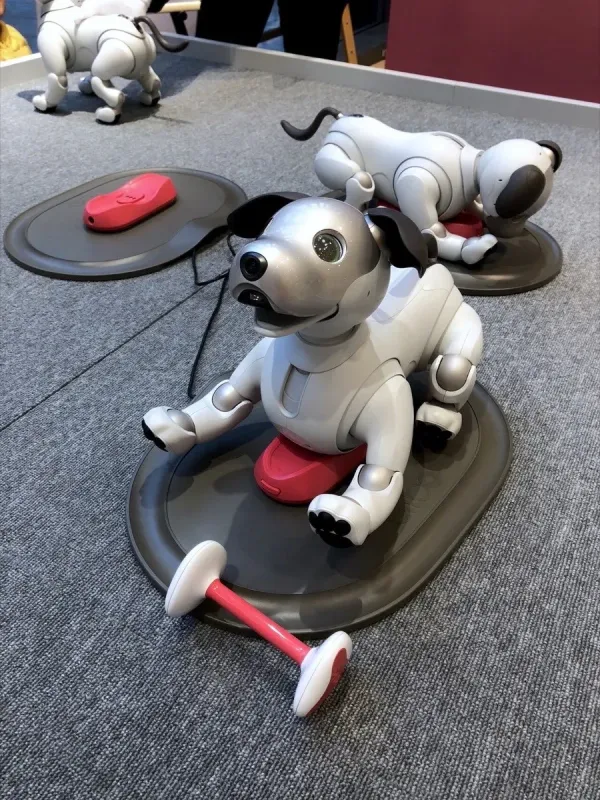
aibo (ERS-1000)
On saleType Robot puppyPrice $3,199.99 + $300/year
Sony's robot dog walks, learns faces, plays with its toy bone and develops its own personality over time. It returns to its charging station by itself. It needs Wi-Fi, a smartphone app and the $300-a-year cloud plan for most features. It doesn't speak.
In a 2008 nursing-home trial with 38 residents, weekly visits from an earlier aibo reduced loneliness as much as visits from a living dog. Both groups did better than residents who had no visits. The trial used an older model, so it says less about today's aibo. It is the most expensive pick for a single home, and a walking robot can get underfoot for someone unsteady.
- 5

Moflin
On saleType Palm-sized furry petPrice $429
A small ball of fur from Casio, about the size of a guinea pig, that squeaks, wriggles and develops moods based on how it is treated. It weighs about 260 g and sleeps on a charging bed. It has no voice and no screen, and its app is optional.
No studies of Moflin have been published. It ranks this high because it is quiet, simple, sold in the US, Japan and the UK, and needs no subscription. TechCrunch spent a month with it and found it "brought a bit more joy" into daily life. Fast Company felt the price was high for what it does.
- 6
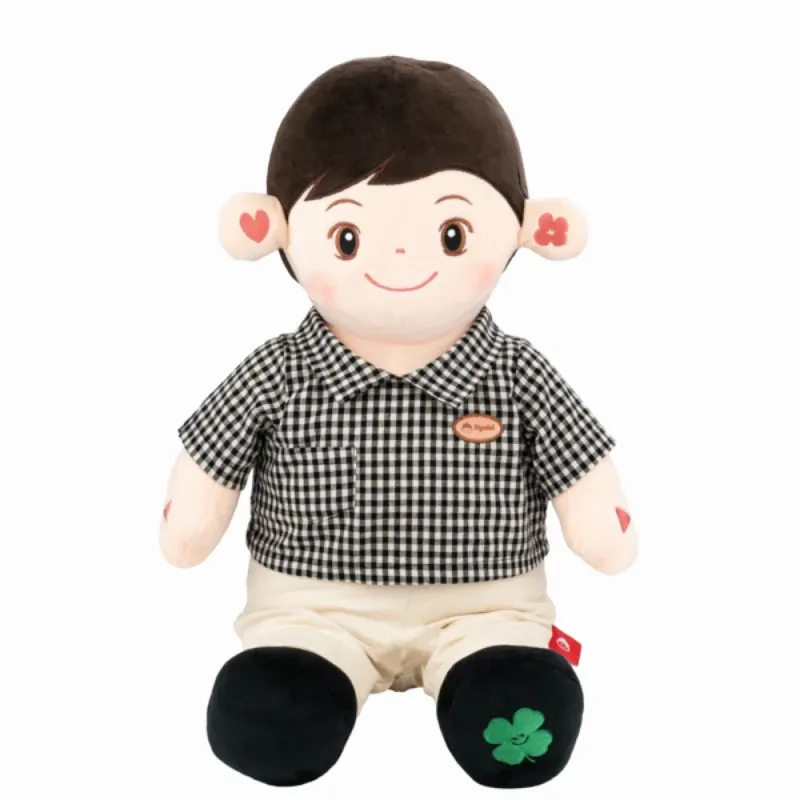
Hyodol
South Korea onlyType Talking care dollPrice ~$960 – $1,330 (₩1,300,000 – ₩1,800,000)
A plush doll shaped like a grandchild, built for older adults who live alone. It chats using a large language model and scripts drawn from interviews with older people. It has no motors and doesn't move. It reminds about meals and medicine and alerts family or carers when it senses no movement. Most are supplied by local governments. The price includes two or three years of mobile data and AI service.
A 2025 study followed 278 older adults in rural areas for six months. The share at high risk of depression fell by 45%, and loneliness improved. The study had no control group. One user told AFP of having no one to talk to all day before the doll arrived.
- 7

LOVOT
Japan onlyType Wheeled pet robotPrice ~$3,660 (¥577,500) plus a monthly plan
A round, furry robot with big animated eyes that rolls after family members, asks to be picked up and warms up when hugged. It has no words and no chat. It docks to charge by itself. A service plan of ~$63–126 a month (¥9,900–19,800) is required.
A 12-week Singapore pilot with 105 older adults found better quality of life and happiness, though no loneliness scores were published. One participant said, "Many of us feel quite lonely, so we talk to LOVOT." At about 4.6 kg it is heavy for a frail person to lift.
- 8
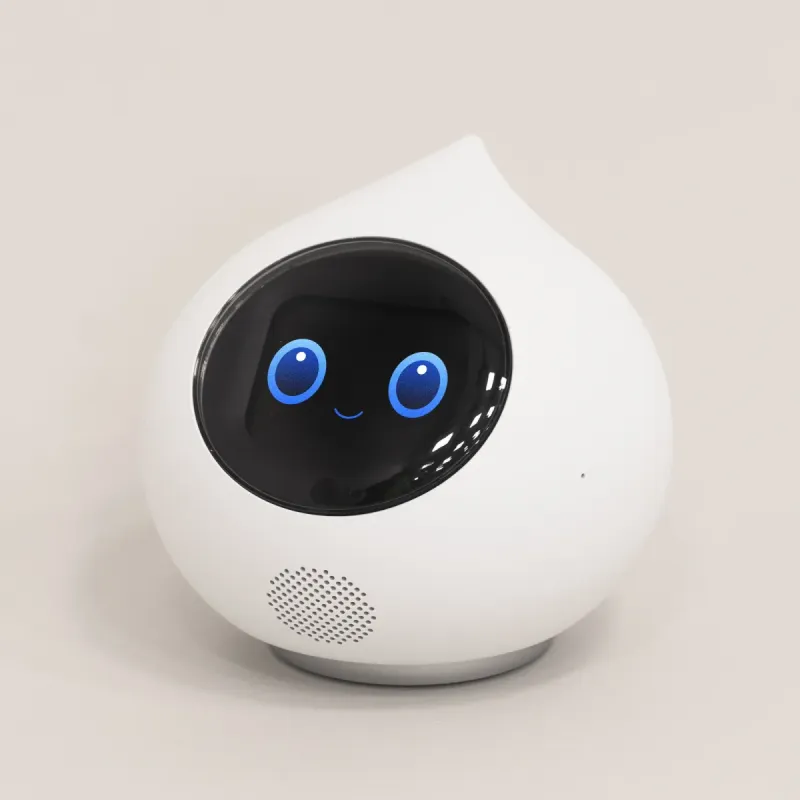
Romi
Japan onlyType Talking palm-sized robotPrice ~$626 (¥98,780) + ~$12.40/month
A small robot face from MIXI that holds free conversations through its own language model. It remembers past talks and comments on what its camera sees. It speaks only Japanese and needs a subscription.
MIXI says Romi helps people who are socially isolated, anxious and lonely. A Japanese city project has been testing it at home since 2023, and its results appeared in a 2025 journal paper (findings unconfirmed). For conversation in Japanese, it is the strongest pick here.
- 9
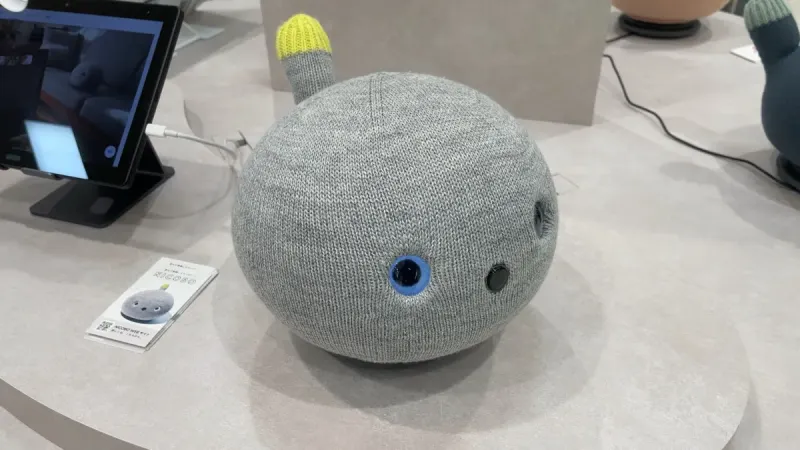
Nicobo
Japan onlyType Cat-like pet robotPrice ~$380 (¥60,500) + $7/month
A round, knit-covered robot from Panasonic that wags its tail, mumbles baby talk and even talks in its sleep. It is a weak robot, designed to need care, an idea from Toyohashi University of Technology research. Looking after it is meant to give its owner a sense of purpose.
The evidence comes only from Panasonic's surveys. About 77% of early buyers said it soothed them. It is quiet, light at about 1.5 kg and cheap to run.
- 10

Qoobo
On saleType Cushion with a tailPrice $183 (Qoobo), $146 (Petit Qoobo)
A furry cushion from Yukai Engineering with a tail that wags when it is stroked. Petit Qoobo adds a heartbeat. It needs no app or Wi-Fi and runs on a rechargeable battery.
Its only study was run by its maker with 38 people in their teens to thirties, who reported less stress and tension. It has not been tested with older adults. It is the cheapest robot on this list that is sold in the US, and its simple calm suits a lap or a bedside.
Other options
- Jennie by Tombot is a lap-sized puppy built with Jim Henson's Creature Shop for people with dementia. Its first batch sold out, and new buyers join a waitlist. Tombot cited a price of about $1,500 and aims to ship in fall 2026. It would rank high once it ships, but no results have been published yet.
- LilMilo from ECOVACS is a $499 plush puppy with a language model that runs fully offline. It needs no subscription and keeps conversations on the device. It has no loneliness studies.
- BOCCO emo from Yukai Engineering has the best trial among people who live alone. In a 2025 Japanese study of 68 people with an average age of 82, loneliness fell by 3.1 points more than in the control group over four weeks. The trial paired the robot with a human operator service, which may not be sold to the public.
- Poketomo from Sharp is a small meerkat-like robot with chat from a language model. It is sold only in Japan, from ~$251 (¥39,600) plus a monthly plan.
- An'An from Mind With Heart Robotics is a soft panda cub built for older adults. It was a CES 2026 award honoree and went on sale in Europe in September 2026, at about $1,000–1,500.
Toy-like companions such as Loona, EMO, Eilik and Vector were left out. They are built for play, need an app to set up and have no loneliness studies. For a cheaper and playful gift, the cutest robots list has more ideas.
What research shows
Loneliness is common and harmful. The World Health Organization estimated in 2025 that 1 in 6 people worldwide are lonely, linked to about 871,000 deaths a year. A 2023 US Surgeon General advisory compared the health risk of social disconnection to smoking up to 15 cigarettes a day. An AARP survey in 2025 found 40% of US adults aged 45 and older were lonely.
A 2025 meta-analysis pooled 19 studies with 1,083 older adults and found social robots reduced loneliness by a moderate amount. The effect was larger in care homes than for people living in their own homes. Only eight of the studies had control groups, and the authors found signs that positive studies were more likely to be published. A 2025 systematic review found that four of six social robot studies reduced loneliness.
The research points the same way across studies. Robots seem to help most when someone uses them often, and when they spark conversation with other people. Health agencies treat human connection as the real cure, and researchers see robots as one support among several.
Choosing a robot
Conversation or comfort
Talking robots like ElliQ, Hyodol and Romi suit someone who misses conversation and daily routine. Pet robots like Joy for All, PARO, Moflin and Qoobo suit someone who misses touch or a pet, or who finds a talking machine strange. Pet robots may also suit people with memory loss, who can struggle with a conversation that drifts.
Setup and upkeep
Joy for All, PARO and Qoobo need no app, no Wi-Fi and no account. ElliQ arrives ready to use but needs a Wi-Fi connection. aibo, LOVOT, Nicobo and Romi need a smartphone app, which a family member may have to manage. Robots that roam the floor, like aibo and LOVOT, can be a trip hazard for someone unsteady on their feet.
Running costs
Subscriptions add up. ElliQ costs about $850 in its first year on the annual plan, and LOVOT's plan alone runs ~$750–1,500 a year (¥118,800–237,600). Joy for All, Moflin, PARO and Qoobo have no subscription. Several US states give ElliQ or Joy for All pets to older adults for free, so a local aging agency is worth asking first.
Concerns
Ethicists have long questioned companion robots for older people. A common argument is that a robot pet only works if its owner forgets that it is a machine, which is a kind of deception. The worry is strongest for people with dementia, who may believe the pet is alive. Others warn a robot may give families an excuse to visit less, or give lonely people a reason to withdraw further.
Talking robots with cameras and microphones also raise privacy questions about where conversations are stored. Two of the nine ElliQ users in the interview study returned it, and one cited privacy. LilMilo avoids the issue by running its language model offline. Shared furry pets in care homes need regular cleaning, as a University of Plymouth study found.
Ranking method
Robots were ranked first by evidence that they reduce loneliness. Randomized trials with a loneliness score counted most, then smaller peer-reviewed studies, then large program surveys and finally makers' own claims. Next came fit for a person living alone, such as conversation or comfort, quiet operation and easy setup for an older adult. Availability and price, including any subscription, settled close calls. Robots sold only in Japan or South Korea still ranked when their evidence or design earned it, and their entries say where they are sold.