Overview
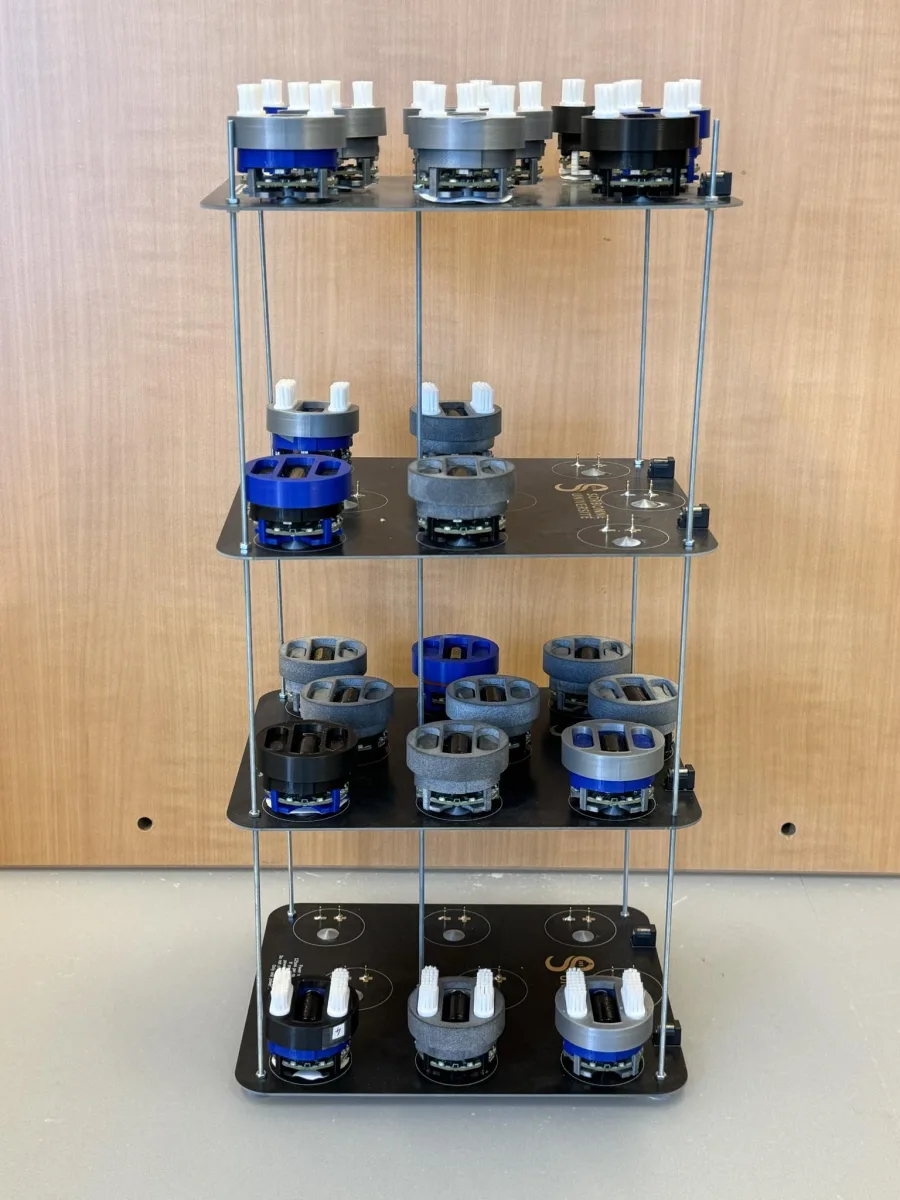
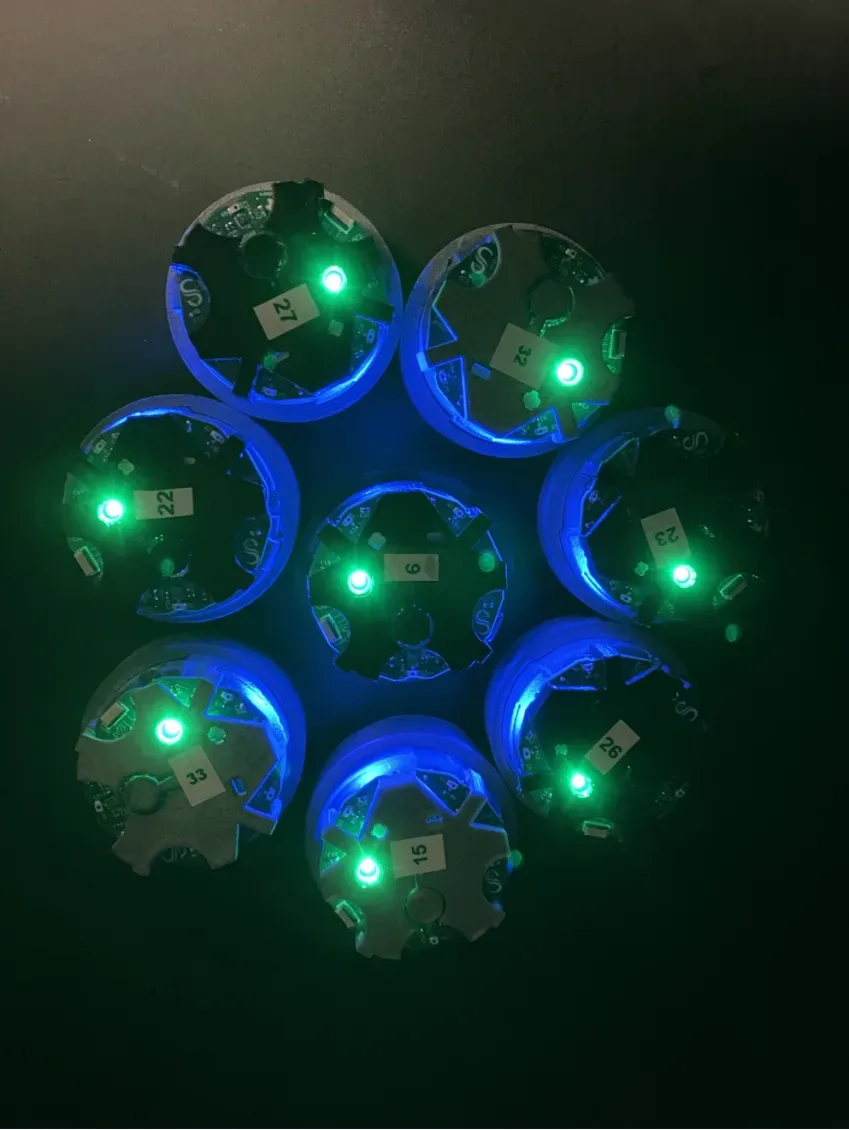
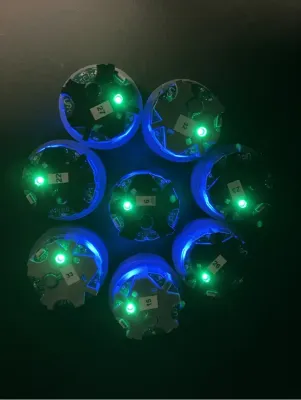
An open-source swarm robot from Sorbonne Université and ESPCI Paris-PSL, designed as a modern replacement for the discontinued Kilobot and used for both swarm robotics and active-matter physics. Robots talk to each other over four directional infrared channels, sending 64-byte messages at 60 Hz with nearly perfect delivery up to 10 cm, and each receiver tells the robot which of eight directions a message came from. In crowded groups a simple random-send rule (the Banshee protocol) spreads messages from robot to robot like gossip, and a handshake mode is available when two robots must be sure an exchange happened. More than 200 units were in daily use at several universities by 2025, including Université de Lorraine and Ochanomizu University in Japan. The catch is that it cannot be bought, so a lab has to order the boards, 3D print the shells and assemble each robot itself.
Specifications
| Category | Wheeled rovers · Research mobile manipulators & platforms |
|---|---|
| Released | 2022 |
| Country | France |
| Availability | Not for sale (research) |
| Programmability | Open source (hardware + software) |
| Built-in autonomy | None / scripted · Moves only when controlled, or plays preset motions |
| LLM support | None · No LLM features. Programs are small C files compiled for a RISC-V soft processor and loaded by cable or broadcast over infrared. |
| MuJoCo simulation | None found · Nothing found. |
| NVIDIA Isaac simulation | None found · Nothing found. |
| Gazebo simulation | None found · Nothing found. The team's own Pogosim simulator (C/C++, Box2D) runs the same C code as the real robots, models infrared packet loss and simulates 100 robots 14 to 21 times faster than real time. It is modeled on the Kilombo simulator used for Kilobots. |
| Best for | Professionals & labs |
| Vision sensors | No vision sensors |
| Actuators | DC / gear motors |
| Audio | No audio |
| Compute type | Arduino / ESP32 / microcontroller |
| Remote control | Via SSH / web / bridge |
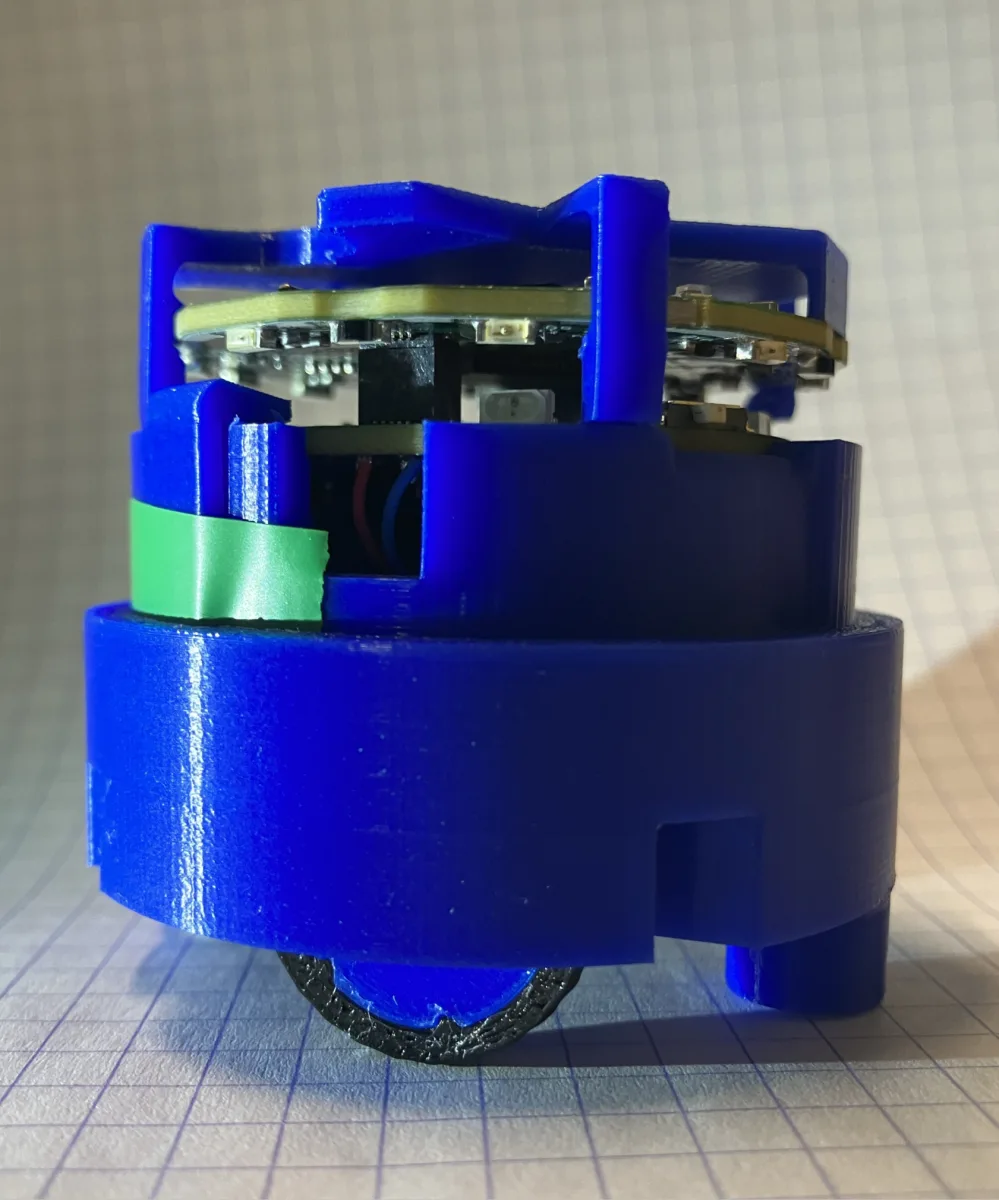
| Size | About 55 mm diameter (about 6 cm with some shells), 43 to 56 g depending on the locomotion module |
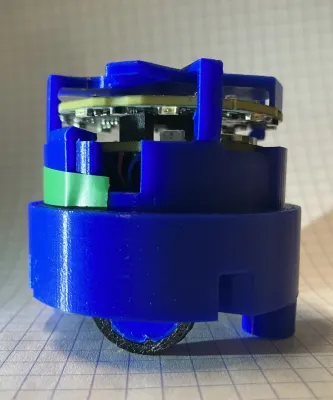
| Drive | Swappable 3D-printed skirts, either two wheels in differential drive or vibration stick-slip on toothbrush heads or printed TPU brushes; the board drives three motors, two for motion and one spare |
| Compute | Lattice iCE40UP5K FPGA running a 32-bit VexRiscv RISC-V soft processor (LiteX system-on-chip) |
| Vision | None |
| Lidar | None |
| Sensors | Four infrared emitter/receiver pairs (TS4231 chips, 1 to 10 MHz optical carrier) giving 8 direction sectors, three ambient light sensors (front-left, front-right, back), IMU, four programmable LEDs facing each direction plus status and charging LEDs |
| Runtime | 60 minutes (motors full speed, all LEDs on) to 120 minutes (half speed, no LEDs, no messages) on a 3.3 V LiFePO4 CR2 cell; a Pogocharger pad charges up to 9 robots in under 2 hours |
| Speed | Up to 25 cm/s with wheels, up to about 7 cm/s with TPU brushes; nylon toothbrush heads mostly spin (up to 15 rad/s) |
| SDK | C with the PogoLib/PogoAPI library over the Pogobios firmware, RISC-V GCC tool chain (MIT license), Pogosim simulator, Pogotrack video tracking, pogo-utils add-ons |
Ratings & reviews
Ratings and reviews load on the live site.
Similar robots
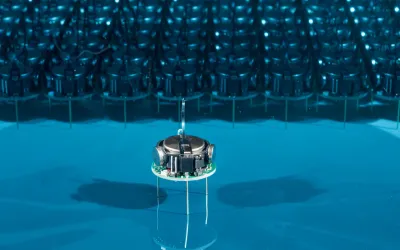 KilobotHarvard Self-Organizing Systems Research Group / K-Team (USA / Switzerland)$1,320 (10-pack)
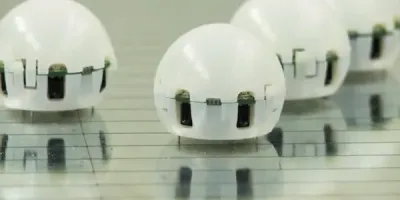 DropletCorrell Robotics Lab, University of Colorado Boulder (USA)Not for sale
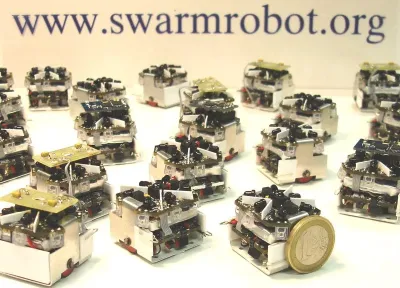 JasmineUniversity of Stuttgart / University of Karlsruhe, swarmrobot.org (Germany)Not for sale
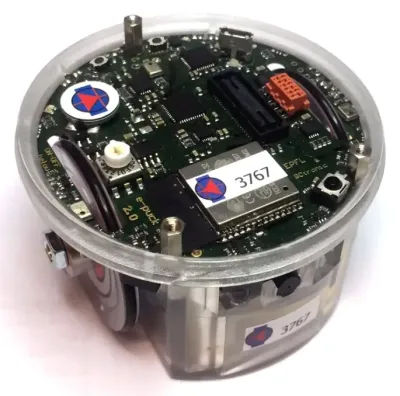 e-puck / e-puck2EPFL / GCtronic (Switzerland)$1,020
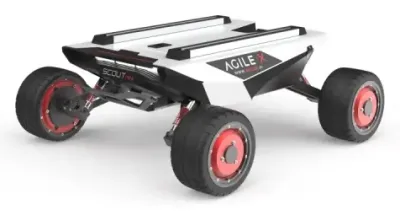 AgileX Scout MiniAgileX Robotics (China)$5,895.95 (Trossen)
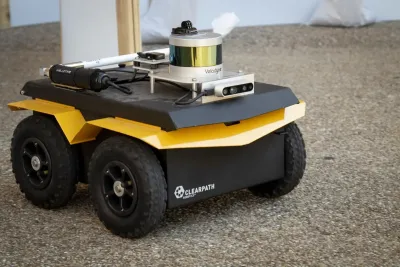 Clearpath JackalClearpath Robotics (Canada, part of Rockwell Automation)Quote (~$20,000+, est.)