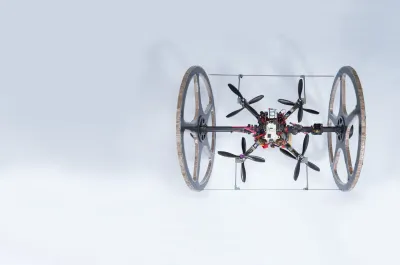
Not for saleNASA JPL research prototype, described in a 2019 IROS paper.
Not for sale (research)Not programmableFly + rollPassive wheelsCave explorerNASA JPL
Not for saleShipping: Not for sale. A research prototype that was never sold.
Remote control: Not possible. Research prototype.
Overview
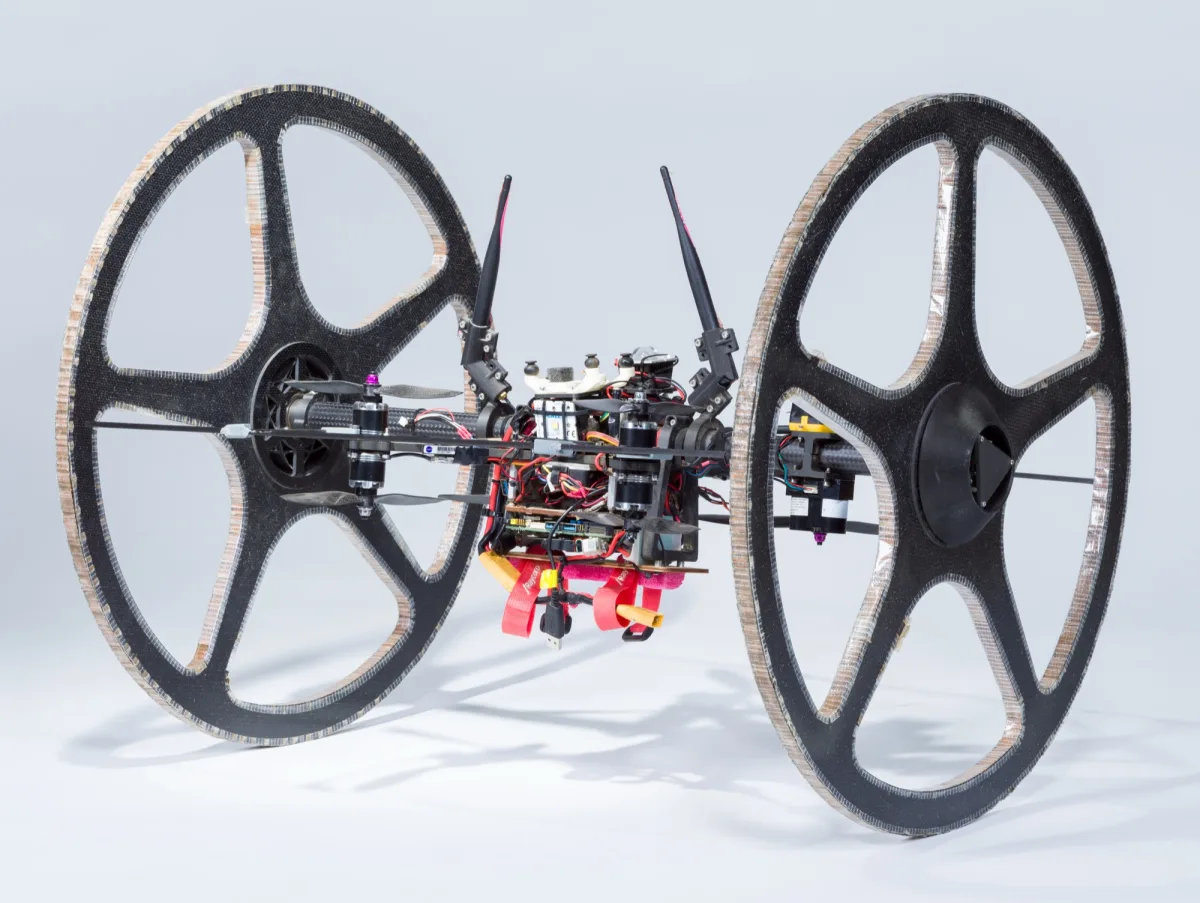
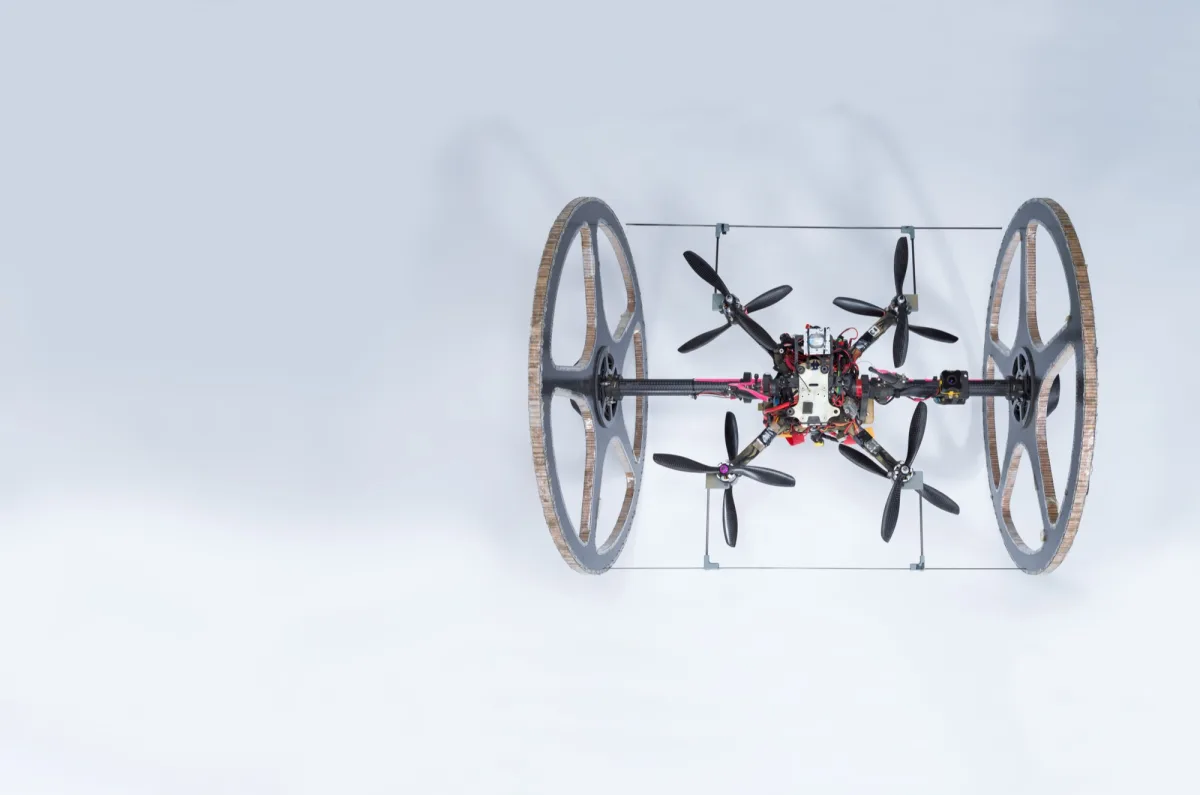
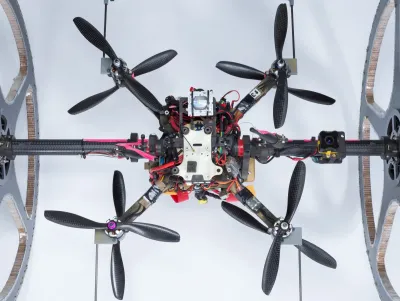
Rollocopter is a quadrotor from NASA JPL's Team CoSTAR with two unpowered wheels on a shaft, so the same propellers that fly it also push it along the ground. In 2019 tests rolling used about one fifth of the power of flying, so it flies only when needed. It was tested in mines for the DARPA Subterranean Challenge, and JPL lists the project as completed. Its first version used a HyTAQ-style rolling cage. A later relative, Drivocopter (Kalantari et al., 2020), used four motor-driven spherical wheels to reduce dust from propeller downwash.
Specifications
| Category | Drones · Fly + drive or walk |
|---|---|
| Released | 2019 |
| Country | USA |
| Availability | Not for sale (research) |
| Programmability | No programmability |
| Built-in autonomy | Navigates · Goes to places on its own, such as mapped rooms, waypoints or its charging dock |
| LLM support | None · No built-in LLM and no SDK to connect one. |
| Best for | Professionals & labs |
| Vision sensors | Lidar, Depth camera, Camera |
| Actuators | Brushless / direct-drive motors |
| Audio | No audio |
| Compute type | x86 PC (Intel / AMD), Arduino / ESP32 / microcontroller |
| Remote control | Not programmable |
| Size | 4.231 kg total, of which the wheels, bearings and mounts weigh about 500 g. Dimensions not published. |
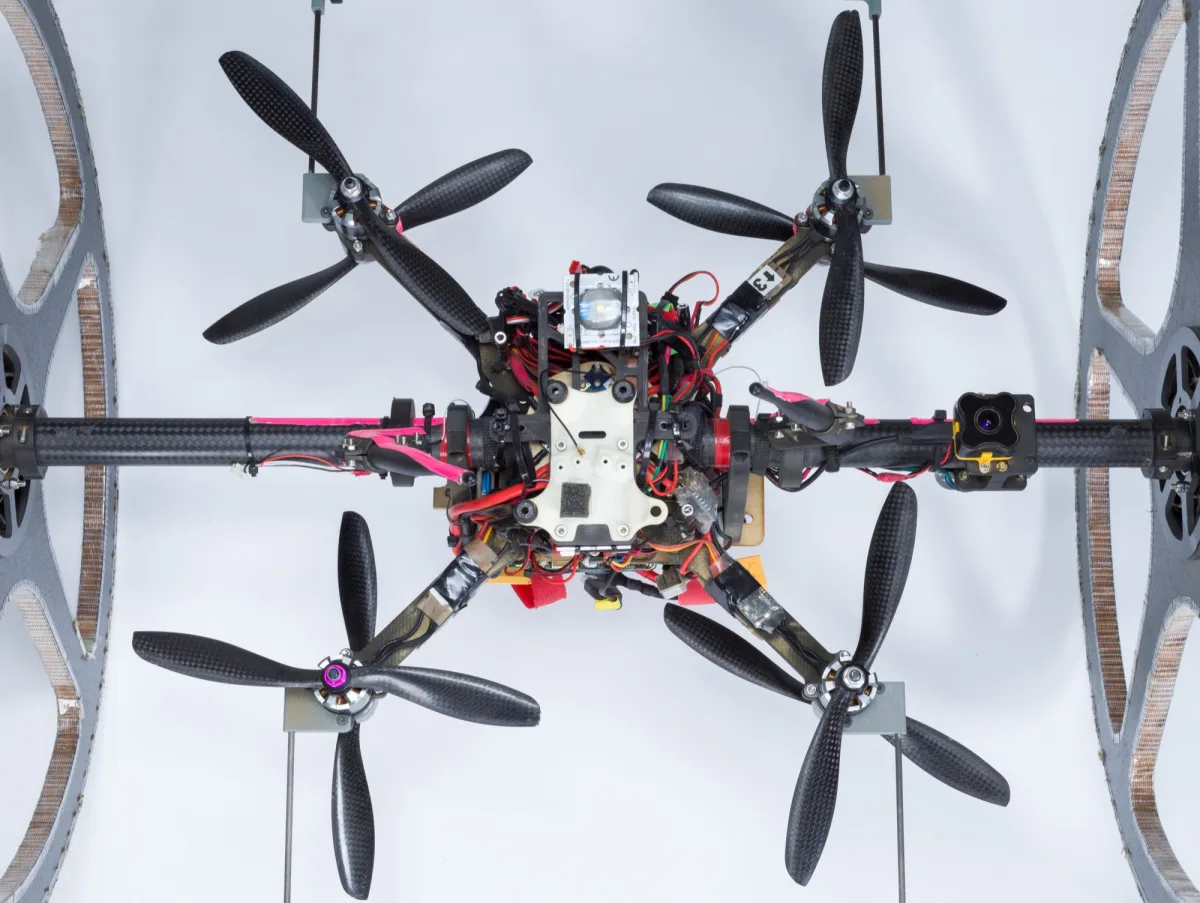
| Drive | Quadrotor with four brushless motors and a Pixhawk flight controller. Two unpowered carbon-fiber honeycomb wheels sit on a shaft through the frame, so propeller thrust pushes it along the ground and also flies it over obstacles. |
| Compute | Intel NUC (Core i7, 32 GB RAM, Ubuntu 16.04, ROS) plus a Pixhawk running PX4. A Qualcomm Snapdragon was also tested for visual SLAM. |
| Vision | Intel RealSense RGB-D camera |
| Lidar | Velodyne VLP-16 360° lidar, plus two TeraRanger Evo 64px height sensors (one up, one down) |
| Sensors | IMU in the Pixhawk, wheel encoders, upward and downward height sensors |
| Runtime | Not published. Average power was 194.5 W when rolling versus 971.9 W when flying, so rolling used about one fifth of the energy. |
| Speed | 0.3 m/s in the published energy tests. Top speed not published. |
| SDK | None public |
Ratings & reviews
Ratings and reviews load on the live site.
Similar robots
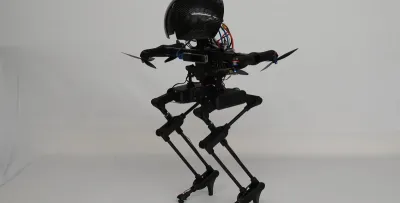 LEONARDO (LEO)Autonomous Robotics and Control Lab (Soon-Jo Chung), Caltech (USA)Not for sale
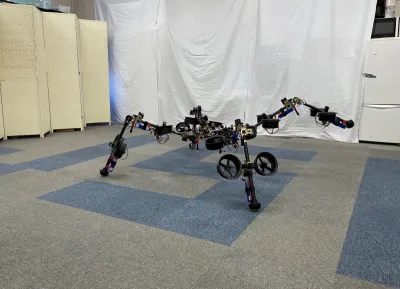 SPIDARJSK Lab (now DRAGON Lab), University of Tokyo (Japan)Not for sale
 RAVENLaboratory of Intelligent Systems (LIS), EPFL (Switzerland)Not for sale
 Husky CarbonSiliconSynapse Lab (Alireza Ramezani), Northeastern University (USA)Not for sale
 M4 (Multi-Modal Mobility Morphobot)Caltech CAST and Northeastern University (USA)Not for sale
 HyTAQRobotics Lab, Illinois Institute of Technology (USA)Not for sale