

Overview
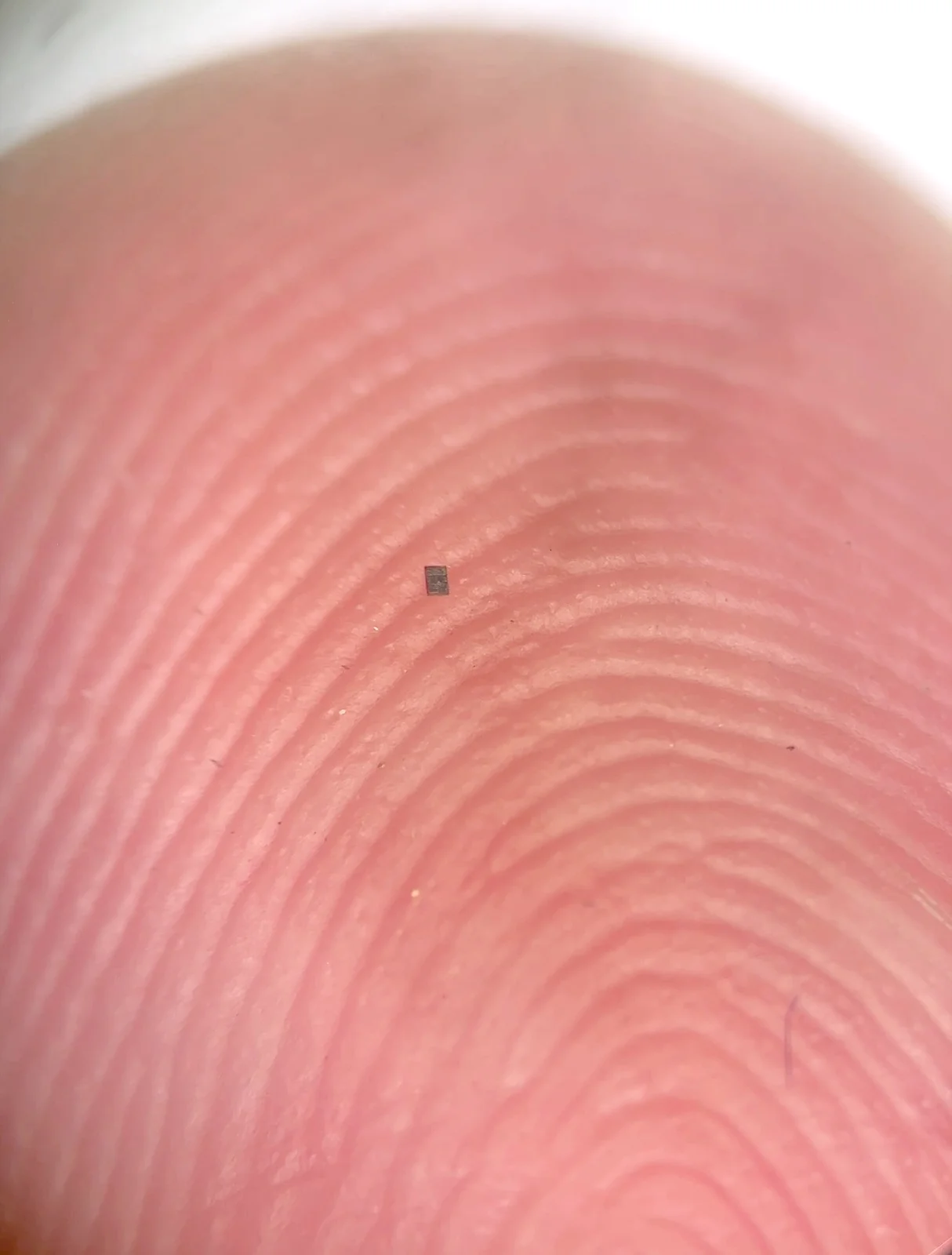
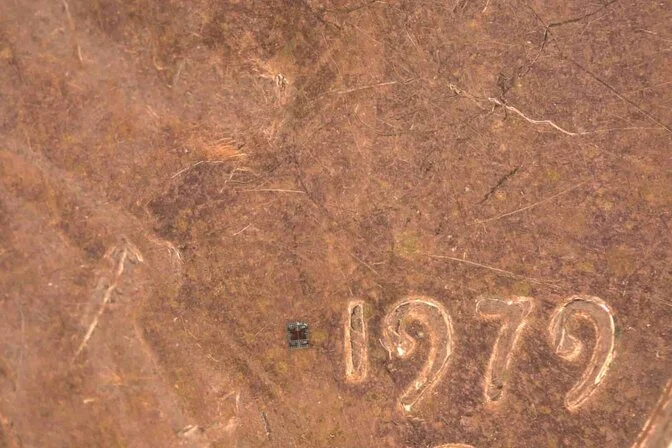
The smallest fully programmable, autonomous robot reported so far, about the size of a single-celled paramecium. Marc Miskin's lab at Penn built the body and propulsion, and David Blaauw's lab at Michigan built the computer. They swim by electrokinetic propulsion, where electrodes set up an electric field that pushes ions, and the ions drag the surrounding water. Solar cells covering most of the chip supply about 75 nW. One LED powers the robot and a second LED sends programs as flashes, starting with a passcode so each robot type loads only its own code. The custom 11-bit instruction set packs sensing, motion and reporting into single commands to fit the tiny memory.
The Science Robotics paper (December 2025) showed robots that measure temperature and report it by wiggling in a Manchester-coded pattern read under a microscope, likened to a honeybee dance. Programmed robots also climbed toward warmer water on their own. A companion PNAS paper (July 2025) described the propulsion, with simpler robots swimming waypoints and swarms at up to one body length per second. The work follows Miskin's 2020 Nature paper on mass-produced walking microrobots powered by laser light. Those walkers move at a few micrometers per second and need bright light to work. An abstract for a May 2026 MRS Spring Meeting talk described early work on a next-generation chip with more memory, robot-to-robot communication and localization. No medical or human use has been tested.
- Type
- Microrobot · Microscopic robots
- Maker
- University of Pennsylvania (Miskin Lab) / University of Michigan (Blaauw Lab) (USA)
- Released
- 2025
- Price
- Not for sale
- Status
- Not for sale (research)
- Best for
- Professionals & labs
- Programming
- Limited SDK
Price and shipping
About a penny each to make at production scale, per the researchers. The paper puts today's small multi-project wafer runs at under $1 per robot.
Shipping: Not for sale. Not available. A university research project.
Specifications
| Category | Microrobots & nanorobots · Microscopic robots |
|---|---|
| Released | 2025 |
| Country | USA |
| Availability | Not for sale (research) |
| Programmability | Limited SDK |
| Built-in autonomy | Reactive · Responds to its surroundings without a map, such as avoiding obstacles or following a person |
| LLM support | None · No built-in LLM. Its memory holds only about 500 bits, and programs go in through light pulses from a lab base station. |
| Best for | Professionals & labs |
| Vision sensors | No vision sensors |
| Actuators | Other |
| Audio | No audio |
| Compute type | Proprietary / undisclosed |
| Remote control | Via light / magnets / lab rig |
| Size | About 200 × 300 × 50 µm (paper: 210 or 270 × 340 × 50 µm), smaller than a grain of salt and about the size of a paramecium |
| Locomotion | Electrokinetic swimming. Four platinum electrode panels drive ions and water past the body, with no moving parts |
| Compute | A custom 11-bit processor in 55 nm CMOS with about 500 bits of memory, running on about 75 nW from its solar cells. Built by the Michigan lab behind the Michigan Micro Mote |
| Camera | None |
| Sensors | Temperature sensor (about 0.2 °C resolution in the paper, "within a third of a degree" per Penn), optical receiver for programming |
| Runtime | Runs as long as it is lit. Keeps swimming for months under an LED, per Penn |
| Speed | 3–5 µm/s straight and 0.1–0.3°/s turning in the Science Robotics robots (about 0.01–0.02 body lengths/s, estimate). Simpler PNAS robots reached up to 1 body length/s |
| SDK | Lab Python GUI that compiles behaviors to its custom instruction set and flashes them over an LED |
Common questions
How much does Penn/Michigan programmable microrobot cost?
Not for sale. About a penny each to make at production scale, per the researchers. The paper puts today's small multi-project wafer runs at under $1 per robot.
Can Penn/Michigan programmable microrobot be bought today?
No. It was never sold to the public.
Who makes Penn/Michigan programmable microrobot?
Penn/Michigan programmable microrobot is made by University of Pennsylvania (Miskin Lab) / University of Michigan (Blaauw Lab) (USA). It came out in 2025.
Can Penn/Michigan programmable microrobot be programmed?
Limited SDK. Lab Python GUI that compiles behaviors to its custom instruction set and flashes them over an LED.
Does Penn/Michigan programmable microrobot have AI chat or LLM support?
None. No built-in LLM. Its memory holds only about 500 bits, and programs go in through light pulses from a lab base station.
Ratings & reviews
Ratings and reviews load on the live site.
Similar robots
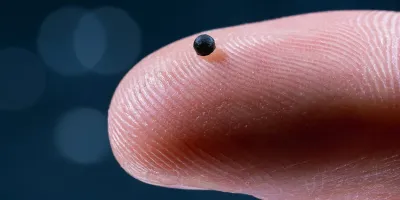 ETH Zurich magnetic microrobotETH Zurich Multi-Scale Robotics Lab (Bradley Nelson, Salvador Pané) (Switzerland)Not for sale
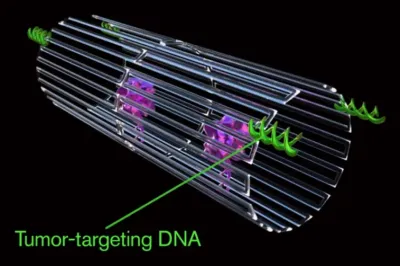 DNA origami nanorobot (ASU / NCNST)Arizona State University (Hao Yan) / National Center for Nanoscience and Technology, Chinese Academy of Sciences (Baoquan Ding, Guangjun Nie, Yuliang Zhao)Not for sale
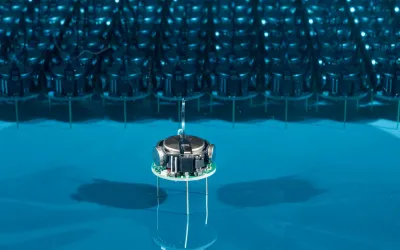 KilobotHarvard Self-Organizing Systems Research Group / K-Team (USA / Switzerland)$1,320 (10-pack)
Sources
Penn Engineering ↗ · Michigan Engineering ↗ · PNAS propulsion paper (2025) ↗ · arXiv preprint ↗ · The Robot Report ↗