
Overview
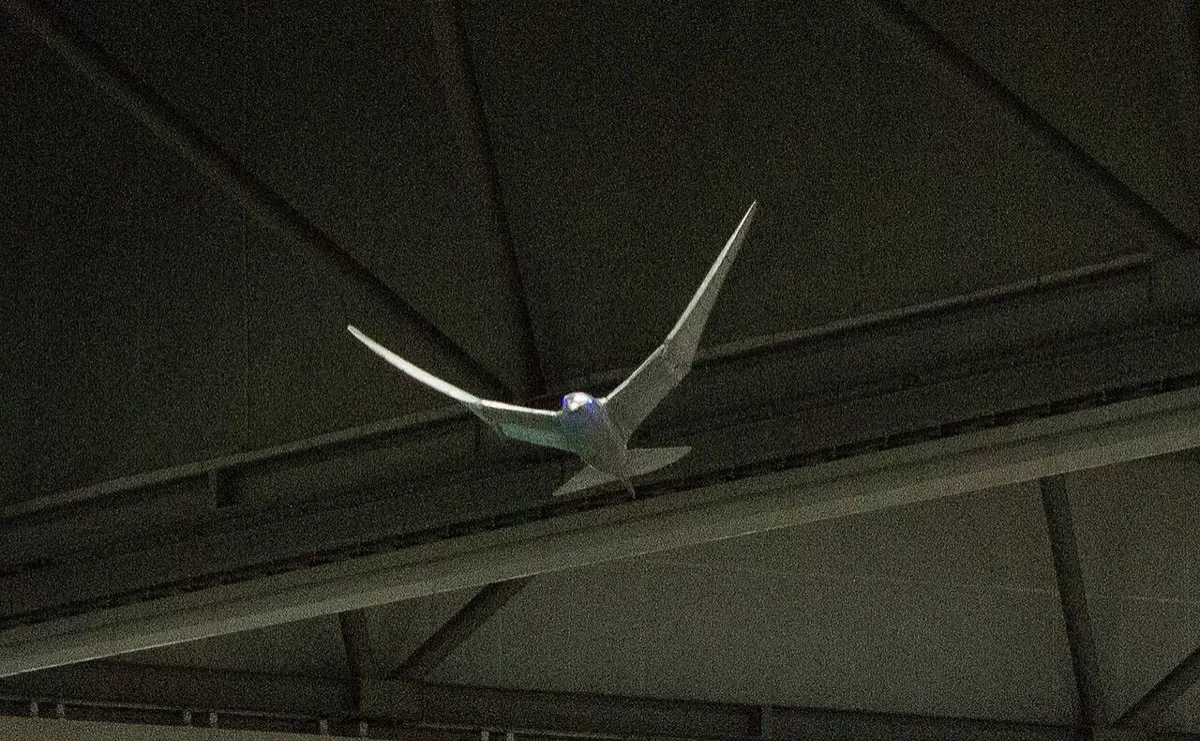
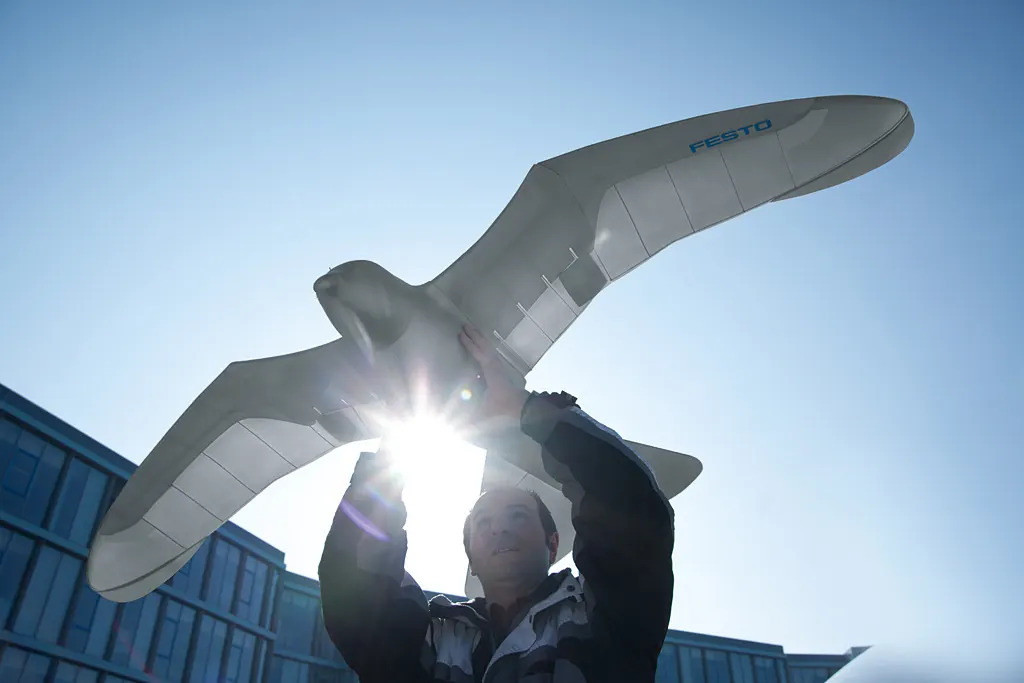
Unveiled at Hannover Messe in April 2011, SmartBird was the first widely publicized ornithopter that could take off, fly and land on its own flapping wings, with no extra propulsion. Its trick is an active torsion drive that twists each wing through the stroke so it generates both lift and thrust, modelled on a herring gull. It remains one of the most recognizable bio-inspired robots and was succeeded by the much smaller BionicSwift.
- Type
- Flapping-wing robot · Flapping-wing robots
- Maker
- Festo Bionic Learning Network (Germany)
- Released
- 2011
- Price
- Not for sale
- Status
- Not for sale (research)
- Best for
- Professionals & labs
- Programming
- No programmability
Price and shipping
Exhibition and research demonstrator only.
Shipping: Not for sale. Never sold. Festo flies it at trade fairs and events.
Specifications
| Category | Flapping-wing fliers · Flapping-wing robots |
|---|---|
| Released | 2011 |
| Country | Germany |
| Availability | Not for sale (research) |
| Sales | 3 prototypes built, never sold (2011) GrabCAD ↗ |
| Programmability | No programmability |
| Built-in autonomy | None / scripted · Moves only when controlled, or plays preset motions |
| LLM support | None · No built-in LLM and no SDK to connect one. |
| Best for | Professionals & labs |
| Vision sensors | No vision sensors |
| Actuators | Mixed |
| Audio | No audio |
| Compute type | Arduino / ESP32 / microcontroller |
| Remote control | Not programmable |
| Size | 1.07 m body length, 1.96 m wingspan, 450 g |
| Locomotion | Flapping wings with actively twisted (torsion-controlled) outer wings, head and tail steer |
| Compute | Texas Instruments LM3S811 32-bit ARM microcontroller (50 MHz) |
| Camera | None |
| Sensors | 3 Hall sensors for motor position, LIS302DLH accelerometer, battery voltage/current monitoring |
| Runtime | Not published (2-cell 450 mAh LiPo, 23 W electrical power) |
| Speed | Not published |
| SDK | None public, bidirectional ZigBee radio link (868 MHz/2.4 GHz) to a ground station |
Common questions
How much does Festo SmartBird cost?
Not for sale. Exhibition and research demonstrator only.
Can Festo SmartBird be bought today?
No. It was never sold to the public.
Who makes Festo SmartBird?
Festo SmartBird is made by Festo Bionic Learning Network (Germany). It came out in 2011.
Can Festo SmartBird be programmed?
No programmability. None public, bidirectional ZigBee radio link (868 MHz/2.4 GHz) to a ground station.
Does Festo SmartBird have AI chat or LLM support?
None. No built-in LLM and no SDK to connect one.
Ratings & reviews
Ratings and reviews load on the live site.
Similar robots
 Festo BionicOpterFesto Bionic Learning Network (Germany)Not for sale
 Festo eMotionButterfliesFesto Bionic Learning Network (Germany)Not for sale
 Festo BionicSwiftFesto Bionic Learning Network (Germany)Not for sale
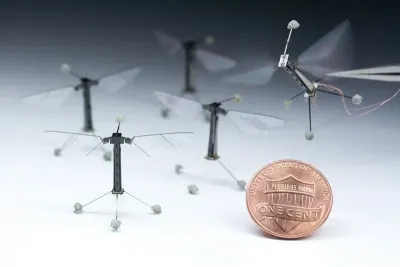 Harvard RoboBee / RoboBee X-WingHarvard Microrobotics Lab / Wyss Institute (USA)Not for sale
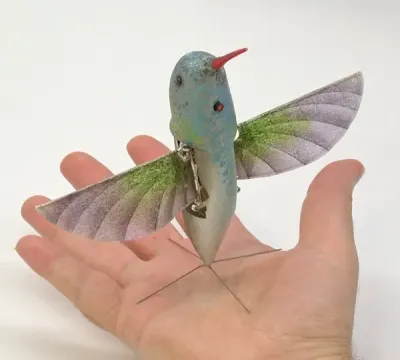 AeroVironment Nano HummingbirdAeroVironment (USA), for DARPANot for sale
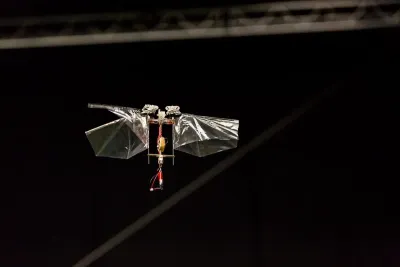 DelFly (II / Micro / Explorer / Nimble)TU Delft MAVLab (Netherlands)Not for sale