Not for saleAcademic research platform, never sold (October 2026 check). Year from the 2018 IEEE ICRA paper and UW announcement.
Not for sale (research)Not programmableInsect-scaleLaser-powered190 mg
Not for saleShipping: Not for sale. Not available. A university research project.
Remote control: Not possible. A lab robot powered by a laser and controlled by lab equipment.
Overview
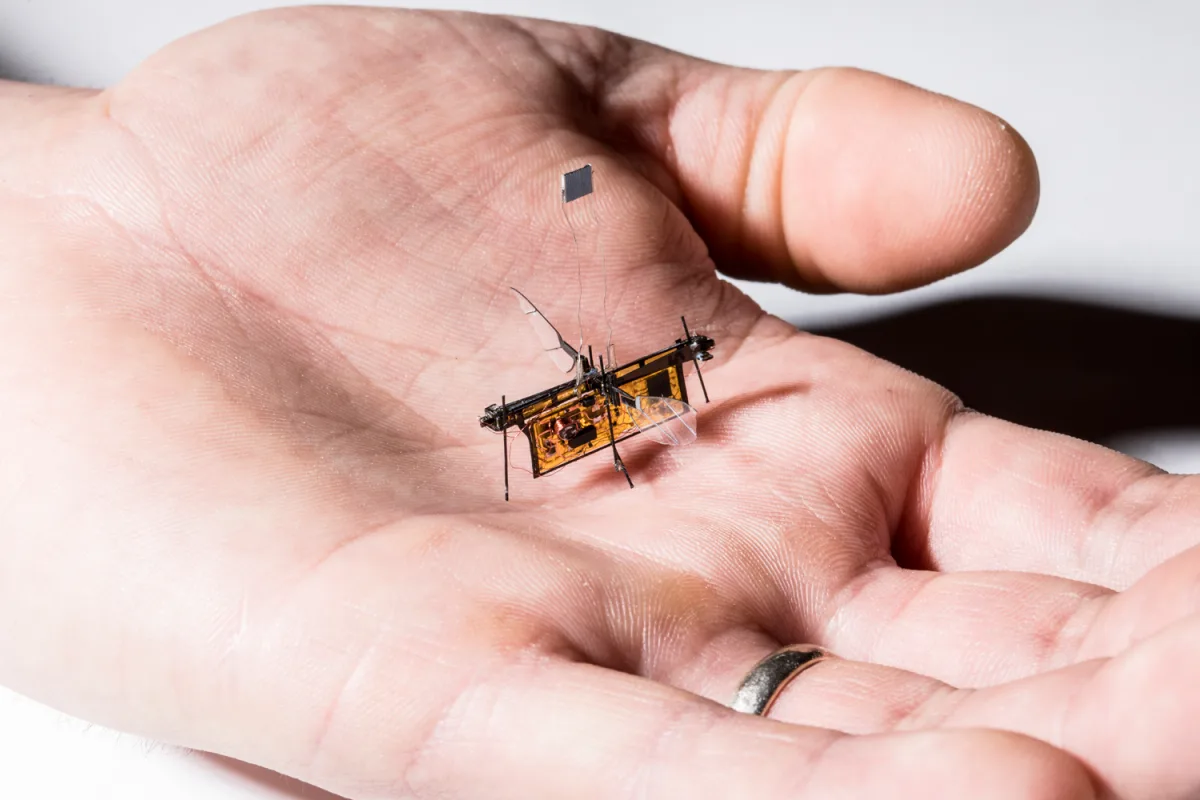
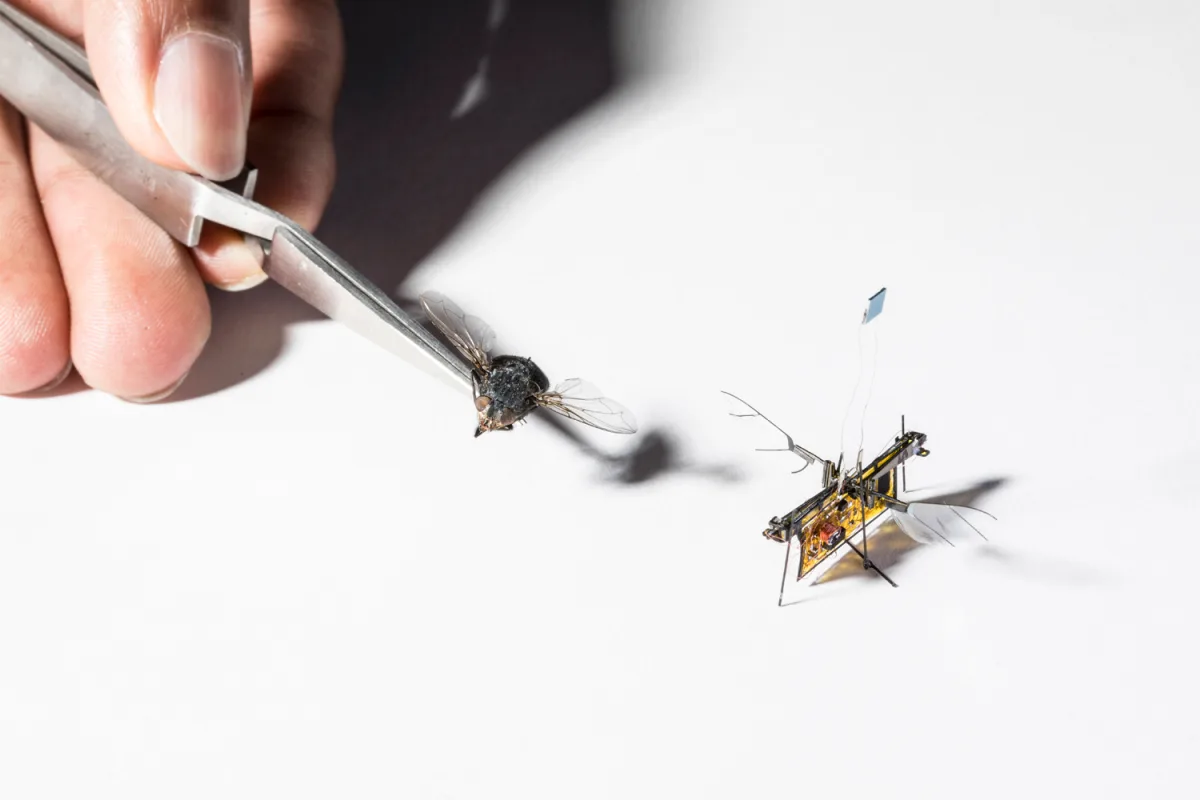
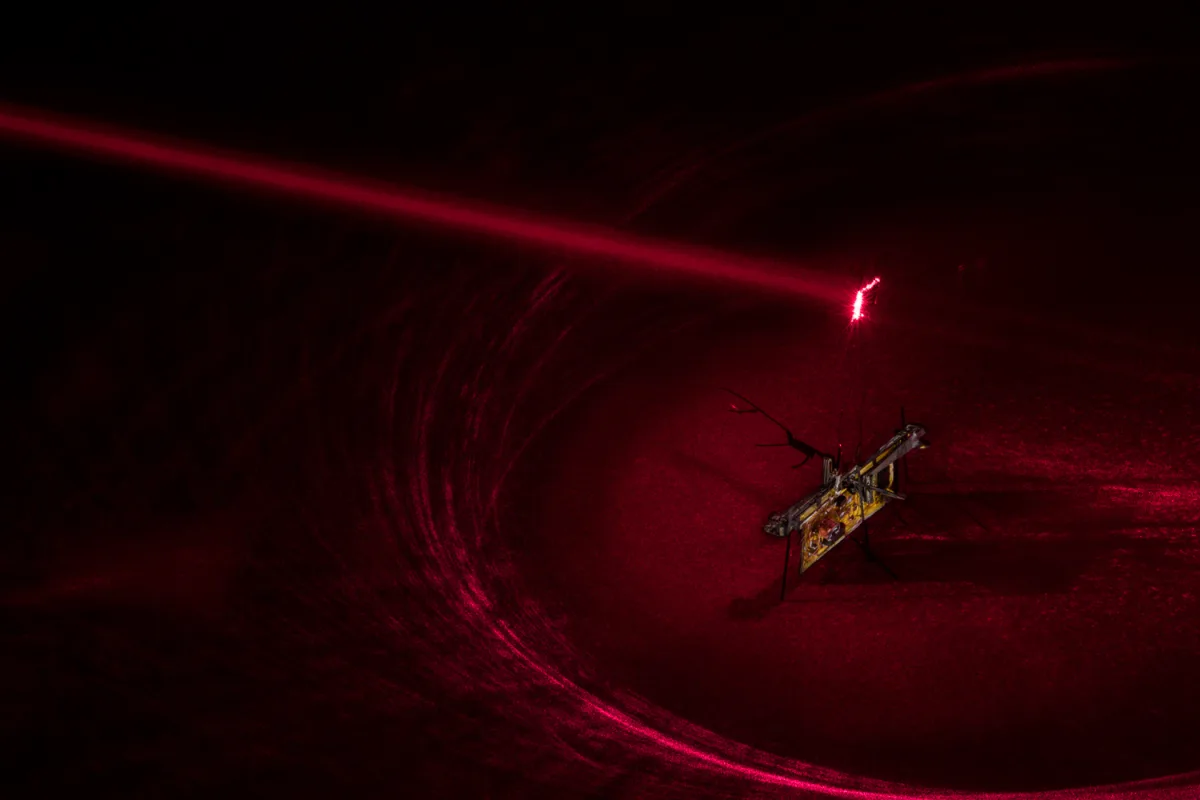
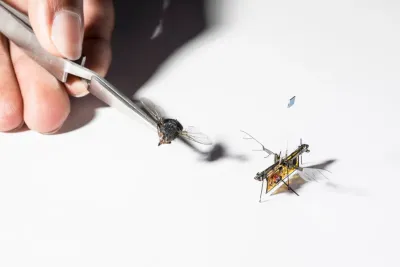
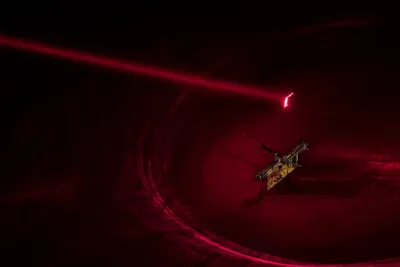
The first insect-sized flying robot to take off without a wire, in 2018. A laser beam lights a small solar cell on top, and an onboard circuit boosts its 7 volts to the 240 volts the piezo wing muscles need, while a tiny microcontroller times the wing beats. It could only take off and land, since it drops as soon as it leaves the beam. A simplified 74 mg version (2020) can also walk on the ground and skim across water using its wings. Led by Sawyer Fuller, a co-author of the Harvard RoboBee flight paper, it is the University of Washington's answer to the same problem.
Specifications
| Category | Flapping-wing fliers · Flapping-wing robots |
|---|---|
| Released | 2018 |
| Country | USA |
| Availability | Not for sale (research) |
| Programmability | No programmability |
| Built-in autonomy | None / scripted · Moves only when controlled, or plays preset motions |
| LLM support | None · No built-in LLM and no SDK to connect one. |
| Best for | Professionals & labs |
| Vision sensors | No vision sensors |
| Actuators | Other |
| Audio | No audio |
| Compute type | Arduino / ESP32 / microcontroller |
| Remote control | Not programmable |
| Size | Slightly larger than a housefly, 190 mg (laser-powered 2018 version), 74 mg (2020 simplified version with 13 mm wings) |
| Locomotion | Two flapping wings driven by piezoelectric actuators (about 140 flaps per second when hovering in the 2020 version) |
| Compute | Onboard microcontroller on a flexible circuit that times the wing pulses (2018 wireless version). The 2020 version is driven from a desktop computer through wires |
| Camera | None on board |
| Sensors | None on board. Lab motion-capture cameras for flight control in the 2020 version |
| Runtime | Only while lit by the laser. It lands as soon as the photovoltaic cell leaves the beam |
| Speed | Not published (water-surface travel about 0.5 cm/s in the 2020 version) |
| SDK | None |
Ratings & reviews
Ratings and reviews load on the live site.
Similar robots
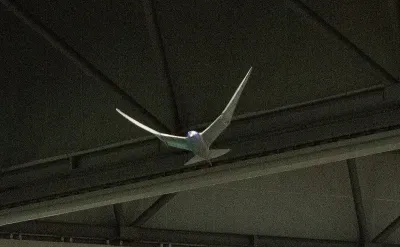 Festo SmartBirdFesto Bionic Learning Network (Germany)Not for sale
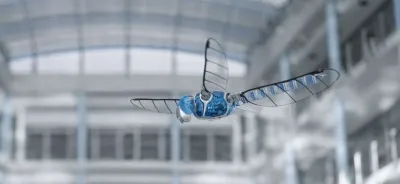 Festo BionicOpterFesto Bionic Learning Network (Germany)Not for sale
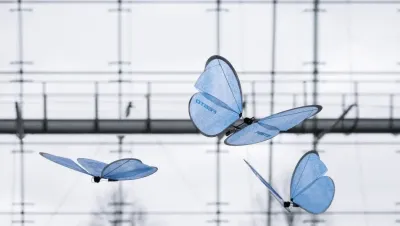 Festo eMotionButterfliesFesto Bionic Learning Network (Germany)Not for sale
 Festo BionicSwiftFesto Bionic Learning Network (Germany)Not for sale
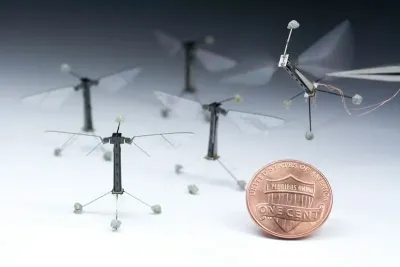 Harvard RoboBee / RoboBee X-WingHarvard Microrobotics Lab / Wyss Institute (USA)Not for sale
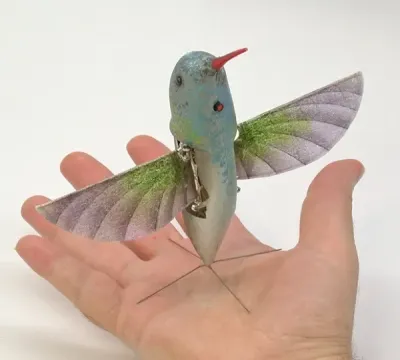 AeroVironment Nano HummingbirdAeroVironment (USA), for DARPANot for sale