$89 – $209 (Kickstarter, failed)The failed 2026 Kickstarter offered H.I.R.O. Lite at $89, the Standard Edition at $149–$169 and Standard + Ex at $199–$209, plus the Cortex board alone at $60. Takamori Robot's own store now sells the TR-01-A kit for $199 and the Zero to H.I.R.O. Exploration Kit (with an extra Pico 2 W, ultrasonic sensor, IMU and breadboard parts) for $249, both quoted to ship in 4–6 weeks (October 2026).
AvailableKickstarterRaspberry Pi Pico 2Kit buildSpider-style
Weeks+Shipping: 4–6 weeks (store pre-order). The 2026 Kickstarter campaign failed, so it ships nothing. Takamori Robot's own store takes orders for the TR-01-A kit at $199 and quotes 4–6 weeks for its first batch (October 2026). Takamori Robot store ↗
Overview
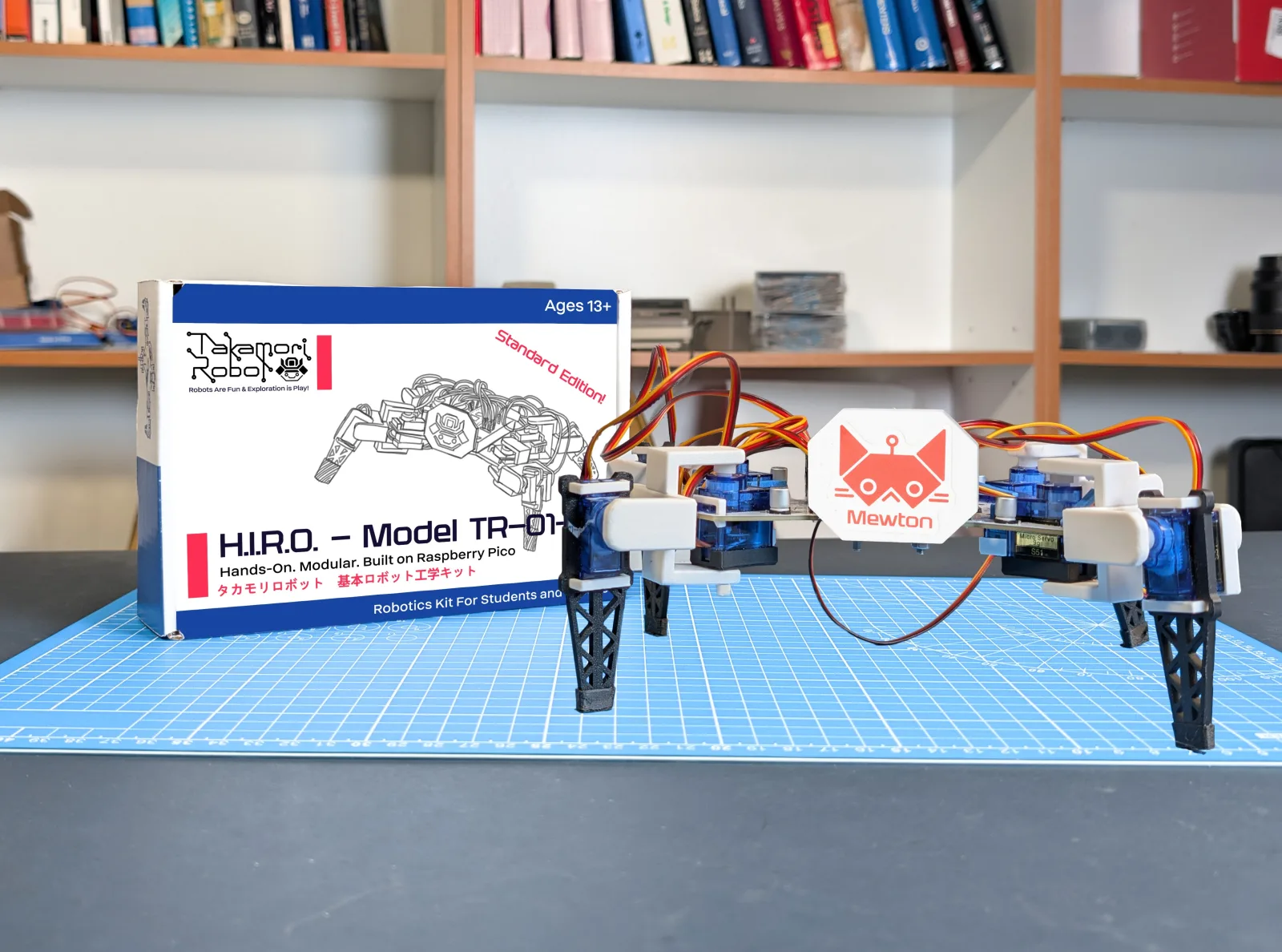
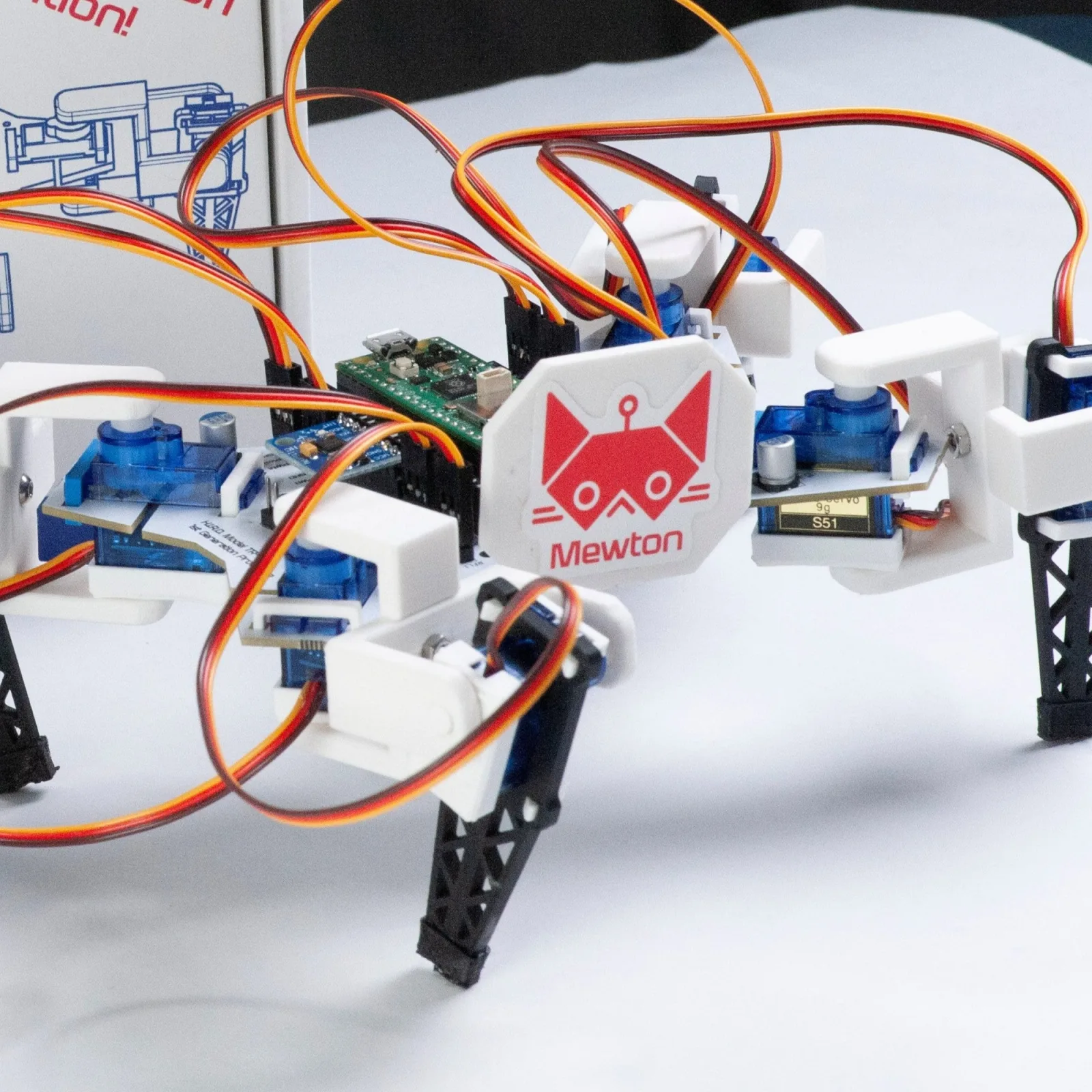
H.I.R.O. is a spider-style four-legged kit with two hobby servos per leg on a Raspberry Pi Pico 2 W board, built and wired by the owner on a breadboard in about 20 minutes to an hour. Its movement library (walk, turn, wave, dances, serial control) is open source on GitHub, but the hardware design files are not released. The first-generation kit (Pico W) funded on Kickstarter in 2025, while this second campaign failed in September 2026 with 30 backers and $4,961 of a $20,000 goal. Takamori Robot sells the kit on its own store instead. It suits teens and classrooms learning wiring and Arduino on a cheap legged robot, not people who want a capable walker like Bittle.
Specifications
| Category | Quadrupeds · Desktop / hobby kits |
|---|---|
| Released | 2025 |
| Country | USA |
| Availability | Available |
| Crowdfunding | Kickstarter · Missed its goal · 30 backers · $4,961 raised of a $20,000 goal · Aug 19, 2026 – Sep 20, 2026 (as of Oct 6, 2026) Campaign ↗ |
| Sales | 47 Kickstarter backers, $10,496 raised for the first-generation kit (2025, estimate) Kickstarter ↗ |
| Programmability | Open source (hardware + software) |
| Built-in autonomy | None / scripted · Moves only when controlled, or plays preset motions |
| LLM support | Possible via SDK · No LLM features. The open Arduino library and serial control let an LLM write or drive its code. HIRO library (GitHub) ↗ |
| MuJoCo simulation | None found · Nothing found. |
| NVIDIA Isaac simulation | None found · Nothing found. |
| Gazebo simulation | None found · Nothing found. |
| Best for | Ages 13+ (maker rating) |
| Vision sensors | Sonar / ultrasonic |
| Actuators | Hobby servos |
| Audio | Speaker |
| Compute type | Arduino / ESP32 / microcontroller |
| Compute | Raspberry Pi Pico 2 W (RP2350) on the Cortex PCB |
| Weight | Not published |
| Speed | Not published |
| DOF | 8 SG-90 micro servos, 2 per leg (the store kit includes 10) |
| Sensors | MPU-6050 IMU, photoresistors, push buttons, LEDs and piezo buzzers wired on a breadboard. The Exploration Kit adds an HC-SR04 ultrasonic sensor |
| SDK | Yes (HIRO Arduino library in C++, MIT license, plus VS Code and Thonny) |
Timeline
- Campaign launchedThe first-generation H.I.R.O. Kickstarter campaign launched. Kickstarter ↗
- Campaign endThe first campaign funded with $10,496 from 47 backers. Kickstarter ↗
- ShippingFirst-generation kits shipped to the 2025 backers. Hackster.io ↗
- Campaign launchedThe second-generation H.I.R.O. (TR-01-A) Kickstarter campaign launched. Kickstarter ↗
- Campaign endThe second campaign ended unfunded with 30 backers and $4,961. Kickstarter ↗
- ReleasedTakamori Robot opened orders for the TR-01-A kit on its own store, quoting 4–6 weeks to ship. Takamori Robot store ↗
Ratings & reviews
Ratings and reviews load on the live site.
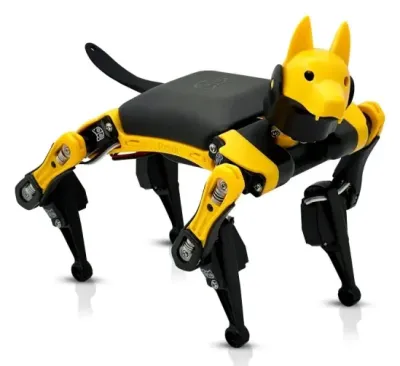 Bittle / Bittle X
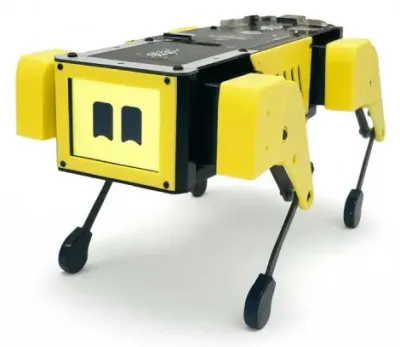 Mini Pupper 2
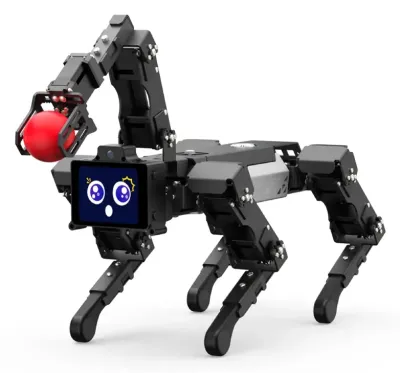 XGO-Mini2 / Mini2S
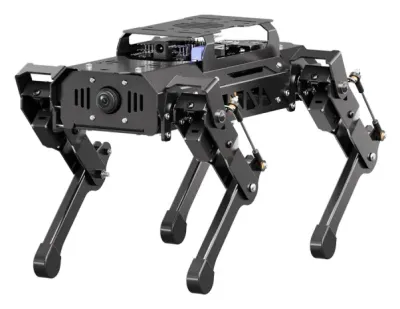 PuppyPi (Standard → Pro Ultimate)
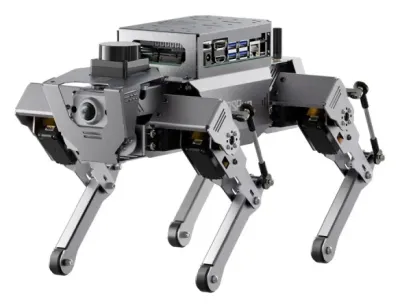 ROSPug
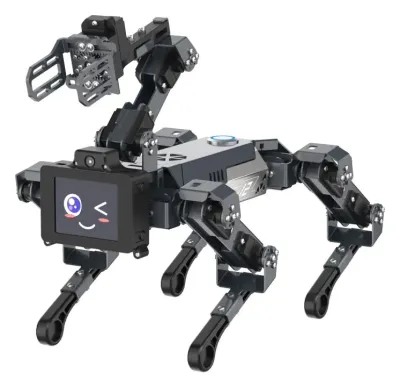 DOGZILLA-Lite (= XGO-Lite2)