$1,020GCtronic shop lists the e-puck2 with battery at 850 CHF (about $1,020 converted) and a set of three at 2,400 CHF (about $2,900), both before VAT and shipping (October 2026 check). Generation Robots in France lists it at €1,040 before VAT with delivery within 3 weeks. Add-ons such as the ground sensors, Pi-puck and omnivision modules cost extra. The original e-puck dates from 2005 per GCtronic; e-puck2 was released in January 2018.
AvailablePython from a laptopPalm-sizedOpen hardwareSwarm classicPython over Wi-Fi
Weeks+Shipping: About 3 weeks (EU reseller), direct from Switzerland unconfirmed. Sold directly by GCtronic in Switzerland (PayPal checkout, shipping quoted separately) and through European resellers such as Generation Robots, which quotes delivery within 3 weeks. No US stockist was found, so US buyers face international shipping and import duties. GCtronic shop ↗
Remote control: A Mac or PC can drive it live over Wi-Fi with the pip-installable unifr_api_epuck Python package, or over Bluetooth/USB with GCtronic's PC tools. Firmware is built with a GCC tool chain and flashed over USB from Mac, Windows or Linux.
Overview
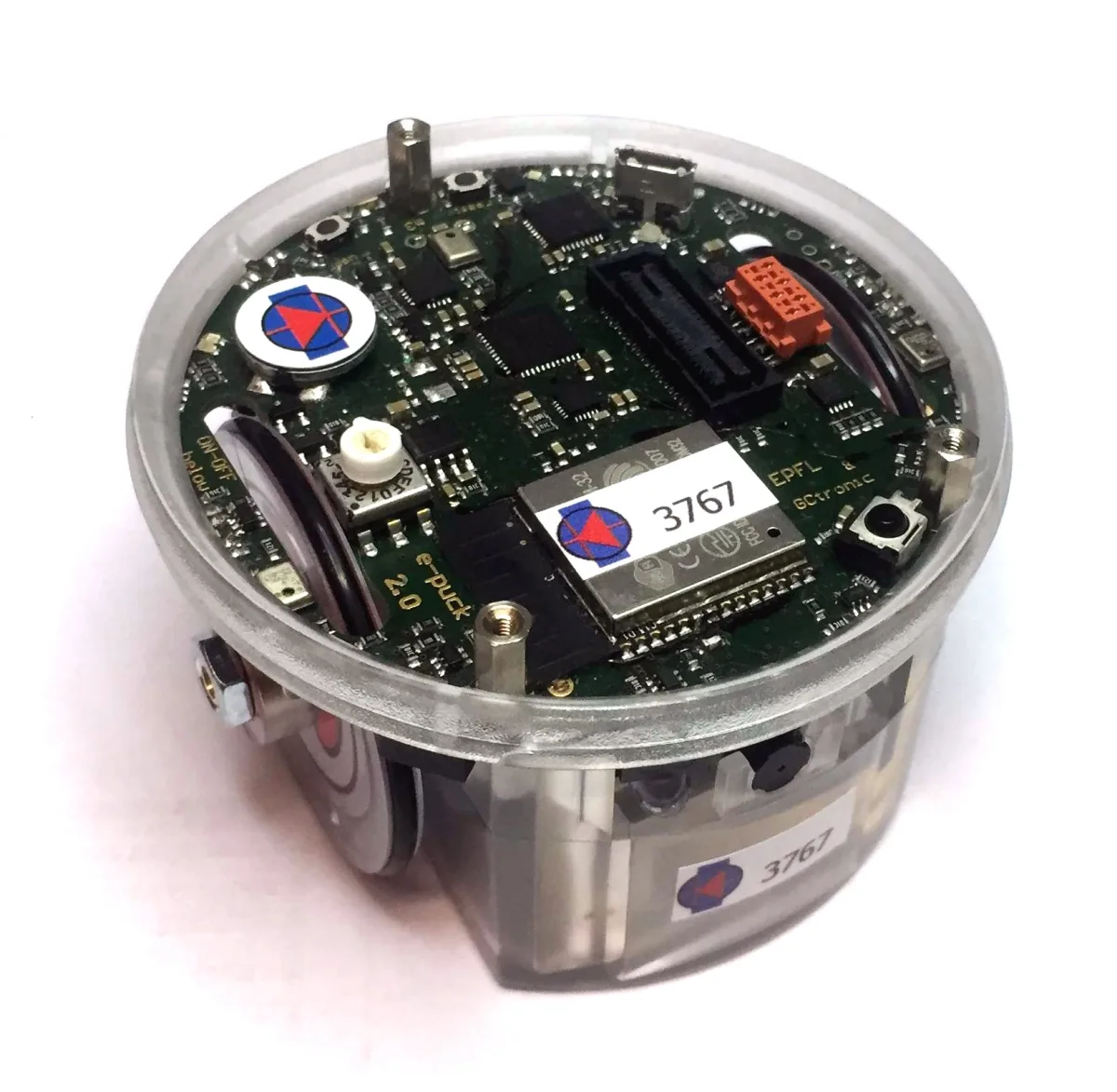
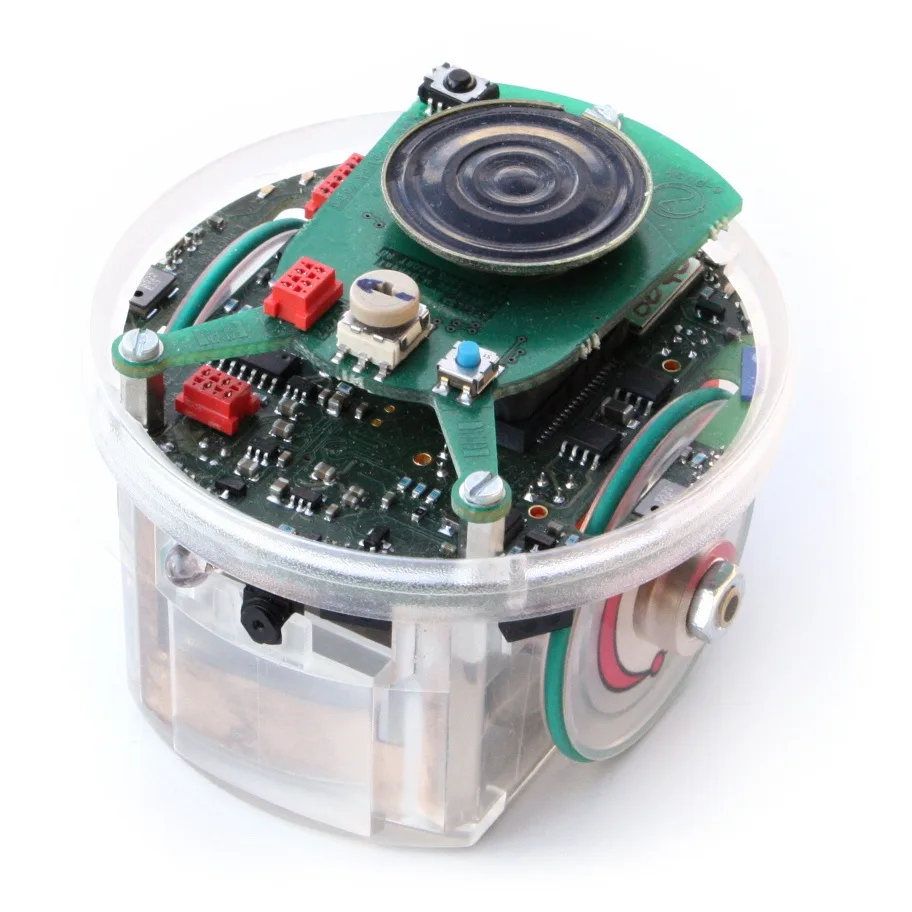
The small open-hardware robot that a generation of university courses and swarm labs used, designed at EPFL by Michael Bonani and Francesco Mondada. The e-puck2 (2018) keeps the same 7 cm body and add-on boards but adds a faster processor, Wi-Fi, a distance sensor and IMU. Its strength is a huge body of course material, papers and simulator support. The catch is price, since a hand-sized robot with microcontroller-class compute costs about $1,000 and ships from Switzerland.
Specifications
| Category | Wheeled rovers · Research mobile manipulators & platforms |
|---|---|
| Released | 2005 |
| Country | Switzerland |
| Availability | Available |
| Programmability | Open source (hardware + software) |
| Built-in autonomy | Reactive · Responds to its surroundings without a map, such as avoiding obstacles or following a person |
| LLM support | Possible via SDK · No LLM features, but a laptop can drive it over Wi-Fi from Python, so an LLM could be connected through custom code. |
| MuJoCo simulation | None found · Nothing found. |
| NVIDIA Isaac simulation | None found · Nothing found. |
| Gazebo simulation | Community model · Old third-party Gazebo 7 / ROS Kinetic simulation of the e-puck2. The best-supported simulator is Webots (official e-puck model and webots_ros2 driver), which is not counted here. SharathRaparthy/Epuck-Robot-Gazebo ↗ |
| Best for | Professionals & labs |
| Vision sensors | Camera |
| Actuators | Stepper motors |
| Audio | Speaker, Microphone |
| Compute type | Arduino / ESP32 / microcontroller |
| Remote control | Python from a laptop |
| Size | 70 mm diameter, 45 mm tall, 130 g (e-puck2) |
| Drive | Two stepper motors with 50:1 gearboxes, differential drive |
| Compute | STM32F407 (168 MHz Cortex-M4) plus an ESP32 for Wi-Fi/Bluetooth, optional Raspberry Pi Zero via the Pi-puck board |
| Vision | Small color camera (160×120 typical for processing) |
| Lidar | None |
| Sensors | 8 infrared proximity and light sensors, time-of-flight distance sensor (up to 2 m), 9-axis IMU, 4 microphones, IR remote receiver, speaker, RGB LEDs |
| Runtime | About 3 hours (1.8 Ah Li-ion) |
| Speed | About 15 cm/s (e-puck2) |
| SDK | Open-source C firmware for the STM32, onboard debugger (GDB), Aseba, Webots, MicroPython (per GCtronic), ROS/ROS 2 drivers, Python Wi-Fi API (unifr_api_epuck), Bluetooth/Wi-Fi/USB remote-control protocol |
Ratings & reviews
Ratings and reviews load on the live site.
Similar robots
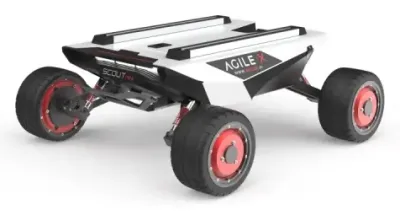 AgileX Scout MiniAgileX Robotics (China)$5,895.95 (Trossen)
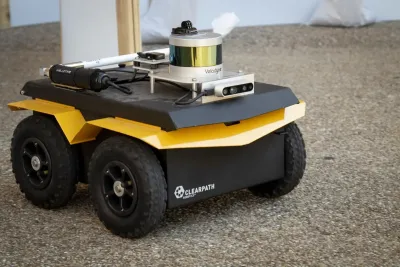 Clearpath JackalClearpath Robotics (Canada, part of Rockwell Automation)Quote (~$20,000+, est.)
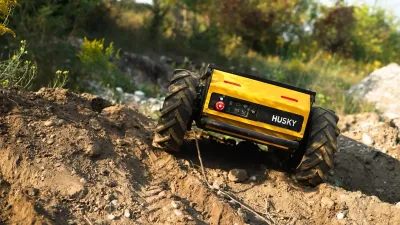 Clearpath Husky (A200 / A300)Clearpath Robotics (Canada, part of Rockwell Automation)Quote (~$30,000+, est.)
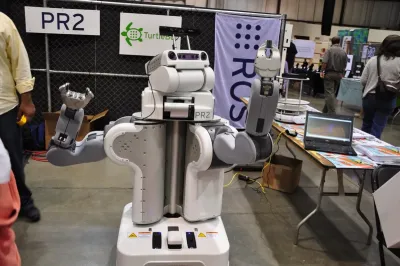 PR2Willow Garage (USA)Was $400,000
 Hello Robot Stretch (RE1 / 2 / 3 / 4)Hello Robot (USA)$24,950 (Stretch 3) / $29,950 (Stretch 4)
 Fetch Mobile ManipulatorFetch Robotics (USA, later Zebra Technologies)Was about $100,000