Sensor comparison
| Sensor | How it measures distance | Typical range | Works in the dark | Sensor cost |
|---|---|---|---|---|
| Single camera | Doesn't measure it directly. Software estimates depth from motion, known sizes or a trained AI model. | No measured range. It sees far, but distances are only estimates. | No | A few dollars to tens of dollars |
| Stereo cameras | Compares the images from two cameras side by side, like a pair of eyes | Best within a few meters, wider camera spacing reaches farther | No | Tens to hundreds of dollars |
| Active stereo and structured light | Projects an infrared pattern and measures how it lands on surfaces | About 0.2–4 m on small robot cameras | Yes | Hundreds of dollars |
| Time-of-flight | Times how long a pulse of light takes to bounce back | Centimeters to several meters | Yes | A few dollars (single point) to hundreds (3D camera) |
| Lidar | Sweeps a laser and times each reflection | About 10 m on hobby units, 100 m or more on car lidars | Yes | Under $100 (2D) to thousands (3D) |
| Ultrasonic | Times the echo of a sound pulse, like a bat | A few centimeters to about 4 m | Yes | A few dollars |
Many robots combine several of these. A modern robot vacuum may carry lidar for mapping, a structured-light sensor for low obstacles, a camera to recognize cables and socks, and cliff sensors to avoid stairs.
Single camera
One camera is the cheapest and most common way for a robot to see. It gives a flat color image, which is ideal for spotting faces, objects, colors, markers and lines. On its own it can't tell whether an object is small and close or large and far away.
Software fills the gap in a few ways. As the robot moves, nearby things shift across the image faster than distant ones, and visual SLAM uses that shift to build a 3D map. A known object size, such as a charging dock or a face, also gives its distance. Newer AI models estimate a full depth map from a single photo, much as a person can judge depth with one eye closed.
Strengths
- Cheap, small and low power
- Rich detail, including color, text and faces
- Huge range of free vision software and AI models
Weaknesses
- No direct distance reading
- Fails in the dark unless paired with an infrared light
- Depth from motion or AI needs a fair amount of computing
Vector uses one wide-angle camera for faces and its charger marker, plus a single-point distance sensor in front. Hobby kits like the PiCar-X and JetBot also rely on one camera, often combined with an ultrasonic sensor.
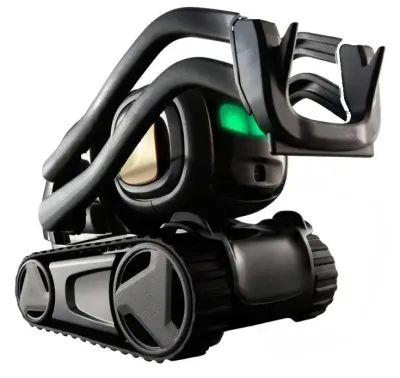 Vector 2.0$249.99
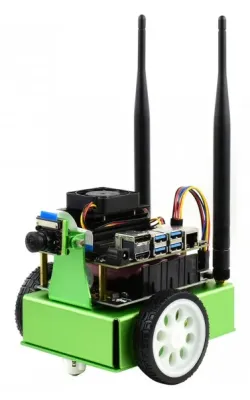 NVIDIA JetBot$399.99 – $499.99…
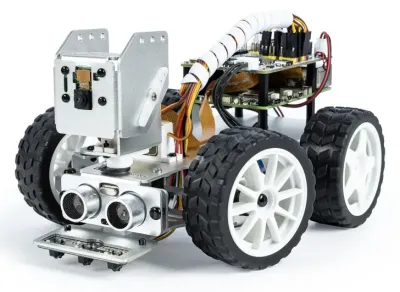 PiCar-X$89.99 (no Pi)
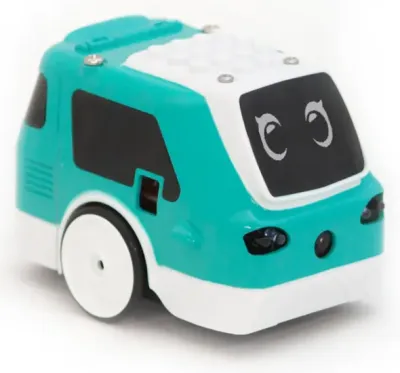 Zumi$179.99
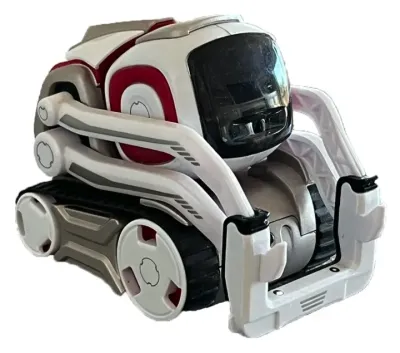 CozmoWas $179.99 (2016)
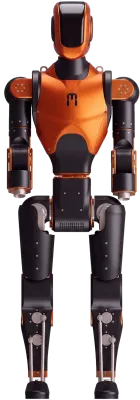 Asimov 1$20,000 kit
Stereo cameras
A stereo camera uses two cameras a fixed distance apart, the same way two eyes work. An object appears in a slightly different spot in each image. The closer it is, the bigger that shift, so the robot can calculate distance for every point it can match between the two images.
Accuracy falls off quickly with distance. In theory, doubling the distance makes the depth error about four times larger. Spacing the cameras farther apart helps, which is why stereo heads on large robots are wider than the tiny modules on small ones. Some newer robots use AI models trained to match the two images, which copes better with plain surfaces than older matching methods.
Strengths
- Real 3D depth from ordinary cameras, with no laser or light emitted
- Works outdoors in bright sun, where infrared sensors struggle
- Color and depth come from the same images
- No moving parts, and closest to how animals see
Weaknesses
- Needs visible texture, so blank walls, glass and mirrors give poor depth
- Needs light, like any camera
- Accuracy drops fast beyond a few meters
- The two cameras must stay precisely aligned, and matching takes computing power
Spot carries five stereo camera pairs around its body and treats lidar as an add-on. The NEO humanoid and the Walker S2 use stereo cameras in the head, with no lidar. Walker S2 uses plain color cameras with learned stereo depth. MiRo-E has stereo cameras in its eyes. Drones such as the Skydio R1 and Parrot ANAFI Ai avoid obstacles mostly with stereo pairs, since lidar is heavy.
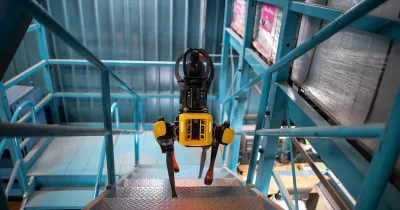 Spot~$75,000+
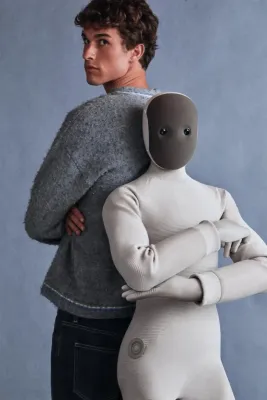 NEO$20,000 or $499/mo
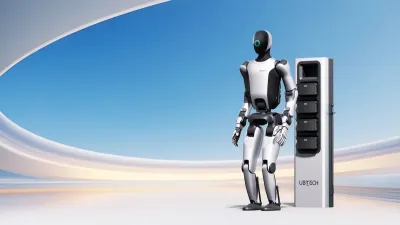 Walker S2$246,600 (reseller)
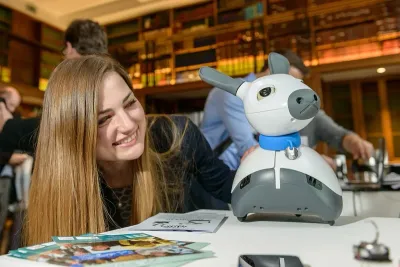 MiRo-EQuote only
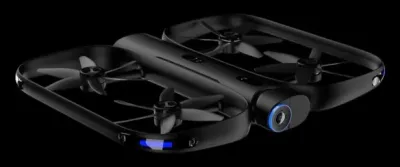 Skydio R1Was $2,499 (2018)
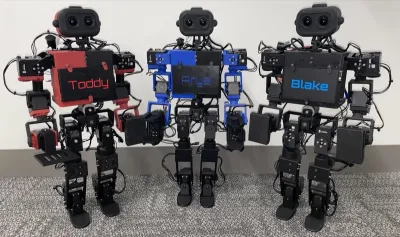 ToddlerBot 2.0~$6,000 DIY · $4,299 built
Active stereo and structured light
Most depth cameras sold for robots add their own light. Active stereo cameras, such as most Intel RealSense models and the OAK-D Pro, are stereo pairs with an infrared projector. The projector sprays thousands of invisible dots onto the scene, so even a blank wall has texture to match. Structured light sensors project a known pattern or line and measure how it bends over objects. Robot vacuums use this on the front bumper to spot shoes and cables.
Strengths
- Dense, reliable depth on plain surfaces
- Works in the dark
- Ready-made cameras with ROS 2 drivers are easy to add
Weaknesses
- Short range, often about 0.2–4 m on small robots
- Sunlight drowns out the infrared pattern outdoors
- Larger and more power-hungry than a plain camera
The TurtleBot 4 pairs an OAK-D Pro depth camera with a 2D lidar. Stretch has RealSense cameras in its head and gripper, and the Unitree H1 combines a RealSense with a 3D lidar. The MentorPi T1 kit uses a structured-light depth camera, and the Roborock Qrevo vacuums use structured light for obstacles.
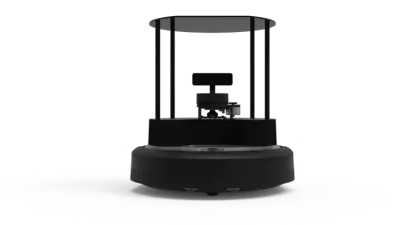 TurtleBot 4 / 4 Lite$1,572 / $2,575
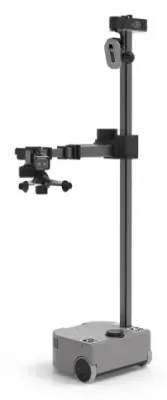 Hello Robot Stretch$24,950 (Stretch 3) /…
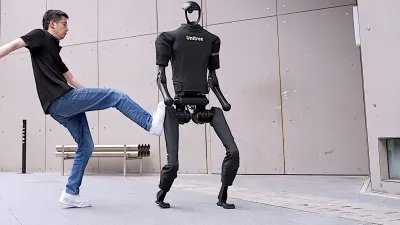 H1 / H1-2~$90,000+
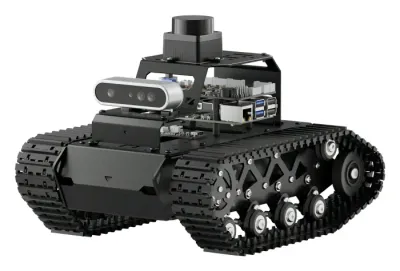 MentorPi T1$329.99 – $909.99
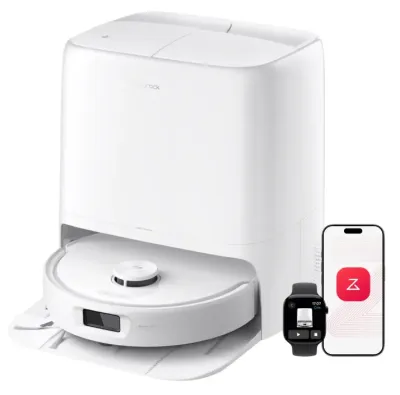 Roborock Qrevo$385 – $900
Time-of-flight sensors
Time-of-flight (ToF) sensors send out light and measure how long it takes to come back. The simplest ones read a single distance, like a laser tape measure the size of a fingernail. 3D ToF cameras measure a whole grid of distances at once, giving a low-resolution depth image.
Strengths
- Measures distance directly, with almost no computing
- Tiny, and works in the dark
- Single-point sensors cost only a few dollars
Weaknesses
- 3D ToF cameras have low resolution compared with normal cameras
- Strong sunlight reduces range
- Shiny, black or see-through surfaces can give false readings
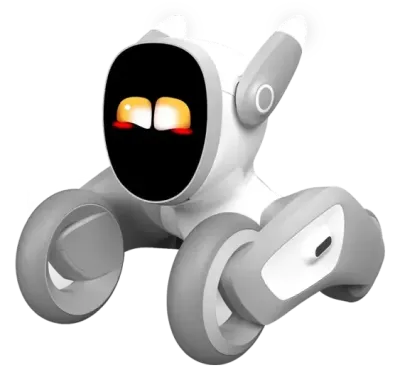
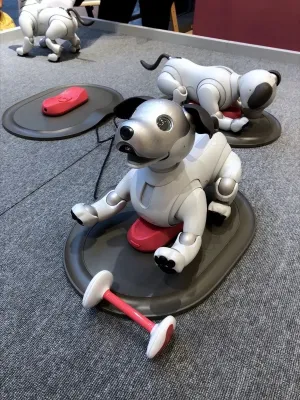
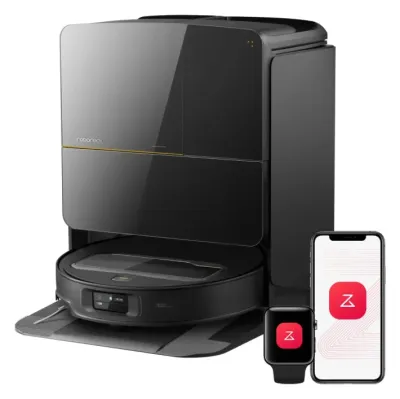
Loona pairs a camera with a 3D ToF sensor. aibo has a ToF sensor alongside its nose and mapping cameras. The Roborock Saros Z70 vacuum uses 3D ToF to guide its arm, and Vector uses a single-point ToF sensor to avoid walls.
Lidar
Lidar measures distance with laser pulses in many directions. A 2D lidar spins a single beam to scan one flat slice of the room, usually at about knee height or lower. It is the standard sensor for SLAM mapping on robot vacuums and ROS robots. A 3D lidar scans many angles at once to build a cloud of points around the robot. That lets walking robots see stairs, curbs and overhangs.
Strengths
- Accurate to about a centimeter, and the error barely grows with distance
- Works in any lighting, including total darkness
- Mapping software is mature and needs little computing
Weaknesses
- A 2D lidar sees only one slice, so it can miss table tops and objects on the floor
- No color, so it can't tell what an object is
- Glass, mirrors and black surfaces can confuse it
- Spinning parts wear out, and 3D units cost far more
The Roomba 105 and most current robot vacuums map with a small spinning lidar. The TurtleBot 4, Stretch and MentorPi M1 carry 2D lidars for ROS 2 navigation. The Go2 robot dog has a 3D lidar built into the front of its body, and the Unitree G1 humanoid has one too.
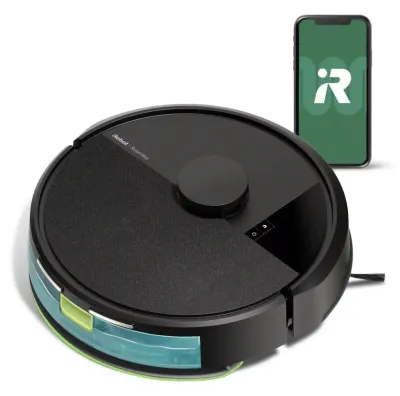 iRobot Roomba 105$280 – $470
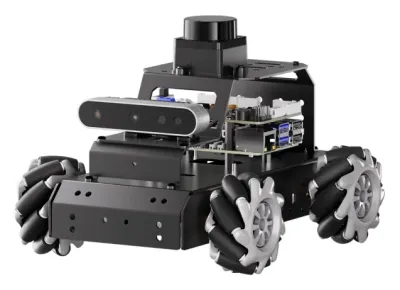 MentorPi M1$430 – $880
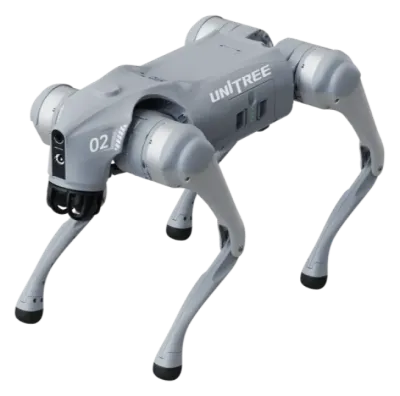 Go2 Air / Pro / X$1,600 / $2,800 / $4,500
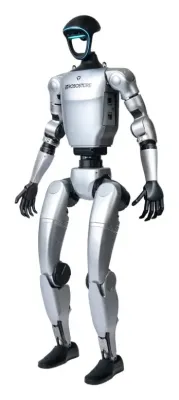 G1$13,500 – $73,900
Other distance sensors
Ultrasonic sensors
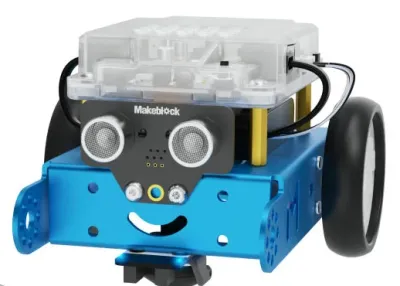
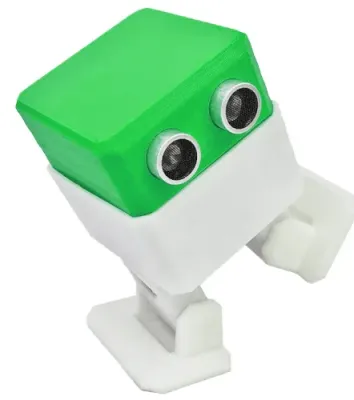
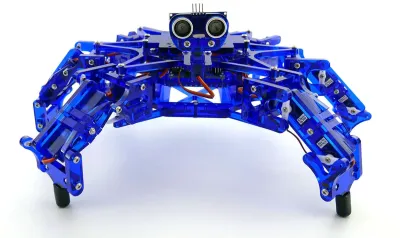
Ultrasonic sensors send a chirp of sound too high to hear and time the echo, just as bats do. The two round "eyes" on many kit robots are the speaker and microphone of an ultrasonic sensor. They are cheap and simple, and they detect glass that fools light-based sensors. Their beam is wide and fuzzy, though, so they report the nearest object somewhere ahead but not exactly where. Soft fabric absorbs the sound.
Infrared, cliff and bump sensors
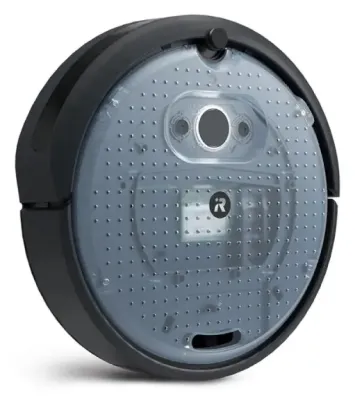
Simple infrared sensors shine a light and check how much reflects back. They handle line following and nearby obstacles. Pointed down, they work as cliff sensors that stop a robot driving off a stair or table edge. Bump switches are the last line of defense, detecting a collision after it happens. The iRobot Create 3 has no camera at all and gets around with these sensors alone.
Radar
Radar uses radio waves instead of light. It sees through fog, dust, rain and smoke, and it measures the speed of moving objects directly. Cars use it for adaptive cruise control. Its resolution is coarse, so robots use it mainly as a backup sensor outdoors or in harsh places. It is rare on consumer robots.
Thermal cameras
Thermal cameras see heat rather than light, so people and animals stand out even in total darkness or smoke. Security and inspection robots carry them to find people, hot motors and leaks. The Sarcos Guardian S snake robot offers one as an option.
Event cameras
Event cameras report only the pixels that change, the instant they change, rather than whole frames. That makes them very fast and good in difficult lighting. They are mostly used in research on fast drones and tracking.
Robot vision compared with animal eyes
Animals solved the depth problem long before robots, and robot sensors often mirror their tricks.
- Two eyes. People and many predators, such as cats and owls, have forward-facing eyes for stereo vision. Prey animals like rabbits have eyes on the sides of the head, trading depth for a wider view. Stereo works best at close range. At a distance, people judge depth mostly from motion, size, perspective and experience. Stereo robots face the same limit.
- Motion. Insects have eyes too close together for useful stereo. They judge distance from how fast things slide past as they fly. The tiny DelFly Explorer drone and visual SLAM use the same idea.
- Echoes. Bats and dolphins find objects by sound, the same principle as ultrasonic sensors and sonar. MiRo-E has a sonar sensor in its nose.
- Heat. Pit vipers sense the warmth of their prey, much like a thermal camera.
- Touch. Whiskers and antennae work like bump sensors, detecting things the eyes miss.
Lidar has no real equivalent in nature. It became popular because it gives reliable distances with little computing. As AI vision improves, more robots are moving toward cameras alone. Examples include the Walker S2 with learned stereo depth and the Optimus humanoid with car-style camera vision. A camera-only robot still struggles in darkness and on blank surfaces, so most commercial robots keep at least one active sensor.
Sensor choice by goal
- Avoiding walls on a hobby robot. An ultrasonic or single-point ToF sensor is enough and costs a few dollars.
- Following lines, faces or colored objects. A single camera, ideally with an AI camera module or a Raspberry Pi.
- Mapping a room and driving to points on the map. A 2D lidar with ROS 2, as on the TurtleBot robots.
- Picking up objects with an arm. A depth camera near the gripper or above the work area.
- A legged robot crossing stairs and rough ground. A 3D lidar, stereo cameras or both.
- A lifelike, camera-only robot. Stereo cameras plus a computer strong enough to run depth models, such as a Jetson.
The Sensors section of Parts of a Robot covers IMUs, encoders and other sensors that tell a robot about its own body.