Quick picks for robots
| Job | Best fit | Why |
|---|---|---|
| A first AI robot or ROS 2 kit | Orin Nano Super Developer Kit | $399 for 67 TOPS, 8 GB and two camera connectors. Most ROS 2 kits from Hiwonder, Yahboom and Waveshare offer it as the brain |
| Vision plus a small language model | Orin NX 16GB | Twice the memory of the Orin Nano and up to 157 TOPS in the same small module size, used in the Go2 EDU and ToddlerBot |
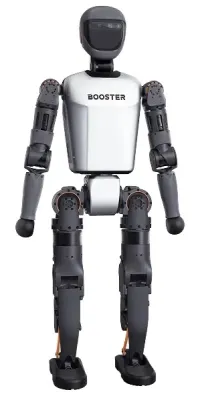
| Several cameras, lidar and larger models | AGX Orin 64GB | 275 TOPS and 64 GB, the standard brain in research humanoids such as the Booster T1 |
| Humanoids and robot foundation models | Jetson AGX Thor | 128 GB and a Blackwell GPU that runs NVIDIA's GR00T models on the robot, chosen by Boston Dynamics, Agility and 1X |
| Lowest cost with a camera and simple AI | A Raspberry Pi 5 with an AI HAT+ | Cheaper and lower power when the job is running a few fixed vision models rather than general GPU code |
| Working through an old kit or tutorial | Jetson Nano | Still sold in kits such as the JetHexa, but stuck on Ubuntu 18.04 with no current ROS 2 or AI software |
Introduction to Jetson
A Jetson is a small computer from NVIDIA that pairs ARM processor cores with an NVIDIA GPU on one module. It is the same kind of graphics chip that trains and runs AI models in data centers. It runs Linux (Ubuntu) and the same CUDA, PyTorch and TensorRT software as a desktop NVIDIA card. Models built on a PC usually run on the robot with few changes. That makes it the most common brain for robots that need to see, map and run neural networks on board, from hobby kits to humanoids.
Each Jetson comes as a module, a card holding the processor and memory, which plugs into a carrier board that provides the connectors. NVIDIA sells developer kits (a module on NVIDIA's own carrier, ready to use) and bare modules for products. Robot makers either use a developer kit as is, as most ROS kits do, or design their own carrier that fits the robot's body. The Orin Nano and Orin NX modules share one connector, and so do the AGX Orin and Thor. A carrier for one usually takes the others in its group.
AI speed is quoted in TOPS. NVIDIA rates Orin boards in sparse INT8 TOPS, which is about twice the dense figure. Thor is rated in FP4 TFLOPS instead, so the two families' numbers are not directly comparable. Memory often matters more than TOPS for robots, since the whole AI model has to fit in the board's memory, which the processor and GPU share.
The 2026 price rise
NVIDIA raised the price of every Jetson by up to 101% in July 2026. There was no announcement, and the new prices simply appeared in NVIDIA's developer FAQ, first reported on July 22. The press linked it to the rising cost of memory chips, the same shortage that pushed up Raspberry Pi and Arduino prices.
| Product | Before July 2026 | Now |
|---|---|---|
| Orin Nano Super Developer Kit | $249 | $399 |
| AGX Orin Developer Kit | $1,999 | $3,499 |
| AGX Thor Developer Kit | $3,499 | $5,499 |
| Orin NX 16GB module | $599 | $999 |
| Jetson Nano module | $99 | $199 |
The module prices in this table are NVIDIA's prices for companies ordering 1,000 or more. A single module from a store usually costs a little more, such as $1,099 for an Orin NX 16GB at Arrow. The board table below lists single-unit prices. Robot kits sold with a Jetson inside, such as the ROSpider and ROSMASTER X3, price each Jetson option separately. The same robot can cost over $1,000 more with the largest board.
Modern boards compared
All current boards run the same JetPack 7.2 software. Prices are for buying a single board in October 2026, mostly from Arrow, which sells modules one at a time. A bare module also needs a carrier board and a heatsink, which add $90 or more.
| Board | AI speed | Memory | GPU / CPU cores | Power | Price (one) |
|---|---|---|---|---|---|
| Orin Nano Super Dev Kit | 67 TOPS | 8 GB | 1,024 / 6 | 7–25 W | $399 kit |
| Orin Nano 4GB / 8GB | 34 / 67 TOPS | 4 / 8 GB | 512–1,024 / 6 | 7–25 W | $399 / $449 |
| Orin NX 8GB / 16GB | 117 / 157 TOPS | 8 / 16 GB | 1,024 / 6–8 | 10–40 W | $729 / $1,099 |
| AGX Orin 32GB | 241 TOPS | 32 GB | 1,792 / 8 | 15–60 W | $1,999 |
| AGX Orin 64GB | 275 TOPS | 64 GB | 2,048 / 12 | 15–60 W | $3,399 kit (module on backorder) |
| Thor T4000 | 1,200 TFLOPS | 64 GB | 1,536 / 12 | 40–70 W | $2,749 |
| Thor T5000 | 2,070 TFLOPS | 128 GB | 2,560 / 14 | 40–130 W | $5,299, $5,415 kit |
The Orin boards came out in 2022 and 2023, and Thor in 2025 and 2026. Orin boards use NVIDIA's Ampere GPU and Arm Cortex-A78AE CPU cores. Thor uses the newer Blackwell GPU and Arm Neoverse-V3AE cores. Orin speeds are sparse INT8 TOPS with Super mode on, and Thor speeds are FP4 TFLOPS. The AGX Orin 32GB was rated 200 TOPS before JetPack 7.2. The Orin NX and Orin Nano modules are the size of a laptop memory stick (69.6 × 45 mm). The AGX Orin and Thor modules are 100 × 87 mm.
Orin Nano and the Orin Nano Super Developer Kit
The Orin Nano Super Developer Kit is the entry point to current Jetsons and the board most ROS 2 robot kits offer. It is the same hardware as the original Orin Nano Developer Kit of 2023, which cost $499. In December 2024 NVIDIA renamed it and cut the price to $249. New software raised its clock and memory speeds, lifting it from 40 to 67 TOPS. Older kits gain the same speed with a software update. The July 2026 price rise brought it to $399.
- Connectors. Two MIPI CSI-2 camera connectors (22-pin), four USB-A 3.2 ports, Gigabit Ethernet, Wi-Fi and DisplayPort. It also has two M.2 slots for NVMe SSDs and a 40-pin header with UART, SPI, I2C and GPIO. It has no HDMI port, and the USB-C port carries data only.
- Size and power. 100 × 79 × 21 mm with its fan heatsink. It runs from a 19 V adapter, and its DC jack accepts about 9 to 20 V, so a 3-cell or 4-cell lithium battery can power it directly.
- Super mode. The board starts in a 25 W mode. The faster MAXN SUPER mode is picked from the power menu in Ubuntu.
- Limits. The Orin Nano has no hardware video encoder, so recording or streaming video uses one or two CPU cores. It also has no deep-learning accelerator (DLA) beside the GPU. The 4 GB module, offered in some kits, is half as fast and fits only small models.
- AI. NVIDIA measured about 19 tokens (word pieces) per second for the Llama 3.1 8B language model, and 43 for the smaller Llama 3.2 3B. Models of up to about 8 billion parameters fit in its 8 GB when shrunk to 4-bit.
NVIDIA announced the Jetson Orin Nano 2 on August 25, 2026. It has 78 TOPS, 8 GB and an 8-core CPU, with about twice the AI speed of the Orin Nano Super in the same form factor. The module and developer kit are due in the first half of 2027, with no price yet.
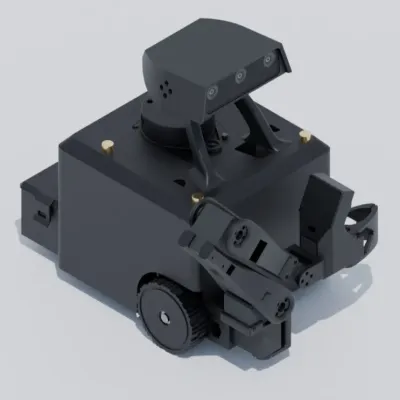 MARS$995
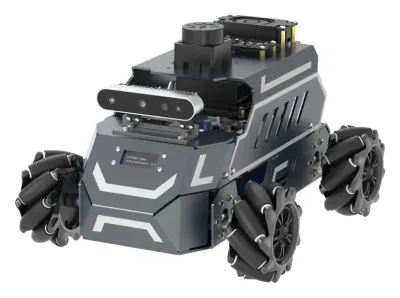 ROSMASTER M1$349.90 – $1,169.90
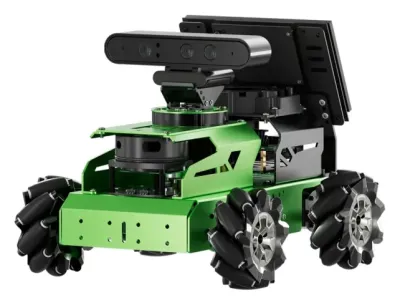 Hiwonder JetAuto$439.99 – $2,429.99
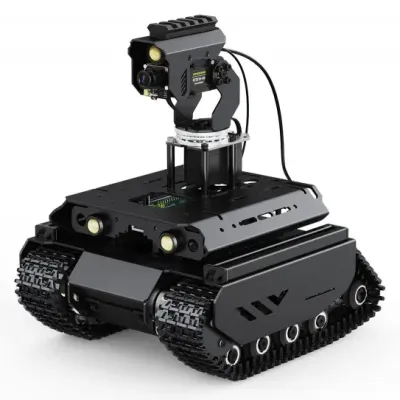 UGV Beast$265 – $752
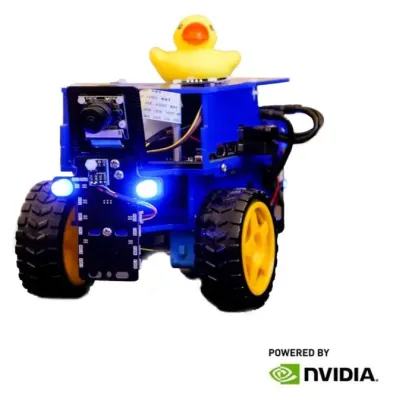 Duckiebot$429 – $1,799
Official pages Orin Nano Super Developer Kit ↗ · Developer kit user guide ↗ · Orin Nano 2 announcement ↗
Orin NX
The Orin NX is a faster module in the same size and with the same connector as the Orin Nano, so it drops into the same carrier boards. The 16 GB version reaches 157 TOPS with an 8-core CPU, a deep-learning accelerator and a hardware video encoder, and the 8 GB version reaches 117 TOPS. NVIDIA sells no Orin NX developer kit, so it reaches buyers on third-party carriers such as Seeed's reComputer boxes, or built into robots. Kits list it as "Orin NX Super", since Super mode raised its speed by up to 70% in January 2025.
It is the most common Jetson in mid-priced robots, including the Go2 EDU robot dog, the TITA wheel-legged robot, the ToddlerBot humanoid and the LOVOT 3.0 companion robot. The Orin Nano Super developer kit carrier accepts an Orin NX module, but NVIDIA advises against Super mode on it because of heat.
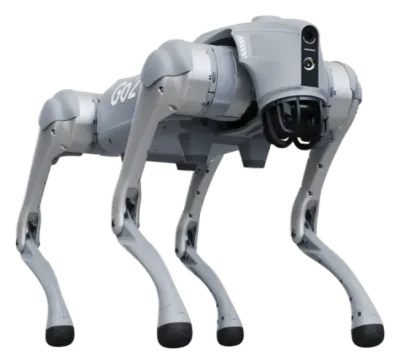 Go2 EDU / EDU Plus$11,190 – $15,600
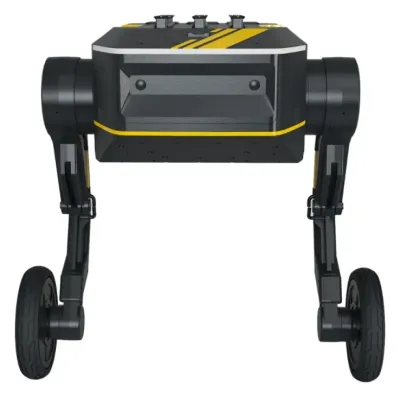 TITA$12,999
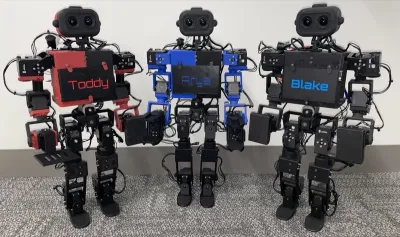 ToddlerBot 2.0~$6,000 DIY · $4,299 built
 LOVOT~$3,660 (¥577,500, LOVOT…
AGX Orin
The AGX Orin is the largest Orin, with up to 12 CPU cores, 64 GB of memory, 275 TOPS, two deep-learning accelerators and 64 GB of built-in storage. Its developer kit (110 × 110 × 72 mm) adds a 16-lane camera connector, a PCIe x16 slot, 10 Gb Ethernet and a 40-pin header that includes CAN bus. It is powered over USB-C or a 7 to 20 V DC jack. The kit launched at $1,999 in March 2022 and now costs $3,499.
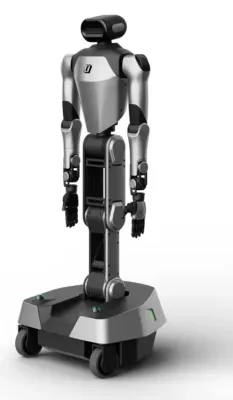
JetPack 7.2 (June 2026) added a Super mode to the 32 GB module, raising it from 200 to 241 TOPS. An Industrial version (248 TOPS) adds error-correcting memory and a wider temperature range, at $3,199. The AGX Orin runs research humanoids and arms such as the Booster T1, Galbot G1 and Galaxea R1. NVIDIA measured about 40 tokens per second for the 30-billion-parameter Nemotron 3 Nano model on the 64 GB module.

Official pages Jetson Orin family ↗ · AGX Orin developer kit guide ↗
Jetson Thor
Jetson Thor is NVIDIA's newest and largest robot computer, built on the Blackwell GPU generation and aimed at humanoids. The AGX Thor Developer Kit, with the T5000 module, 128 GB of memory and a 1 TB SSD, went on sale on August 25, 2025 at $3,499 and now costs $5,499. NVIDIA says it gives 7.5 times the AI compute of the AGX Orin with 3.5 times the energy efficiency. It runs NVIDIA's Isaac GR00T humanoid models on board, and NVIDIA measured 82 tokens per second for a 32-billion-parameter reasoning model on it.
- T4000. A cheaper Thor module with 64 GB and 12 CPU cores, announced at CES in January 2026 at $1,999 and now $2,999. It fits the same carriers as the T5000.
- T3000 and T2000. Two smaller Thor modules (32 GB and 16 GB) announced on July 15, 2026, due in early 2027 with no price yet.
- Connectors. The developer kit has 25 Gb and 5 Gb Ethernet, HDMI, DisplayPort, two CAN headers and NVMe and Wi-Fi slots, but no ribbon camera connector. Cameras connect over USB or through NVIDIA's Holoscan Sensor Bridge.
- Size and power. 243 × 112 × 57 mm and about 1.9 kg, drawing 40 to 130 W. It runs from a 140 W USB-C supply or 9 to 28 V DC.
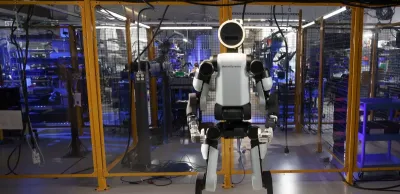
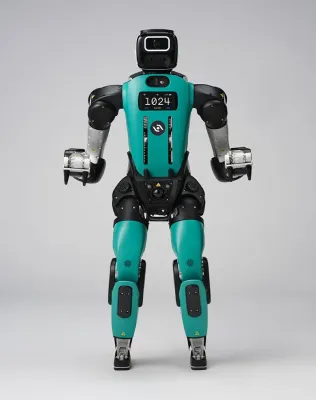
Thor brains are announced or reported for the electric Atlas, 1X NEO and Agility's Digit. NVIDIA's own Isaac GR00T reference humanoid also carries a T5000. It is built on a Unitree H2 Plus body and is due from Unitree in late 2026.

Official pages Jetson Thor ↗ · AGX Thor developer kit guide ↗ · NVIDIA Jetson prices ↗
Older and retired boards
Older Jetsons still turn up in robot kits and on the used market, but their software has stopped moving forward. NVIDIA ended JetPack 4 in November 2024, leaving the Nano, TX1 and TX2 on Ubuntu 18.04. JetPack 5, the last for the Xavier boards, reaches its end in late 2026. In May 2026 NVIDIA also brought forward the end of several modules, because their LPDDR4 memory chips are going out of production. Last orders were due July 15, 2026.
| Board | Released | Memory | AI speed | Launch price | Last JetPack | Status |
|---|---|---|---|---|---|---|
| Jetson TK1 | 2014 | 2 GB | Not rated | $192 kit | 3.1 | Retired 2018 |
| Jetson TX1 | 2015 | 4 GB | 1 TFLOPS | $599 kit | 4.6.6 | Retired 2021 |
| Jetson TX2 | 2017 | 4 or 8 GB | 1.3 TFLOPS | $599 kit | 4.6.6 | Last orders July 2026 |
| Jetson Nano 4GB | 2019 | 4 GB | 0.5 TFLOPS | $99 kit | 4.6.6 | Module sold to Jan 2027 |
| Jetson Nano 2GB | 2020 | 2 GB | 0.5 TFLOPS | $59 kit | 4.6.6 | Retired 2022 |
| Xavier NX | 2020 | 8 or 16 GB | 21 TOPS | $399 kit | 5.1.7 | Last orders July 2026 |
| AGX Xavier | 2018 | 16–64 GB | 32 TOPS | $2,499 kit | 5.1.7 | Last orders July 2026 |
The TK1 used a 192-core Kepler GPU, the TX1 and Nano Maxwell GPUs (256 and 128 cores), the TX2 a 256-core Pascal GPU, and the Xavier boards Volta GPUs (384 and 512 cores). TFLOPS figures are FP16. JetPack 4.6.6 runs Ubuntu 18.04 and JetPack 5.1.7 runs Ubuntu 20.04. The TX2 module itself retired in 2025, and only its TX2 NX and TX2i versions were still sold until July 2026. The Nano, Xavier NX and AGX Xavier developer kits retired between 2022 and 2024.
The Jetson Nano was the board that brought AI robots to hobbyists, through the $99 developer kit and NVIDIA's JetBot design. Many kits still offer it as the cheapest option, including the JetHexa, JetTank and Duckiebot DB21J. But its Ubuntu 18.04 has no official builds of current ROS 2 versions, Isaac ROS or GPU-accelerated Ollama. Most new tutorials no longer work on it. Older drones and robot dogs show the earlier boards at work. The Skydio R1 used a TX1 and the Skydio 2 a TX2, while the CyberDog 2 and Spot's CORE I/O payload use a Xavier NX.
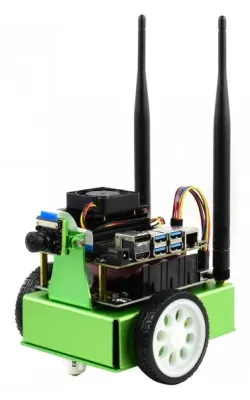 NVIDIA JetBot$399.99 – $499.99…
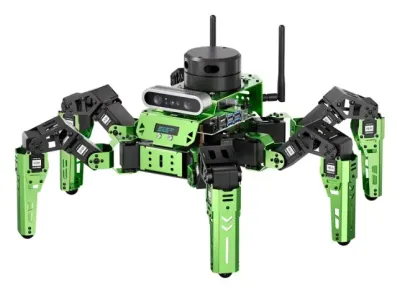 Hiwonder JetHexa$709.99 – $1,109.99
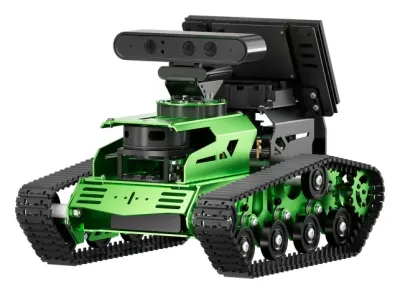 Hiwonder JetTank$659.99 – $1,239.99
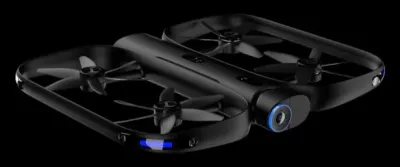 Skydio R1Was $2,499 (2018)
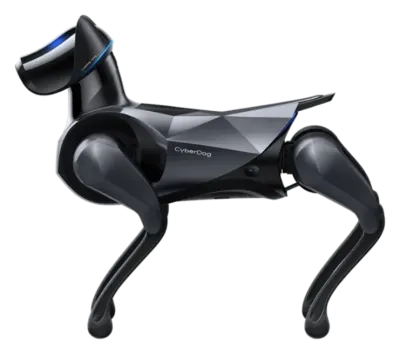 CyberDog 2~$1,800 – $3,000
Software
Every Jetson runs JetPack, NVIDIA's bundle of Ubuntu Linux (called Jetson Linux or L4T on Jetson), GPU drivers and AI libraries such as CUDA, TensorRT and DeepStream. Each board is tied to the JetPack versions NVIDIA supports for it, which decides the Ubuntu version and therefore which ROS 2 release fits.
| JetPack | Ubuntu | Boards | Status (Oct 2026) |
|---|---|---|---|
| 4.6.x | 18.04 | Nano, TX1, TX2, Xavier | Ended November 2024 |
| 5.1.x | 20.04 | Xavier, Orin | Ends Q3 2026 |
| 6.x | 22.04 | Orin | Maintenance only |
| 7.0 / 7.1 | 24.04 | Thor | Replaced by 7.2 |
| 7.2 / 7.2.1 | 24.04 | Thor and every Orin | Current (August 2026) |
- JetPack 7.2. Released in June 2026, it moved the Orin boards to Ubuntu 24.04, the same base as Thor, so one software setup now covers every current Jetson. It installs from a USB stick, and NVIDIA no longer offers a ready-made SD card image for the Orin Nano kit.
- Isaac ROS. NVIDIA's GPU-accelerated ROS 2 packages for tasks such as visual SLAM, depth estimation and object detection. Version 5.0 (September 2026) moved to the newest ROS 2 release, Lyrical Luth, and recent versions support Orin and Thor only.
- Isaac Sim. NVIDIA's robot simulator (see Isaac Sim and Isaac Lab) does not run on a Jetson. It needs a PC with an RTX graphics card, and the usual setup trains and tests on the PC and runs the result on the robot's Jetson.
- Language and vision models. NVIDIA's Jetson AI Lab site has guides and containers for running LLMs and vision-language models with Ollama, llama.cpp and vLLM. An 8 GB Orin Nano handles models of up to about 8 billion parameters, an AGX Orin about 30 billion, and Thor's 128 GB reaches 120-billion-parameter models.
- GR00T. NVIDIA's Isaac GR00T models are vision-language-action models for humanoids, and Thor is NVIDIA's chosen computer for running them on the robot.
Official pages JetPack ↗ · Isaac ROS ↗ · Jetson AI Lab ↗
Carrier boards and ready-made boxes
A bare Orin Nano or Orin NX module needs a carrier board, and robot builders often skip NVIDIA's developer kit for one that fits better. Robot-oriented carriers accept higher battery voltages, add CAN bus for motor controllers and connect more cameras. NVIDIA's Orin Nano kit takes only 9 to 20 V and has no CAN on its header. Boxed versions add a case, an SSD and a preinstalled JetPack, at a large markup over the $399 kit.
| Product | Module | Robot features | Price (Oct 2026) |
|---|---|---|---|
| Seeed reComputer J3010 / J3011 | Orin Nano 4GB / 8GB | 9–19 V, two camera connectors, CAN, metal case | $649 / $776.99 |
| Seeed reComputer J4011 / J4012 | Orin NX 8GB / 16GB | Same box. Seeed's page says the J4011 does not support Super mode | $932.99 / $1,450.99 |
| Seeed reComputer Robotics J4012 | Orin NX 16GB | 19–54 V battery input, CAN, optional four-camera GMSL2 board, 115 × 115 × 38 mm | $1,657.99 |
| Waveshare and Yahboom carrier boards | Orin Nano or Orin NX | Board only, in the developer kit's shape | $88–$129 |
| Auvidea JNX42 | Orin Nano or Orin NX | 12–48 V input, two 4-lane camera connectors, CAN | About $250 (€215) |
Retail prices for the developer kit itself vary widely. SparkFun sells the Orin Nano Super kit at NVIDIA's $399, while some robot stores list it for $600 or more. Production modules on third-party carriers need flashing with NVIDIA's Super settings to reach the full Super speed, and some carriers limit the power modes.
Cameras and sensors
- Ribbon cameras. The Orin Nano kit's two 22-pin connectors take cameras built on the Sony IMX219 (the Raspberry Pi Camera v2 sensor) and IMX477 (the Pi HQ Camera sensor). They are set up with NVIDIA's jetson-io tool. Raspberry Pi cameras use a 15-pin cable, so they need a 15-to-22-pin cable. Arducam sells IMX219 cameras made for Jetson for about $20.
- Depth cameras. Orbbec's SDK supports every current Jetson, and Orbbec's Gemini and Aurora cameras appear in many kits. Intel RealSense cameras work too, but users report driver trouble on JetPack 6 that sometimes needs a build from source.
- Many cameras. Robots with four or more cameras use GMSL2 camera links through boards such as Seeed's GMSL2 add-on, or Thor's Holoscan Sensor Bridge, which handles up to 20 cameras.
- Lidar. Most 2D lidars connect over USB or Ethernet and run in ROS 2 with no Jetson-specific setup.
Robots built on Jetson
ROS 2 education kits often sell the same robot with a choice of brain, from a Raspberry Pi 5 through the old Jetson Nano to an Orin Nano or Orin NX. Hiwonder's JetAuto, JetRover and ROSpider, and Yahboom's ROSMASTER X3, ROSMASTER R2 and ROSMASTER M1 all work this way. Waveshare's UGV Beast and UGV Rover Jetson kits use only the Orin Nano. Ready-built research robots include the AgileX LIMO Pro (Orin Nano) and the MARS Builders Edition (Orin Nano Super with a 1 TB SSD).
Hiwonder JetAuto$439.99 – $2,429.99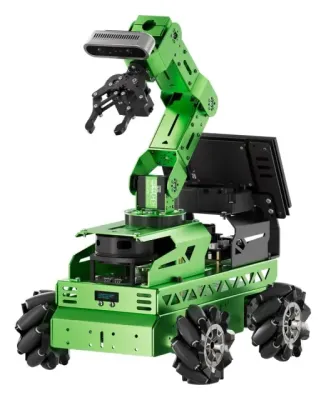 Hiwonder JetRover$780 – $2,600
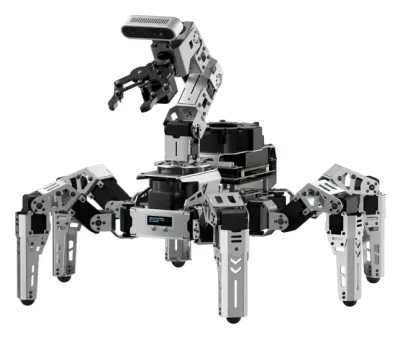 Hiwonder ROSpider$799.99 – $2,449.99
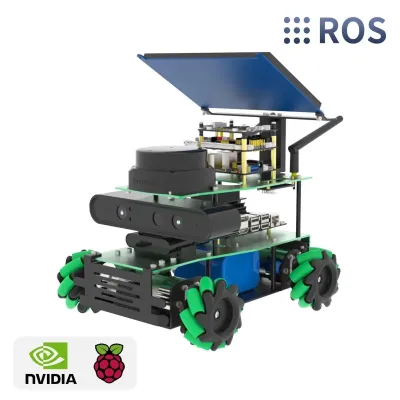 ROSMASTER X3$989 – $2,519
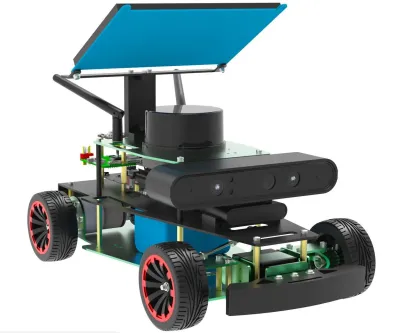 ROSMASTER R2$655 – $2,375
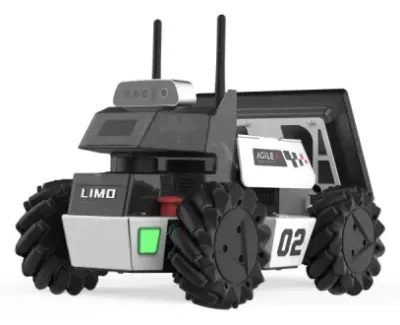 AgileX LIMO / LIMO Pro$3,400 (LIMO Pro)
Higher up, Unitree's EDU versions add a Jetson Orin to the Go2, G1 and R1, and the Spot robot dog takes a Jetson-based CORE I/O payload. Humanoid makers moved to Thor from 2025, as with the electric Atlas and NEO.
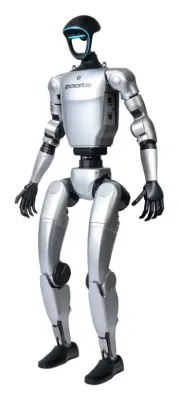

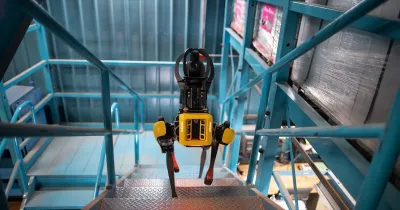
Several DIY blueprints are built around a Jetson. The JetBot was NVIDIA's own teaching robot for the Jetson Nano. The Donkey Car runs on a Jetson or a Raspberry Pi. The F1TENTH and MuSHR racing cars carry a Jetson with lidar, and the ToddlerBot humanoid uses an Orin NX 16GB.
Jetson or Raspberry Pi
A Raspberry Pi 5 with an AI HAT+ 2 costs about the same as an Orin Nano Super kit at $399. The 8 GB Pi is $175, and the HAT, with a 40 TOPS Hailo-10H chip, is $200. The Hailo chip runs only models converted for it, and the HAT takes the Pi's single PCIe lane, so an NVMe drive needs an extra board. The Jetson's GPU runs PyTorch, TensorRT and language-model tools directly. The Jetson also has two camera connectors, an M.2 slot for an SSD and far more robot software and tutorials. The Pi uses less power, starts cheaper with the 13 TOPS AI HAT+ at $70, and suits robots that run one or two fixed vision models. The Raspberry Pi Guide covers the Pi side in detail.
Tips for using a Jetson in a robot
- Pick the board by memory. The AI model, the camera images and ROS 2 all share the same memory, so an 8 GB board fills up quickly with a language model. The 4 GB Orin Nano in some kits suits single vision models only.
- Check the battery voltage. The Orin Nano kit needs 9 to 20 V, so a 3-cell (9 to 12.6 V) or 4-cell LiPo works, while a 2-cell pack is too low. Boards should not share an unfiltered supply with motors, whose start-up current can reset them.
- Budget for power. An Orin Nano draws 7 to 25 W, an AGX Orin up to 60 W and Thor up to 130 W, often more than the motors of a small robot. Turning on Super mode raises both speed and battery drain.
- Keep it cool. Jetsons slow down when hot. The fan needs free air, which is hard to give inside a closed robot shell.
- Boot from an SSD. An NVMe drive is far faster than a microSD card for loading models and recording data, and NVIDIA recommends it.
- Update an old Orin Nano kit first. Kits that shipped with JetPack 5 firmware will not start JetPack 6 or 7 until the firmware is updated, which NVIDIA's guide covers with a short bridge step.
- Let a microcontroller drive the motors. Linux does not keep exact timing. Most Jetson robots, including the Hiwonder, Yahboom and Waveshare kits, pass motor and servo control to an STM32, ESP32 or Arduino board over serial.
- Avoid the old Nano for new projects. It is cheap in kits, but current ROS 2, Isaac ROS and language-model tools no longer support it.