Overview
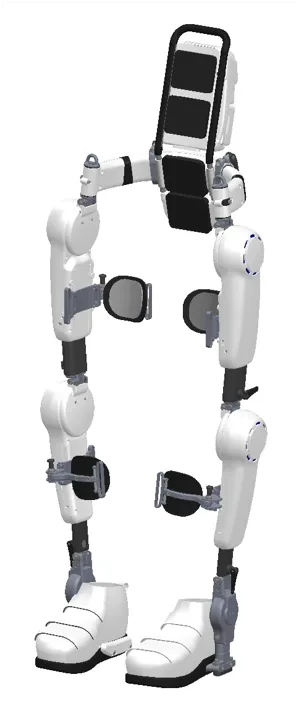
HAL (Hybrid Assistive Limb) is the medical exoskeleton that made Cyberdyne's name, a hip-and-knee gait trainer that moves when it detects the wearer's own bioelectric signals rather than a preset pattern. It is used in hospitals for gait treatment of spinal cord injury, stroke, cerebral palsy and a list of neuromuscular diseases such as SMA, ALS and Charcot-Marie-Tooth, and in Japan ten neuromuscular and spinal diseases are covered by public health insurance. The lineup is the adult HAL-ML05, the pediatric HAL-ML07 for 100–150 cm (FDA cleared in May 2024) and the new one-size Medical HAL Lower Limb Type C (HAL-ML08), which fits 150–190 cm in two hip widths and replaced four sizes when Japanese rentals began on 2026-05-20. The catches are weight (13–14 kg), about one hour per battery and the rule that Cyberdyne only rents to medical institutions, never to individuals. Regulatory coverage is broad, with CE marking since 2013, Japanese approval in 2015, FDA 510(k) clearance in December 2017 and the Type C already approved in Japan and Europe. The sibling HAL Lumbar Type is the one Cyberdyne product rented to people at home.
Specifications
| Category | Exoskeletons & exosuits · Medical & rehabilitation |
|---|---|
| Released | 2013 |
| Country | Japan |
| Availability | Available |
| Sales | In use at hospitals across Japan, Germany and Malaysia, where one PERKESO rehabilitation center opened in June 2026 with 65 HAL units (lower limb, single joint and lumbar types). Total installed base not published. (estimate) Cyberdyne news (Japanese) ↗ |
| Programmability | No SDK, app / visual programming only |
| Built-in autonomy | Reactive · Responds to its surroundings without a map, such as avoiding obstacles or following a person |
| LLM support | None · No voice assistant or LLM. |
| Best for | Ages 18+ (HAL-ML07 fits children of 100–150 cm) (maker rating) |
| Vision sensors | No vision sensors |
| Actuators | Brushless / direct-drive motors |
| Audio | No audio |
| Compute type | Proprietary / undisclosed |
| Control | App-adjusted |
| Weight | 13 kg (one-size Type C, HAL-ML08); 14 kg (HAL-ML05); 9.5 kg (pediatric HAL-ML07) |
| Assistance | Powers hip and knee flexion and extension on both legs in response to the wearer's own faint bioelectric signals picked up on the skin, so the legs move when the wearer tries to move them. A single-leg configuration is also offered. |
| Joints | Hips & knees |
| Battery & runtime | Custom battery pack, about 1 hour of operation per charge. |
| Operation | Non-invasive skin electrodes read the wearer's bioelectric signals and trigger the motors. Therapists set assist levels and modes on a controller, and the Type C model adds an AI gait control algorithm tuned for treadmill and faster walking. |
| Sensors | Skin-surface bioelectric sensors, joint angle sensors, foot floor-reaction-force sensors |
| Compute | Not published |
| SDK | None |
Ratings & reviews
Ratings and reviews load on the live site.
Similar robots
 EksoNR
 Ekso Indego Personal
 ReWalk 7 Personal Exoskeleton
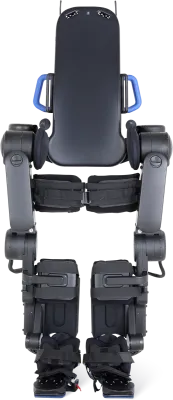 Atalante X
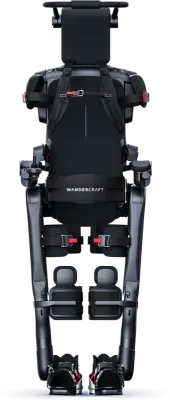 Eve
Eve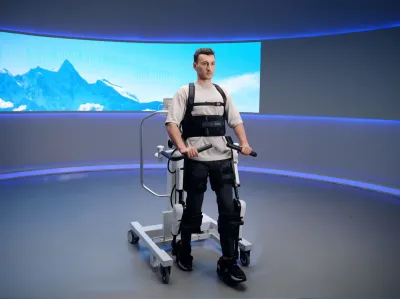 ExoMotus M4
Image credits
- Image 1: source (official product image)