Overview
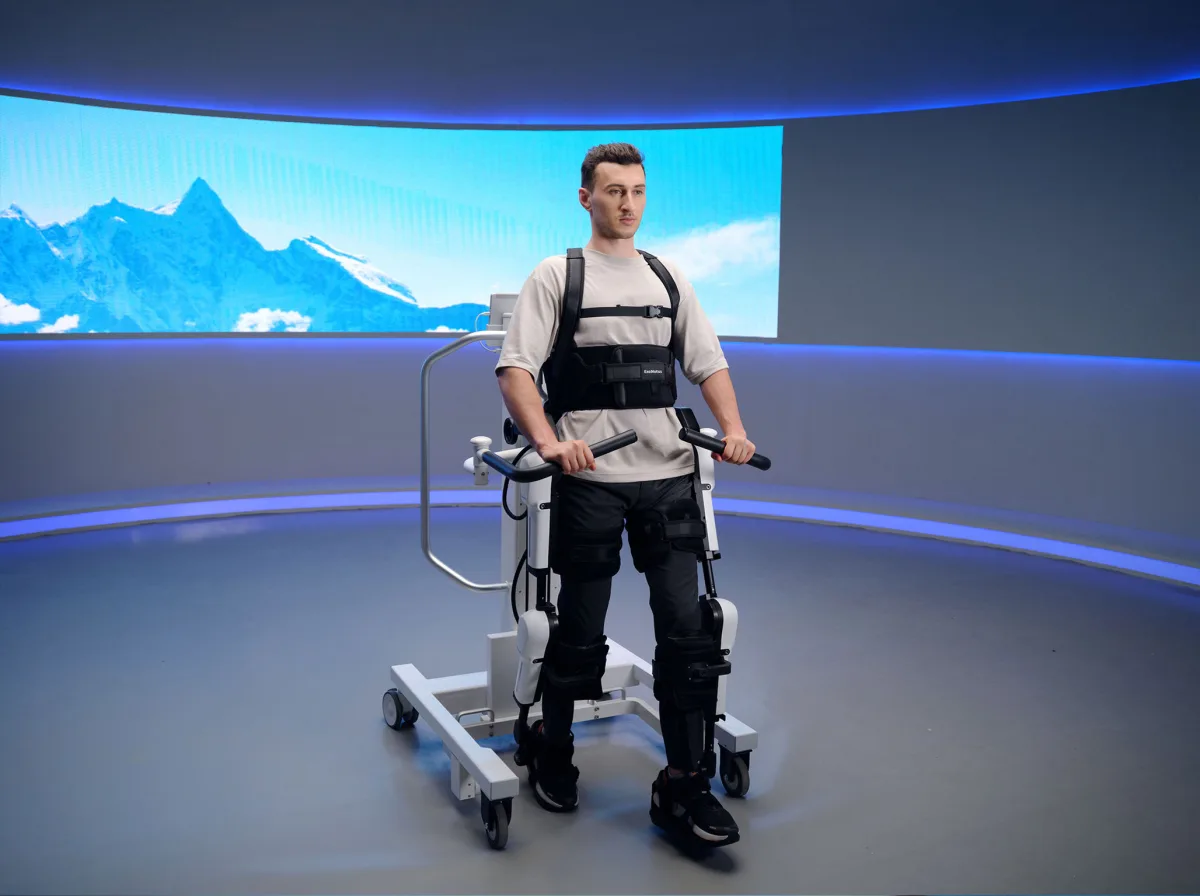
The ExoMotus M4 is Fourier's answer to the balance problem that makes most gait exoskeletons need crutches. It couples a hip-and-knee exoskeleton to a wheeled balance-support frame with a built-in seat, so a patient can be strapped in from sitting, stand up and walk inside the frame with a therapist alongside. It is the successor to the crutch-based Fourier X2 (ExoMotus X2), fits patients of 150–190 cm up to 100 kg and is aimed at clinic gait retraining after stroke, spinal cord injury and similar conditions, with use as a research platform too. Fourier, the Shanghai company better known today for the GR-1 humanoid, split its medical line into a separate Fourier Rehab arm in July 2024 and its own site now shows only the humanoids, so the M4 is documented mainly through distributors such as HealthLink in Hong Kong. Release year about 2023 (unconfirmed), NMPA and CE status (unconfirmed), and weight, battery and speed are not published.
Specifications
| Category | Exoskeletons & exosuits · Medical & rehabilitation |
|---|---|
| Released | 2023 |
| Country | China |
| Availability | Available |
| Programmability | No SDK, app / visual programming only |
| Built-in autonomy | Reactive · Responds to its surroundings without a map, such as avoiding obstacles or following a person |
| LLM support | None · No voice assistant or LLM. |
| Best for | Ages 18+ (estimated) |
| Vision sensors | No vision sensors |
| Actuators | Brushless / direct-drive motors |
| Audio | No audio |
| Compute type | Proprietary / undisclosed |
| Control | App-adjusted |
| Weight | Not published (the exoskeleton docks to a wheeled frame measuring about 84 × 112 × 150 cm) |
| Assistance | Powered hips and knees move the legs through a customizable gait while a wheeled body-weight-support frame with a seat and handlebars carries the patient's balance, so people with lower-limb impairment can practice standing, walking and sit-to-stand on level floors and gentle slopes. |
| Joints | Hips & knees |
| Battery & runtime | Not published. |
| Operation | A therapist sets gait parameters, step length and assist levels on the device's user interface, and the patient holds the frame's handlebars. |
| Sensors | Multi-dimensional force sensors and joint sensors |
| Compute | Not published |
| SDK | None |
Ratings & reviews
Ratings and reviews load on the live site.
Similar robots
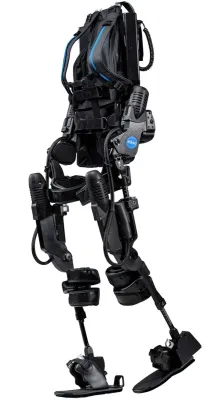 EksoNREkso Bionics, a Wandercraft company (USA)Quote only
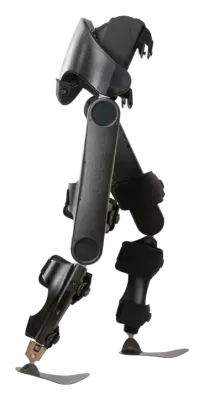 Ekso Indego PersonalEkso Bionics, a Wandercraft company (USA)Quote only
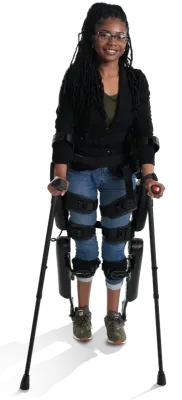 ReWalk 7 Personal ExoskeletonLifeward (USA / Israel)Quote only
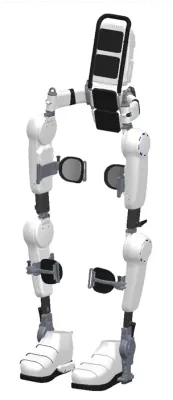 Medical HAL Lower Limb TypeCyberdyne (Japan)Quote only
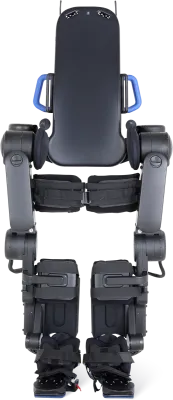 Atalante XWandercraft (France)Quote only
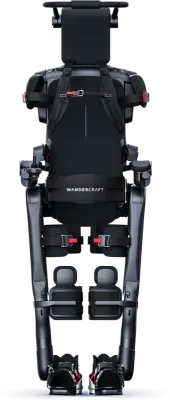 EveWandercraft (France)Quote only
Image credits
- Image 1: source (distributor listing image)