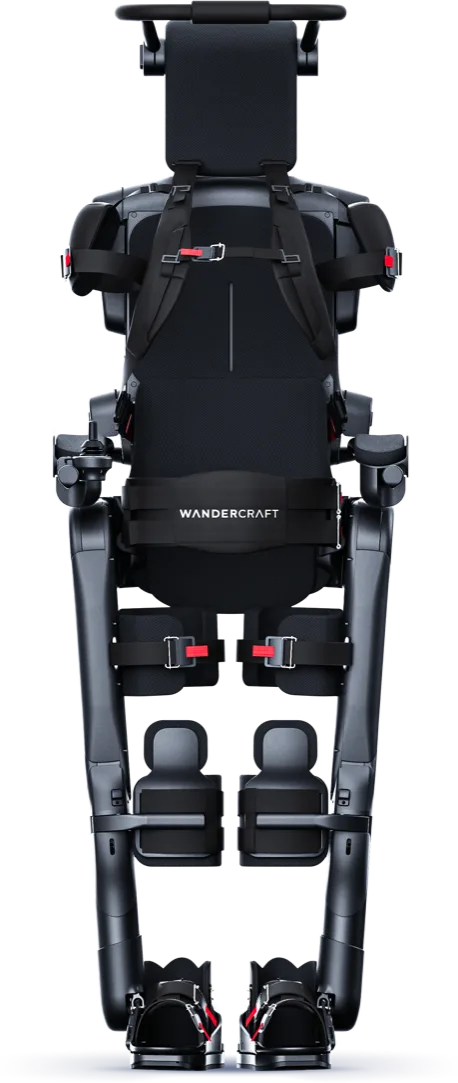
Overview
Eve is the first self-balancing exoskeleton cleared for personal use, a home version of Wandercraft's clinic trainer Atalante X built for adults with spinal cord injury at any level, including tetraplegia, who cannot use the crutch-based Indego Personal or ReWalk 7. The user steers from a controller in the armrest and the twelve-motor frame handles balance, so hands stay free for daily tasks. The limits are strict, since it is for level, firm, dry indoor floors and open-air spaces attached to a building, not stairs, slopes, wet ground, public streets or crowds, it walks at under 1 km/h, weighs 83 kg at its largest setting, and a trained companion must be within arm's reach whenever it is in use. FDA 510(k) clearance K260381 was decided on 2026-08-03 and announced on August 11, and US sales began on 2026-09-17 by prescription, through National Seating & Mobility, Walk US, Good Shepherd Rehabilitation and USVetServ for VA patients, with other regions to follow. Two weeks later, on 2026-10-01, Wandercraft bought Ekso Bionics, so Eve and the Indego are now stablemates. It fits users up to 1.94 m and 100 kg.
Specifications
| Category | Exoskeletons & exosuits · Medical & rehabilitation |
|---|---|
| Released | 2026 |
| Country | France |
| Availability | Available |
| Programmability | No SDK, app / visual programming only |
| Built-in autonomy | Reactive · Responds to its surroundings without a map, such as avoiding obstacles or following a person |
| LLM support | None · No voice assistant or LLM. |
| Best for | Ages 18+ (maker rating) |
| Vision sensors | No vision sensors |
| Actuators | Brushless / direct-drive motors |
| Audio | No audio |
| Compute type | Proprietary / undisclosed |
| Control | App-adjusted |
| Weight | 83.4 kg (maximum setting) |
| Assistance | Twelve motors power hips, knees and ankles and balance the whole system, so a person with spinal cord injury at any level can sit, stand, walk, turn and do weight-shift and squat exercises hands-free, without crutches or a walker. |
| Joints | Hips, knees & ankles |
| Battery & runtime | 50.4 V, 18 Ah lithium-ion pack, about 4 hours of typical use per charge (up to 47 minutes of continuous walking), 4 hours to charge. |
| Operation | The user drives it from a handheld controller built into the armrest, and a specially trained companion must stay within arm's reach at all times. Users and companions complete five two-hour certification sessions. |
| Speed | Up to 0.9 km/h |
| Sensors | Joint encoders and IMUs for balance, foot force sensing |
| Compute | Not published |
| SDK | None |
Ratings & reviews
Ratings and reviews load on the live site.
Similar robots
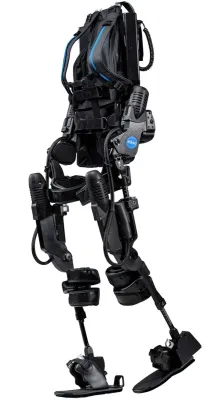 EksoNREkso Bionics, a Wandercraft company (USA)Quote only
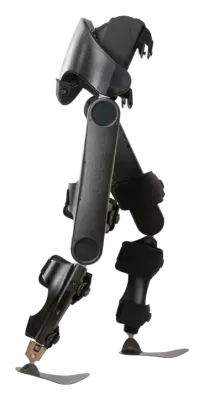 Ekso Indego PersonalEkso Bionics, a Wandercraft company (USA)Quote only
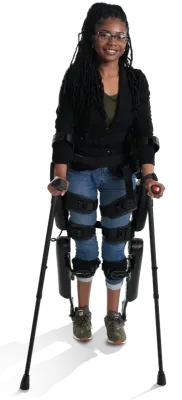 ReWalk 7 Personal ExoskeletonLifeward (USA / Israel)Quote only
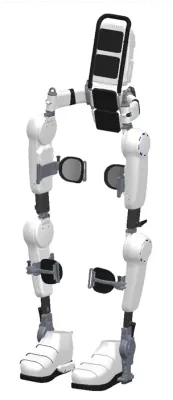 Medical HAL Lower Limb TypeCyberdyne (Japan)Quote only
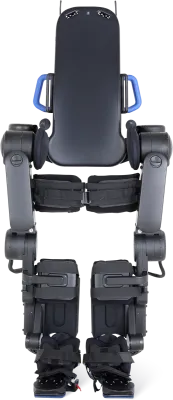 Atalante XWandercraft (France)Quote only
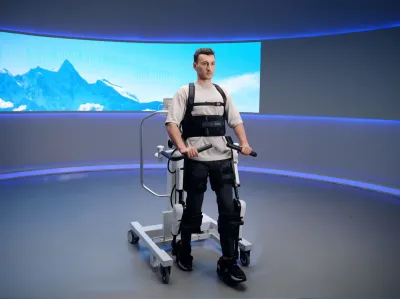 ExoMotus M4Fourier (China)Quote only
Image credits
- Image 1: source (official product image)