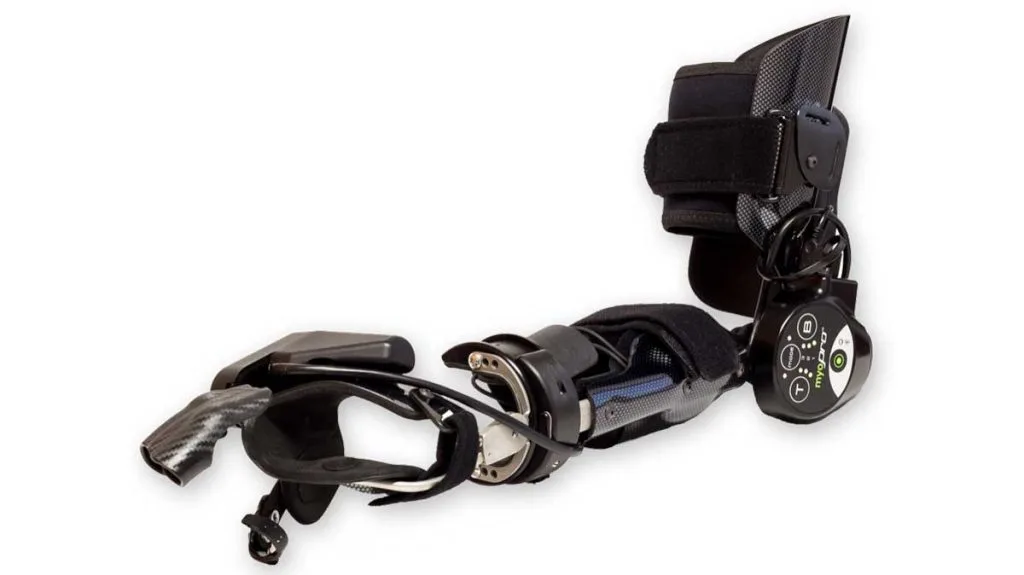
Overview
The MyoPro is a myoelectric arm orthosis rather than a leg exoskeleton, a custom-fitted brace with motors at the elbow and hand that move when EMG sensors detect the wearer trying to move, which Myomo likens to power steering for the arm. It is for people with chronic arm weakness or paralysis after stroke, brachial plexus injury, brain or spinal cord injury and neuromuscular disease, who must still have detectable muscle signals and no fixed contractures. The MyoPro 2x launched on 2025-04-30 with easier independent donning, a multi-articulating wrist and standardized components, replacing the MyoPro 2+ of 2022, and Myomo says more than 3,000 patients have received a MyoPro since the original in 2012. It is a prescription device, fabricated for each patient by certified orthotics providers, and the big change for US buyers is that Medicare has covered it as a brace since 2024, with the VA and a growing list of commercial insurers also paying. FDA status is Class II registered and listed, and a CE mark is reported (unconfirmed). It sits in the same arm-and-hand niche as the soft Carbonhand glove, which helps grip rather than elbow motion.
Specifications
| Category | Exoskeletons & exosuits · Medical & rehabilitation |
|---|---|
| Released | 2025 |
| Country | USA |
| Availability | Available |
| Sales | More than 3,000 patients have received a MyoPro since 2012. (estimate) Myomo launch release ↗ |
| Programmability | No SDK, app / visual programming only |
| Built-in autonomy | Reactive · Responds to its surroundings without a map, such as avoiding obstacles or following a person |
| LLM support | None · No voice assistant or LLM. |
| Best for | Ages 18+ (estimated) |
| Vision sensors | No vision sensors |
| Actuators | Brushless / direct-drive motors |
| Audio | No audio |
| Compute type | Proprietary / undisclosed |
| Control | App-adjusted |
| Weight | 1.4–1.8 kg (3–4 lb, depending on configuration) |
| Assistance | Surface EMG sensors pick up faint muscle signals in the weakened arm and motors at the elbow and hand amplify them, so the wearer can bend and straighten the elbow and open and close the hand to reach, grasp and release objects. It does not help at the shoulder. |
| Joints | Elbow & hand |
| Battery & runtime | Removable rechargeable battery rated for a full day of typical use, charged overnight. |
| Operation | Entirely from the wearer's own EMG signals, with a small control panel on the upper-arm cuff for power, modes and sensitivity. Clinicians tune gain and thresholds during fitting. |
| Sensors | Surface EMG electrodes on the biceps, triceps and forearm |
| Compute | Not published |
| SDK | None |
Ratings & reviews
Ratings and reviews load on the live site.
Similar robots
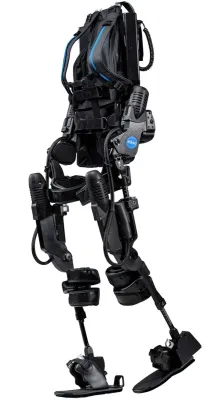 EksoNREkso Bionics, a Wandercraft company (USA)Quote only
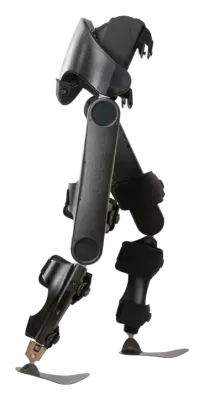 Ekso Indego PersonalEkso Bionics, a Wandercraft company (USA)Quote only
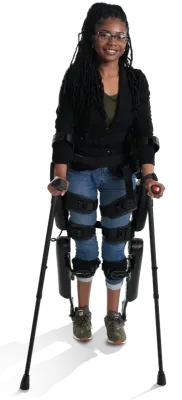 ReWalk 7 Personal ExoskeletonLifeward (USA / Israel)Quote only
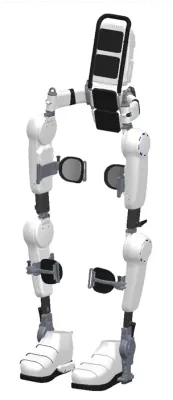 Medical HAL Lower Limb TypeCyberdyne (Japan)Quote only
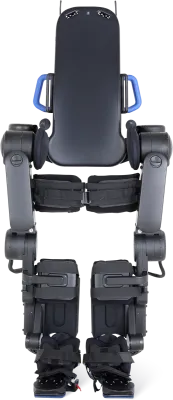 Atalante XWandercraft (France)Quote only
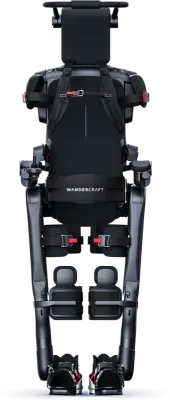 EveWandercraft (France)Quote only
Image credits
- Image 1: source (official product image, Motion G configuration)