
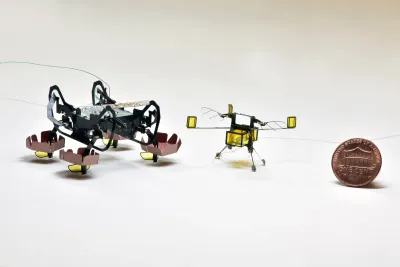
Not for saleAcademic research platform. Year 2009 is the first HAMR paper (a 90 mg hexapod at ISRR 2009); the quadrupedal HAMR design used since appeared around 2014.
Not for sale (research)Insect-scalePiezo legsWalks underwater
Not for saleShipping: Not for sale. Not available. A university research project.
Overview
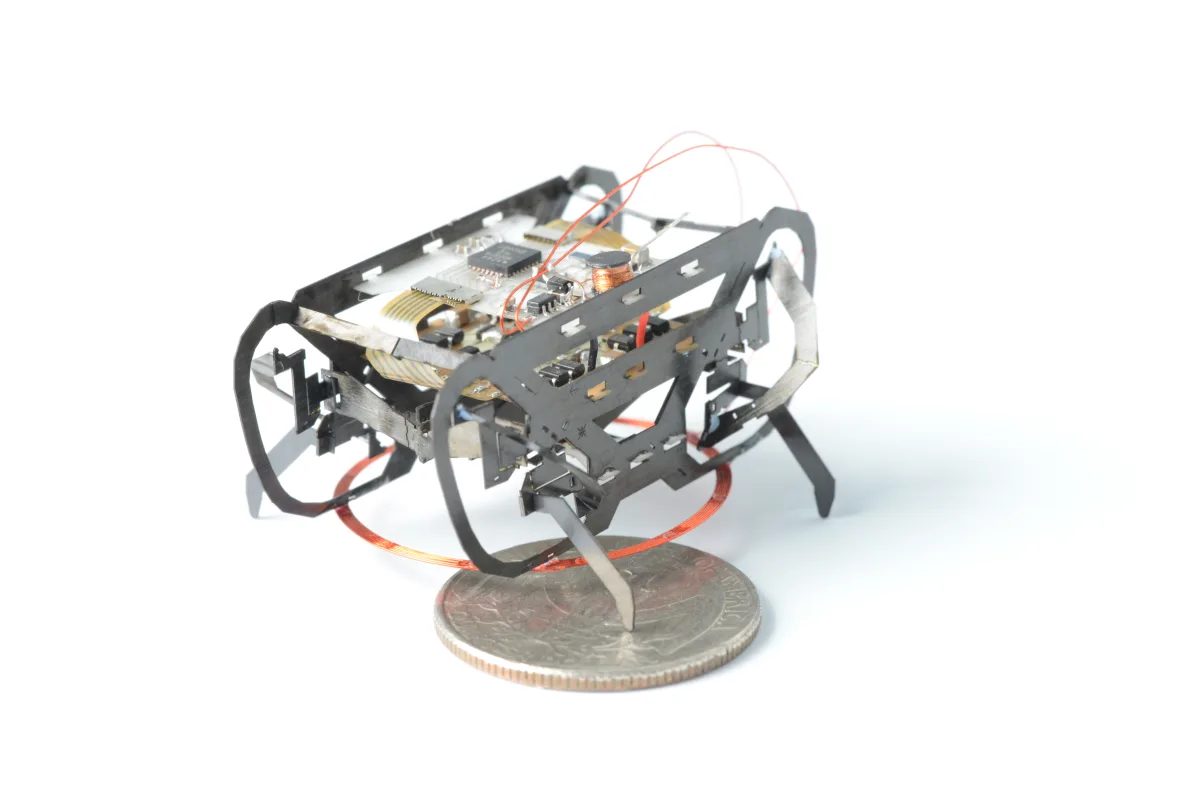
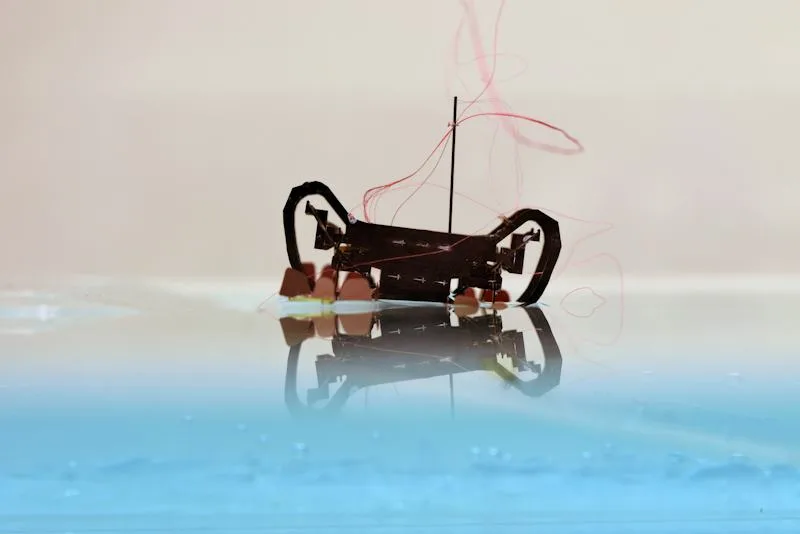
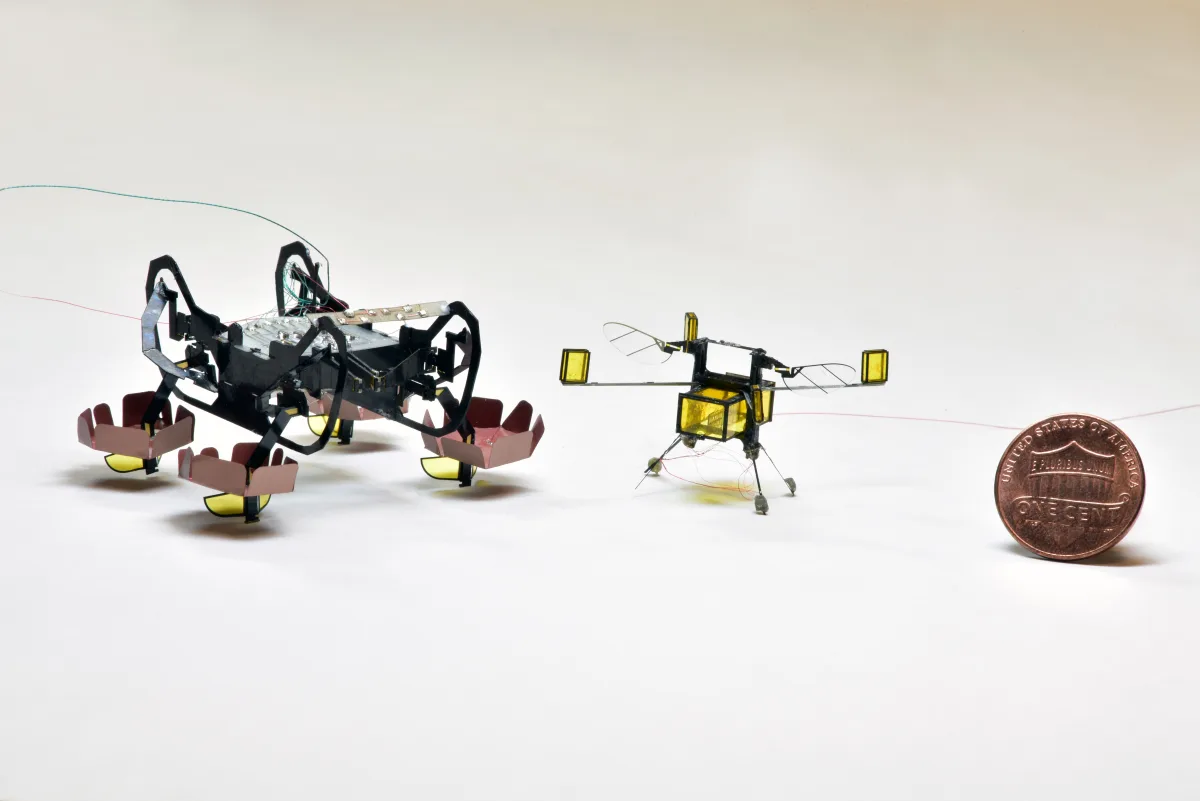
A 4.5 cm robotic cockroach from Robert Wood's lab at Harvard, built with the pop-up laminate (PC-MEMS) process also used for the RoboBee. Piezoelectric actuators drive each leg at up to 45 Hz, and it can run at over 10 body lengths per second while carrying more than twice its weight. Variants climb vertical and inverted surfaces with electroadhesive feet (HAMR-E, 2019), walk on the bottom of a tank and swim on the surface (2018), and shrink to penny size (HAMR-Jr, 2020). Most versions need a tether for power and control.
Specifications
| Category | Quadrupeds · Research & legacy platforms |
|---|---|
| Released | 2009 |
| Country | USA |
| Availability | Not for sale (research) |
| Programmability | No programmability |
| Built-in autonomy | None / scripted · Moves only when controlled, or plays preset motions |
| LLM support | None · No built-in LLM and no SDK to connect one. |
| Best for | Professionals & labs |
| Vision sensors | No vision sensors |
| Actuators | Other |
| Audio | No audio |
| Compute type | Laptop / PC as the brain |
| Compute | Mostly off-board through a tether. HAMR-F (2018) carried a battery, power electronics and radio for untethered runs |
| Weight | 1.43 g (HAMR-VI); 0.32 g (HAMR-Jr); 1.65 g (amphibious HAMR); 2.79 g (HAMR-F with battery) |
| Speed | Up to 50 cm/s, over 10 body lengths per second (HAMR-VI); about 14 body lengths per second (HAMR-Jr); 17.2 cm/s with onboard battery (HAMR-F) |
| DOF | 8 actuated (two piezoelectric bending actuators per leg), more than 60 passive flexure joints |
| Sensors | None on board in most versions; lab motion capture for control |
| SDK | None |
Ratings & reviews
Ratings and reviews load on the live site.
Similar robots
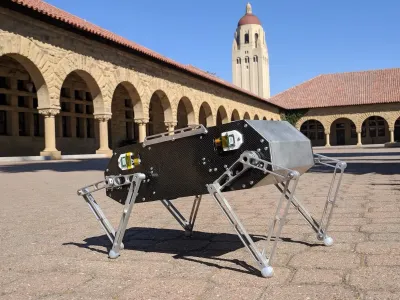 Stanford DoggoStanford Student Robotics (Extreme Mobility team)Not for sale
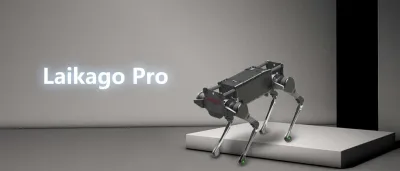 Laikago / Laikago ProUnitree Robotics (China)Was quote-only
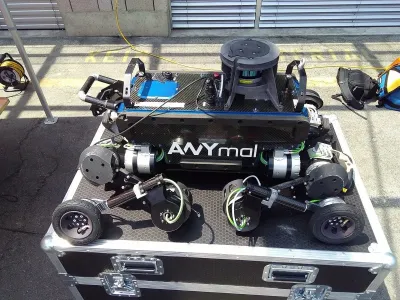 Swiss-Mile / RIVR wheeled-legged robotSwiss-Mile, now RIVR (Switzerland)Not for sale
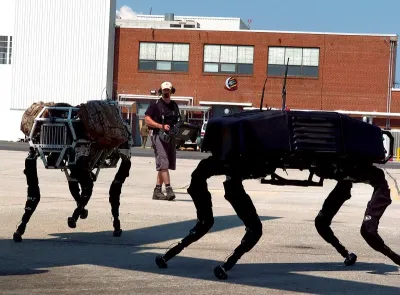 BigDogBoston Dynamics (US) for DARPANot for sale
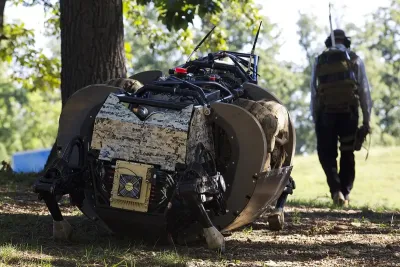 LS3 (Legged Squad Support System)Boston Dynamics (US) for DARPA/USMCNot for sale
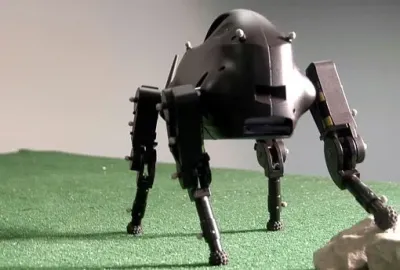 LittleDogBoston Dynamics (US) for DARPANot for sale