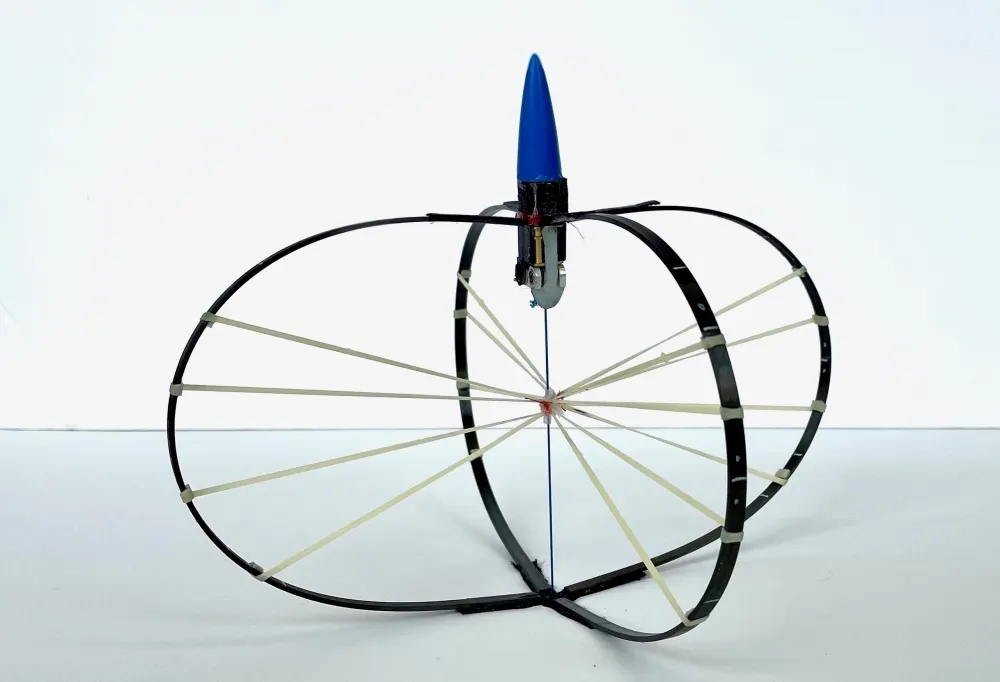
Not soldResearch device published in Nature (April 2022).
Not for sale (research)Not programmableResearchRecord jumpWork multiplication
Not soldShipping: N/A. Not available; a university research device.
Remote control: Not possible. A single-purpose research device with no control interface.
Overview
Holds the record for the highest jump of any known jumper, engineered or biological, at roughly 30 m. The paper argues engineered jumpers should invert biology's design, using a tiny motor that 'multiplies work' over many rotations into a very large spring, instead of a big muscle with a small tendon. The team calculated the same device could clear about 125 m high and 500 m forward on the Moon. It is a mechanism rather than a steerable robot, but it resets expectations for hopping explorers.
Specifications
| Category | Jumpers & hoppers · Jumping & hopping robots |
|---|---|
| Released | 2022 |
| Availability | Not for sale (research) |
| Programmability | No programmability |
| Best for | Professionals & labs |
| Vision sensors | No vision sensors |
| Actuators | DC / gear motors |
| Audio | No audio |
| Compute type | No on-board computer |
| Remote control | Not programmable |
| Size | About 30 cm tall, 30 g |
| Locomotion | Motor-driven spindle slowly winds a hybrid spring (carbon-fiber compression bows plus rubber bands in tension); a minimal latch releases it; legs fold in flight to cut drag |
| Compute | None described; a small motor and batteries wind the string for about 2 minutes, and the final turn trips a mechanical latch |
| Camera | None |
| Sensors | None |
| Runtime | Single jump per wind-up |
| Speed | 0 to 28 m/s (about 60 mph) in about 9 ms; jumps over 30 m (about 33 m, roughly 100 ft) |
| SDK | None |
Ratings & reviews
Ratings and reviews load on the live site.
Similar robots
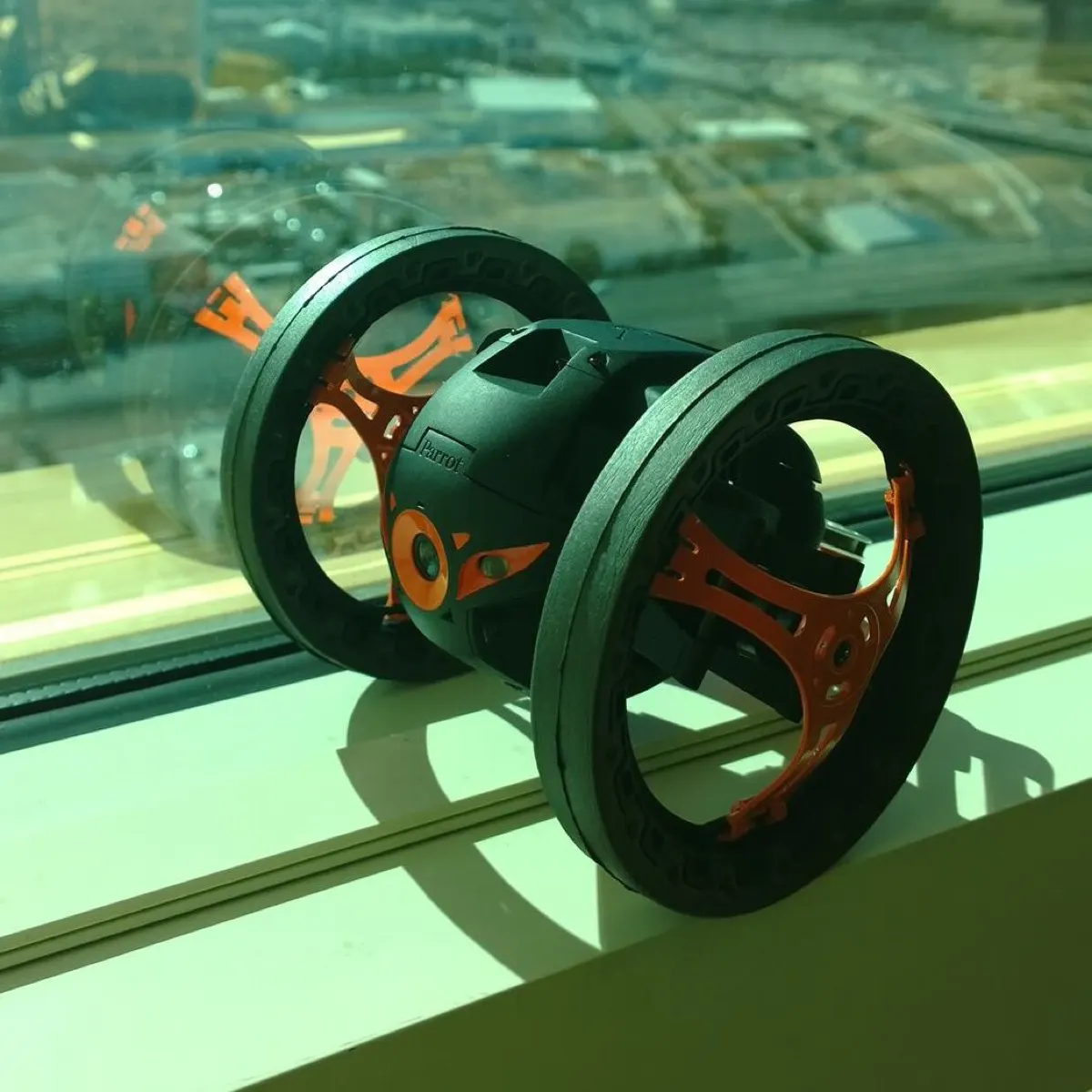 Parrot Jumping Sumo (and Jumping Race / Night)Parrot (France)Was $159.99 (2014)
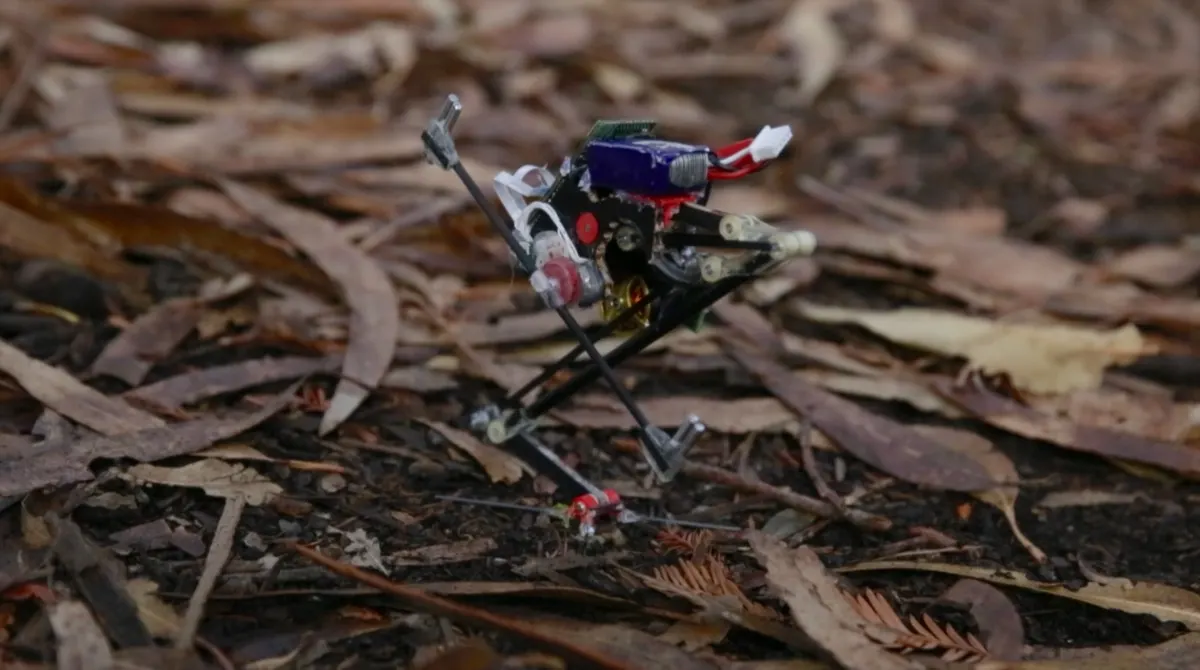 SALTO / SALTO-1PUC Berkeley Biomimetic Millisystems Lab (USA)Not sold
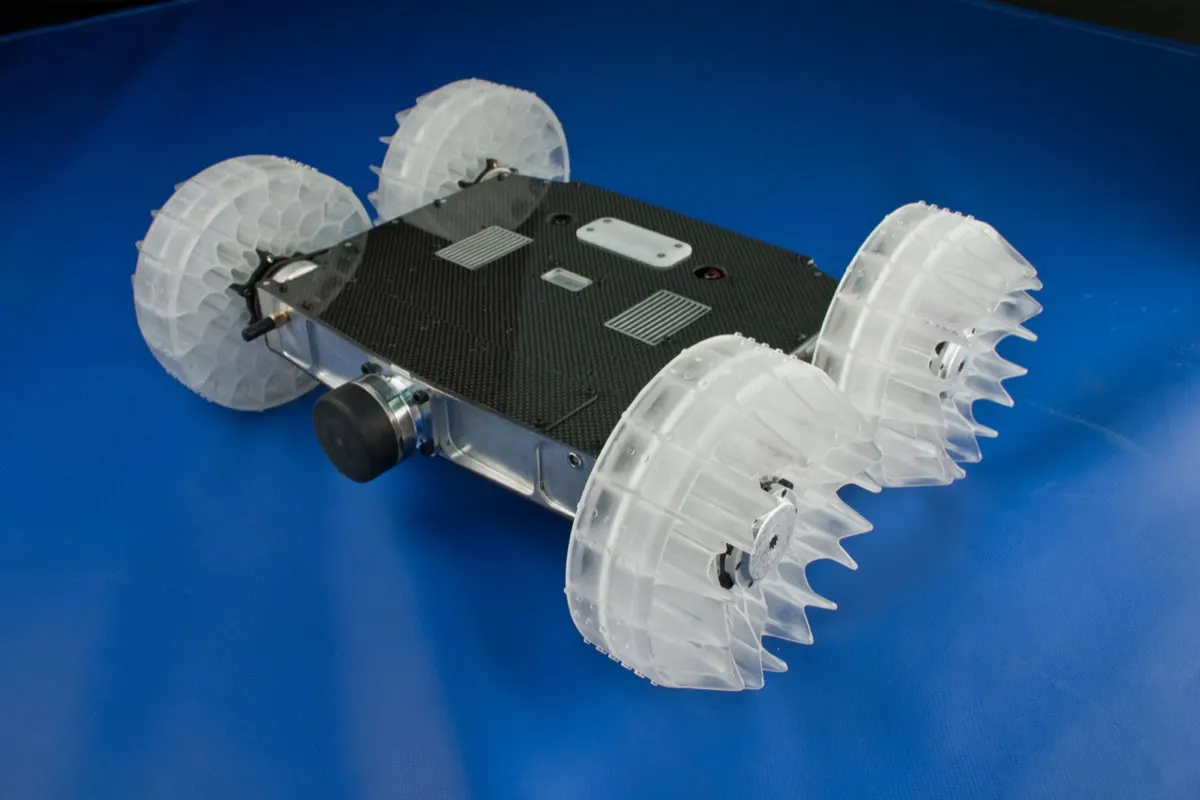 Sand FleaBoston Dynamics (USA)Not sold
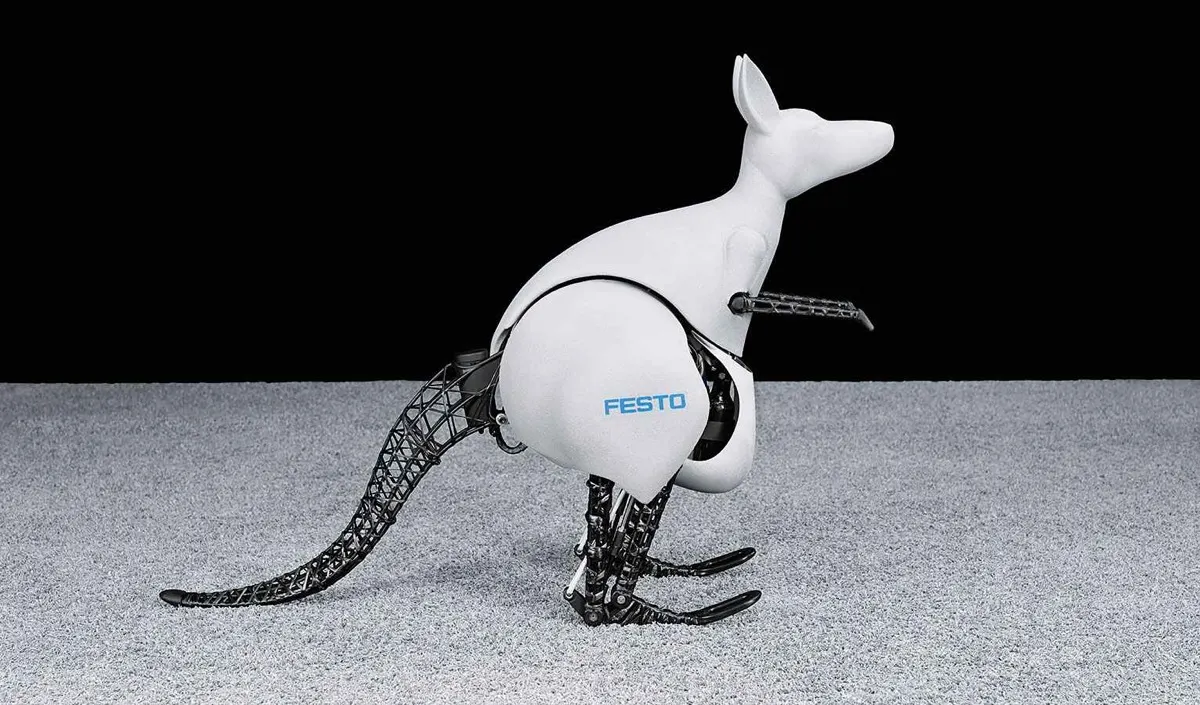 BionicKangarooFesto Bionic Learning Network (Germany)Not sold
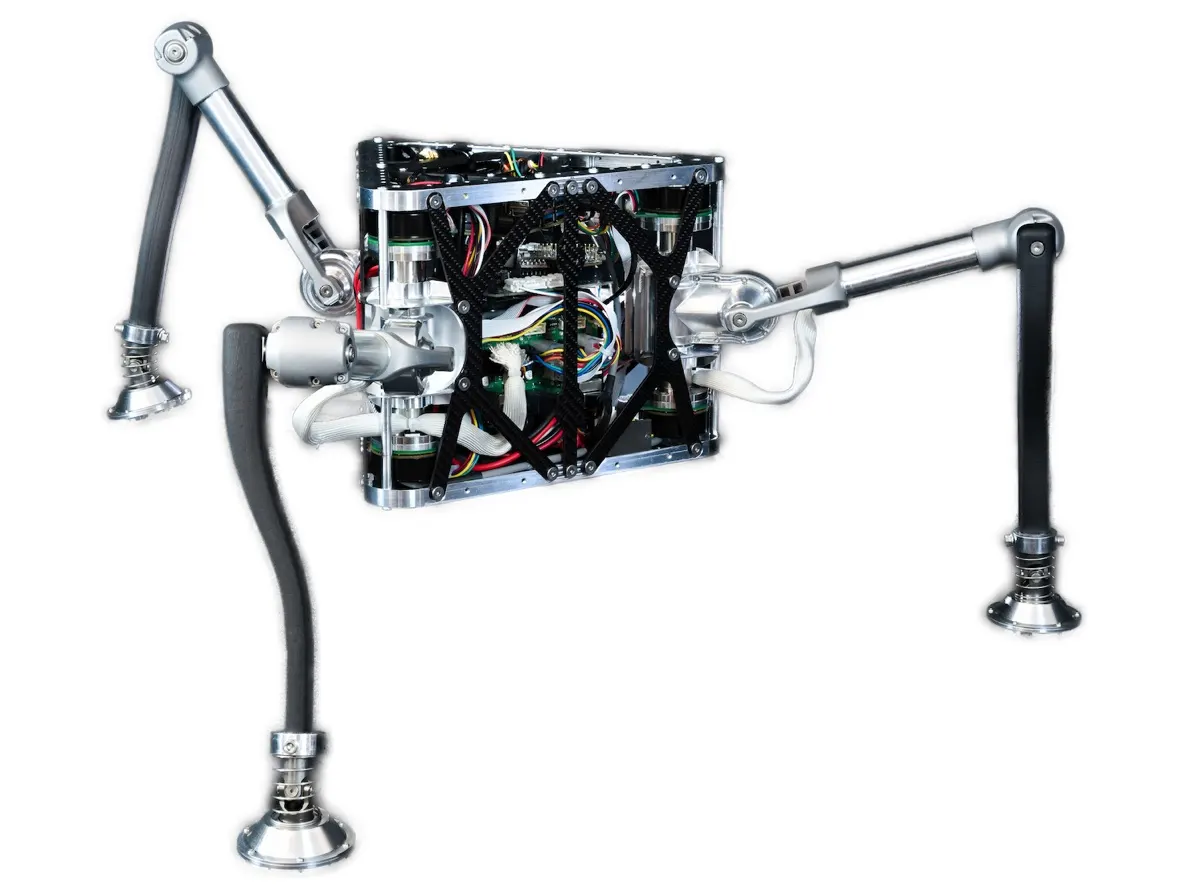 SpaceHopperETH Zurich Robotic Systems Lab student focus project (Switzerland)Not sold
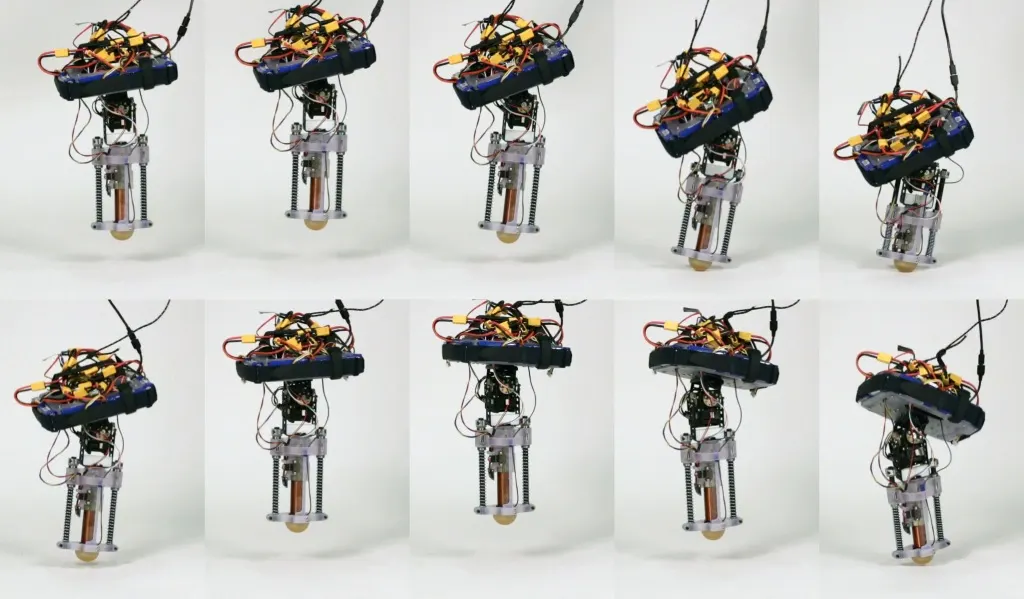 Disney Research One-Legged Hopper (LEAP)Disney Research (USA)Not sold
Image credits
- Image 1: source (UC Santa Barbara Engineering press image, jumping-device-EWHawkes.jpg, credit E.W. Hawkes)