Comparison table
| Unit | Price | Voltage | Current | Interface | Status |
|---|---|---|---|---|---|
| PCA9685 16-Channel 12-bit PWM/Servo Driver (Adafruit board and clones) | $14.95 | 3.3 or 5 V logic | servo power passes through | I2C | Available |
| Pololu Maestro USB Servo Controller (Micro 6-ch, Mini 12/18/24-ch) | $27.95 – $54.95 | 5–16 V or USB | servo power wired separately | native USB | Available |
| ROBOTIS U2D2 (+ U2D2 Power Hub Board) | $36.92 | USB (Power Hub feeds servos) | up to 10 A via Power Hub | USB-C to 3-pin TTL | Available |
| ROBOTIS OpenRB-150 | $28.64 | USB 5 V or 3.7–12.6 V | up to 3 A to servos | 4 DYNAMIXEL TTL ports | Available |
| ROBOTIS OpenCR 1.0 | $247.14 | 5–24 V input | 4.5 A 12 V supply | 3 DYNAMIXEL TTL ports | Available |
| Waveshare Bus Servo Adapter (A) / Serial Bus Servo Driver Board | $4.99 | matches the servos | passes servo supply through | USB-C | Available |
| ODrive S1 / ODrive Pro | $149 | 12–48 V | 40 A (S1), 70 A (Pro) continuous | USB | Available |
| mjbots moteus r4.11 / moteus-c1 / moteus-n1 | $69 – $149 | 10–44 V | 100 A peak phase | 5 Mbps CAN-FD | Available |
| VESC (VESC 6 MkVI and VESC Labs controllers, e.g. VESC Minim) | about $180 | 12–92 V (Minim) | 50 A continuous (Minim) | USB | Available |
| Toshiba TB6612FNG dual DC motor driver (Pololu carrier and clones) | $4.95 | 4.5–13.5 V motor | 1 A per channel | per channel two direction pins… | Available |
| L298N dual H-bridge module (STMicroelectronics L298 chip) | about $1.50 – $3.50 per module | 5–35 V motor | 2 A peak per channel | IN1–IN4 direction pins plus… | Available |
| Trinamic TMC2209 stepper driver (BIGTREETECH and other StepStick boards) | $8.99 – $29.99 | 5.5–28 V motor supply | 2 A RMS (BTT board) | STEP/DIR | Available |
| Allegro A4988 stepper driver (Pololu carrier and clones) | $8.95 | 8–35 V motor supply | 1–2 A per coil | STEP/DIR | Available |
| Pololu Dual G2 High-Power Motor Driver 18v18 Shield for Arduino | $74.95 | 6.5–30 V | 18 A per channel | Arduino shield pinout with PWM… | Available |
PCA9685 16-Channel 12-bit PWM/Servo Driver (Adafruit board and clones)
Adafruit store, October 2026 check, $14.95 and out of stock at the time. Amazon US clone listings on October 4, 2026 ran $5.99 for a single Dorhea board, $9.99 – $13.99 for two-packs (HiLetgo at $13.99) and $43.97 for a ten-pack.
The PCA9685 is an NXP LED-dimming chip that the maker world adopted as the default servo expander. Adafruit's breakout made it popular, and dozens of near-identical blue clone boards now sell for a few dollars. It generates all 16 PWM signals in hardware, so the host computer does not need precise timing, which matters on Linux boards like the Raspberry Pi.
- Weight
- 5.5 g bare, 9 g with headers and terminal block (Adafruit board)
- Size
- 62.5 × 25.4 × 3 mm (Adafruit board)
- Voltage
- logic 3.3 V or 5 V; servo power supplied separately through the terminal block (5 V compliant outputs)
- Current
- no servo power regulation on the board; servo current comes straight from the external supply
- Feedback
- none (open-loop PWM output, the servos report nothing back)
- Interface
- I2C, 7-bit address 0x40–0x7F set by solder jumpers, up to 62 boards on one bus (992 outputs)
- Other
- 16 PWM channels, 12-bit resolution (about 4 µs steps at 60 Hz), frequency adjustable up to about 1.6 kHz, push-pull or open-drain outputs, 220 Ω series resistors, reverse-polarity protection on the power terminal (Adafruit board)
Adding 16 hobby-servo channels to a Raspberry Pi, Jetson or Arduino over two I2C wires, which is why it sits inside many hexapod, robot-dog and Pi car kits.
Smart-servo setups that need position, load or temperature feedback, since it only sends PWM pulses. The 12-bit resolution spread across a full 20 ms frame leaves only a few hundred usable steps for a servo's 1–2 ms pulse range.
Robots in the guide that use it
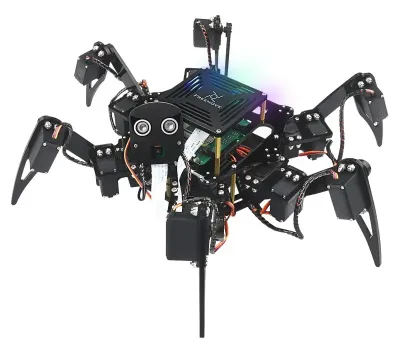 Freenove Big Hexapod Robot Kit$169.99
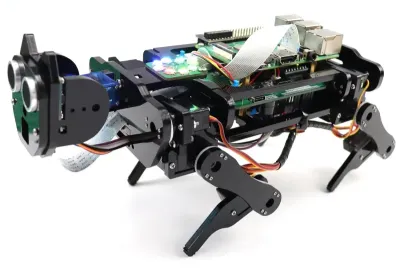 Freenove Robot Dog Kit$129.99
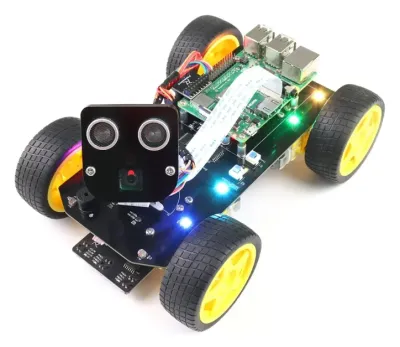 Freenove 4WD Smart Car Kit for Raspberry Pi$69.99 (no Pi)
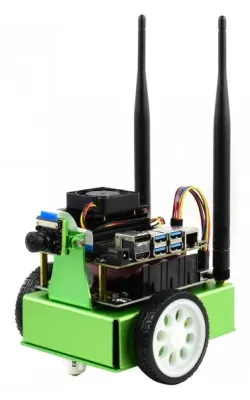 NVIDIA JetBot$399.99 – $499.99…
The original NVIDIA JetBot bill of materials uses Adafruit's DC Motor + Stepper FeatherWing, which pairs a PCA9685 with two TB6612 H-bridges. Many SunFounder, Adeept and Yahboom Raspberry Pi kits use a PCA9685 on their HATs (unconfirmed per kit).
Sources Adafruit product page (specs) ↗ · Adafruit DC Motor + Stepper FeatherWing (PCA9685 + TB6612) ↗ · NVIDIA JetBot bill of materials ↗ · Amazon US search (clone prices) ↗
Buying Adafruit ships from New York City (unconfirmed transit time). Clone boards are on Amazon US with Prime delivery, and on AliExpress (1–3 weeks, unconfirmed).
Pololu Maestro USB Servo Controller (Micro 6-ch, Mini 12/18/24-ch)
Pololu store, October 2026 check, assembled boards at single-unit price. Micro Maestro 6-channel $27.95, Mini Maestro 12-channel $37.95, 18-channel $46.95, 24-channel $54.95.
Pololu's Maestro line is the classic USB servo controller for hobby robots and animatronics. Unlike a bare PWM chip it handles per-channel speed and acceleration limits, and the Mini versions can store and replay scripts without a host. The free Maestro Control Center software runs on Windows and Linux.
- Weight
- 3.0 g without headers, 4.8 g with headers (Micro Maestro); 4.2 g without headers (Mini Maestro 12)
- Size
- 21.6 × 30.5 mm (Micro Maestro); 27.9 × 36.1 mm (Mini Maestro 12)
- Voltage
- 5–16 V board supply or USB power (servo power wired separately)
- Feedback
- none from the servos; spare channels can be set as analog or digital inputs
- Interface
- native USB (virtual serial), TTL serial (5 V), plus an internal scripting language; daisy-chainable
- Other
- 6, 12, 18 or 24 channels; 0.25 µs pulse resolution (about 0.025° on a typical servo); per-channel speed and acceleration limits; pulse rate 33–100 Hz (Micro) or 1–333 Hz (Mini); script memory 1 KB (Micro) or 8 KB on the Mini 12 (about 3,000 servo positions); channels also usable as digital outputs or PWM
Animatronics and small walkers that need smooth, rate-limited servo moves and stored sequences, since speed and acceleration are handled on the board and a script can run standalone.
Feedback control or bus servos, because it only outputs standard PWM pulses. It costs several times more than a PCA9685 clone with the same channel count.
Widely used in animatronics, Halloween props and hobby walkers, where its built-in script memory lets it run sequences without a separate computer.
Sources Pololu Micro Maestro 6-channel ↗ · Pololu Mini Maestro 12-channel ↗
Buying Pololu ships from Las Vegas, Nevada, with free standard US shipping on orders over $75 (transit time unconfirmed); also stocked by US distributors (unconfirmed).
ROBOTIS U2D2 (+ U2D2 Power Hub Board)
ROBOTIS US store, October 2026 check. Both items were listed as sold out at the time. The Power Hub set does not include the U2D2.
The U2D2 is ROBOTIS's official USB adapter for DYNAMIXEL smart servos, replacing the older USB2Dynamixel. Paired with the Power Hub board, it is the usual way research arms like the Interbotix X-series talk to a host computer. Because it is just a fast half-duplex bridge, all the real control runs on the PC.
- Weight
- 9 g (U2D2)
- Size
- 48 × 18 × 14.9 mm (U2D2); 48 × 57 mm (Power Hub)
- Voltage
- U2D2 passes no motor power (USB-powered logic only); Power Hub accepts 3.5–24 V
- Current
- Power Hub up to 10 A to the DYNAMIXEL bus
- Feedback
- passes through all DYNAMIXEL feedback (position, velocity, current, temperature, voltage) to the PC
- Interface
- USB-C to 3-pin TTL, 4-pin RS-485 and 4-pin UART; 9,600 bps to 6 Mbps; DYNAMIXEL Protocol 1.0 and 2.0
- Other
- TTL and RS-485 usable at the same time; internal DIP switches for a 120 Ω RS-485 terminator and 3.3 V UART power; connector moved from Micro-B to USB-C in August 2025. Power Hub takes power through a DC barrel jack, a Molex connector or screw terminals (only one at a time).
Connecting a PC or SBC directly to a chain of DYNAMIXEL servos at up to 6 Mbps for ROS, MoveIt or LeRobot-style control loops.
Powering servos on its own, since the U2D2 supplies no motor power and needs the Power Hub or another supply. It is also pricier than generic USB-to-TTL adapters that can do the same job at lower speeds.
Robots in the guide that use it
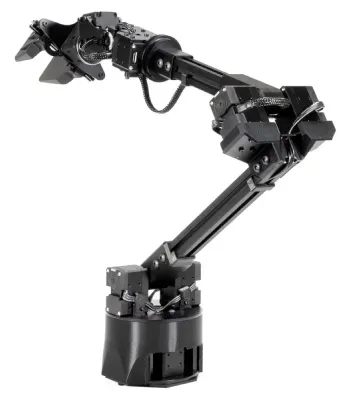 Interbotix WidowX 250Was $2,895.95
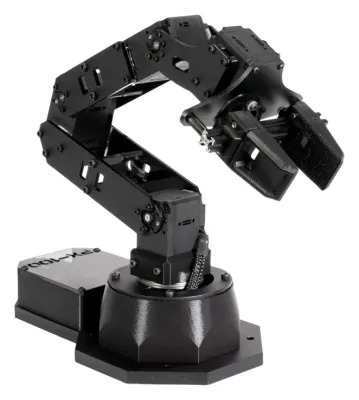 Interbotix PincherX 100Was $769.95
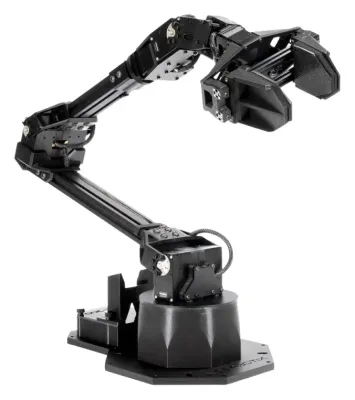 Interbotix ViperX 300 / 300 SWas $6,742.95
The Interbotix arms used in the original ALOHA and ALOHA 2 kits each connect through a U2D2 (unconfirmed per kit). Also the standard PC link for DYNAMIXEL arms and humanoids in many research labs.
Sources U2D2 e-Manual ↗ · U2D2 Power Hub e-Manual ↗ · ROBOTIS US store, U2D2 ↗ · ROBOTIS US store, Power Hub set ↗
Buying ROBOTIS America ships from Corona, California to North, Central and South America only (transit time unconfirmed). Trossen Robotics and Amazon also list it (unconfirmed).
ROBOTIS OpenRB-150
ROBOTIS US store, October 2026 check, listed as sold out at the time.
The OpenRB-150 is ROBOTIS's low-cost Arduino-compatible DYNAMIXEL controller, built on the same SAMD21 chip as Arduino's MKR boards. It sits between the bare U2D2 adapter and the larger OpenCR 1.0, and it can also act as a USB bridge for configuring servos.
- Size
- 25 × 66 mm
- Voltage
- USB 5 V, or 3.7–12.6 V on VIN / 1–3 cell Li-Po
- Current
- up to 3,000 mA to the DYNAMIXEL ports; USB input fused at 500 mA
- Feedback
- reads DYNAMIXEL feedback over the TTL bus
- Interface
- 4 DYNAMIXEL TTL ports (up to 1 Mbps); USB; Arduino MKR-style headers
- Other
- Arduino-compatible SAMD21 Cortex-M0+ at 48 MHz, 256 KB flash, 32 KB SRAM; 24 digital I/O, 12 PWM, 7 analog inputs; supports X, MX, AX and P series DYNAMIXEL; works with Arduino IDE (Dynamixel2Arduino) and DYNAMIXEL Wizard 2.0
Small DYNAMIXEL projects that want an Arduino-style microcontroller to run servos without a PC, or a cheap USB pass-through to DYNAMIXEL Wizard.
Heavy computation or high-speed multi-servo loops, since it is a 48 MHz Cortex-M0+ with TTL ports capped at 1 Mbps. RS-485 servos need a different board.
Sources OpenRB-150 e-Manual ↗ · ROBOTIS US store ↗
Buying ROBOTIS America ships from Corona, California to North, Central and South America only (transit time unconfirmed).
ROBOTIS OpenCR 1.0
ROBOTIS US store, October 2026 check, listed as sold out at the time.
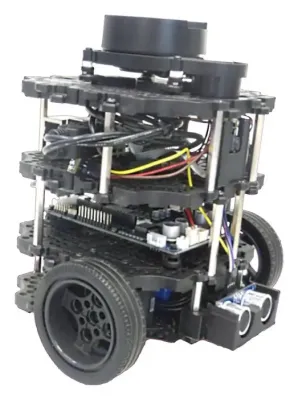
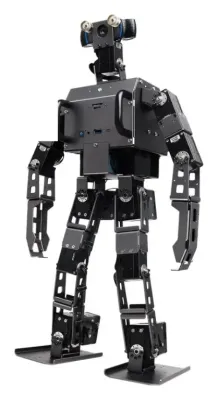
OpenCR (Open-source Control module for ROS) is the controller under every TurtleBot 3, handling the two DYNAMIXEL wheel servos, the IMU and power while a Raspberry Pi runs ROS. The ROBOTIS OP3 humanoid also uses it as its servo and IMU board. Its hardware and firmware are open source.
- Weight
- 60 g
- Size
- 105 × 75 mm
- Voltage
- 5–24 V input (11.1 V Li-Po or 12 V 4.5 A supply by default); regulated 12 V (4.5 A) and 5 V (4 A) outputs, 55 W combined, plus 3.3 V at 800 mA
- Feedback
- reads DYNAMIXEL feedback; onboard ICM-20648 3-axis gyroscope and accelerometer
- Interface
- 3 DYNAMIXEL TTL ports, 3 RS-485 ports, 2 UART, 1 CAN, USB 2.0, I2C, SPI, Arduino-style headers
- Other
- STM32F746 Cortex-M7 at 216 MHz with FPU; 32 digital pins, 6 analog inputs, 6 PWM outputs; programmed through the Arduino IDE
ROS robots built on DYNAMIXEL servos that need a real-time board with an IMU between the servos and a Raspberry Pi or PC, which is exactly its role in TurtleBot 3.
Cost-sensitive builds, since it lists at several times the price of an OpenRB-150 or U2D2, and its value comes mostly from the TurtleBot 3 firmware.
Robots in the guide that use it
Sources OpenCR 1.0 e-Manual ↗ · ROBOTIS US store ↗
Buying ROBOTIS America ships from Corona, California to North, Central and South America only (transit time unconfirmed).
Waveshare Bus Servo Adapter (A) / Serial Bus Servo Driver Board
Waveshare store, October 2026 check, $4.99 before shipping. Amazon US listing B0CTMM4LWK, titled 'Serial Bus Servo Driver Board', showed $12.47 on October 4, 2026. The SO-ARM100/101, LeKiwi, XLeRobot and Koch bills of materials quote the same listing at $10 – $10.60.
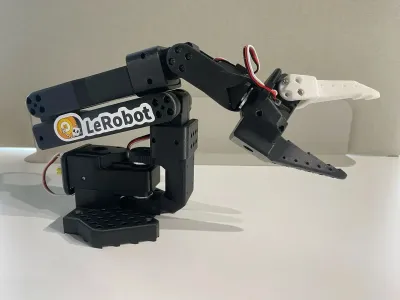
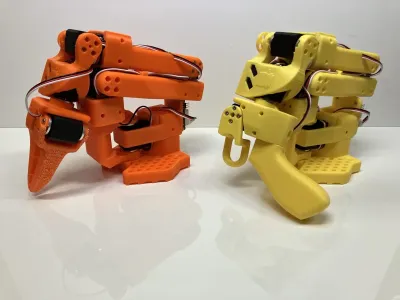
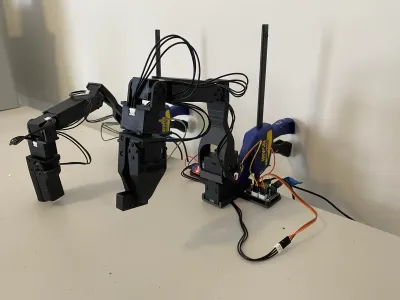
This small board became one of the best-known robot electronics parts of 2024–2025 because the SO-100, SO-101, LeKiwi and XLeRobot bills of materials all specify it, one per arm, and the Koch v1.1 arm uses it as a cheaper, lower-latency substitute for the ROBOTIS U2D2. It combines a USB-serial bridge, the half-duplex bus circuit and power distribution for Feetech-style servos. A pair of jumpers switches it between USB control from a PC and UART control from a microcontroller. Waveshare sells it as 'Bus Servo Adapter (A)', and the Amazon listing in the LeRobot parts lists ships that same board under the name 'Serial Bus Servo Driver Board'.
- Size
- 42 × 33 mm
- Voltage
- 9–12.6 V input rated by Waveshare, which says the input must match the servo voltage, since the supply passes straight through to the servos. In practice the SO-101 and Koch bills of materials run it from 5 V supplies (7.4 V STS3215 and 5 V DYNAMIXEL XL330 servos) and LeKiwi and XLeRobot from 12 V supplies (12 V STS3215 servos).
- Feedback
- passes through servo feedback (position, load and more from ST/SC servos)
- Interface
- USB-C (both jumpers on B) or UART to an MCU/SBC (jumpers on A); half-duplex serial bus to Feetech/Waveshare ST and SC servos, and in the Koch arm to DYNAMIXEL XL330/XL430 TTL servos
- Other
- one 5.5 × 2.1 mm DC jack plus screw terminals for power; up to 253 servo IDs on one bus with enough power; Waveshare advises against mixing ST and SC series on one board
The cheapest way to wire a chain of Feetech STS3215-class bus servos to a PC or Raspberry Pi, and the board that the LeRobot SO-100/SO-101, LeKiwi, XLeRobot and Koch bills of materials all specify.
Anything needing onboard intelligence or power regulation, because it is only a USB/UART bridge with power pass-through. A wrong supply voltage goes straight to the servos.
Robots in the guide that use it
 SO-101~$230 DIY parts (pair),…
 SO-100~$232 DIY parts (pair)
 Koch v1.1 Low-Cost Robot Arm~$477 DIY parts (pair)
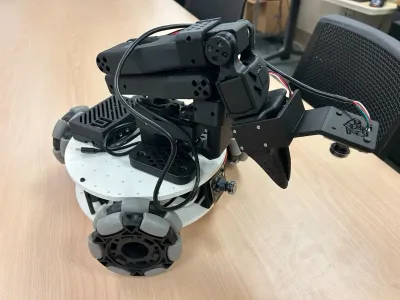 LeKiwi~$450 – $870 complete
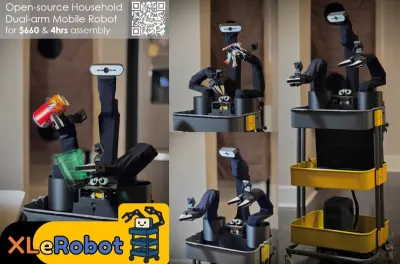 XLeRobot 0.4~$800 – $900 all-in
Feetech sells its own FE-URT-1 USB adapter for the same servos (specs not checked).
Sources Waveshare product page ↗ · Waveshare wiki ↗ · SO-ARM100/101 bill of materials ↗ · LeRobot SO-101 assembly docs (jumper setting) ↗ · Koch v1.1 bill of materials ↗ · LeKiwi bill of materials ↗ · XLeRobot bill of materials ↗ · Amazon US listing ('Serial Bus Servo Driver Board') ↗
Buying Amazon US with Prime shipping (the listing used in the LeRobot BOMs, $12.47 on October 4, 2026). Waveshare's own store ships from China (transit time unconfirmed).
ODrive S1 / ODrive Pro
ODrive Robotics shop, October 2026 check, single-unit prices. Both were sold out at the time; volume pricing drops to $143 (S1) and $209 (Pro) at 100 units.
ODrive started as an open-source dual-motor BLDC controller (v3.x) that made field-oriented control of cheap drone and gimbal motors accessible to hobbyists and student robot teams. The current S1 and Pro are single-axis designs with isolated I/O and higher ratings, and their firmware is no longer published as open source (unconfirmed). Stanford Doggo is the best-known robot built on the older ODrive v3.5.
- Weight
- 35 g without, 55 g with screw terminals (both)
- Size
- 66 × 50 mm (S1); 51 × 64 mm (Pro)
- Voltage
- 12–48 V (S1, 50.5 V max); 12–56 V (Pro, 58 V max)
- Current
- 40 A continuous with heat spreader (S1); 70 A continuous, 100 A peak with heatsink and fan (Pro)
- Feedback
- both have an onboard MA702 magnetic encoder and accept external quadrature, Hall, SPI and RS-485 encoders (Pro adds SSI and lists dual absolute encoder support)
- Interface
- USB, isolated UART, isolated STEP/DIR, analog voltage, PWM, CAN 2.0B at 1 Mbps (CAN-FD experimental, 5 Mbit/s on S1 and 10 Mbit/s on Pro)
- Other
- single-axis FOC driver for BLDC/PMSM motors (Pro also ACIM); torque, velocity, position and trajectory modes; 8 kHz control loop, 24 kHz PWM, 700 Hz recommended max electrical frequency; S1 has a brake-resistor chopper and ships with a 2 Ω 50 W resistor; Pro rated up to 3 kW continuous, 5 kW peak with cooling
DIY legged robots, arms and wheel drives that want torque control of hobby BLDC motors with good documentation and a Python/USB setup tool.
Very compact joints, since the boards are larger and heavier than moteus-class controllers, and current S1/Pro boards drive only one motor each.
Stanford Doggo used four of the earlier dual-axis ODrive v3.5 (48 V) boards, two per leg, driven from a Teensy 3.5 over UART, not the S1 or Pro. Many DIY quadrupeds and robot arms of the 2018–2022 era were built on ODrive v3.x boards.
Sources ODrive S1 (shop, specs) ↗ · ODrive Pro (shop, specs) ↗ · Stanford Doggo README (ODrive v3.5) ↗
Buying ODrive Robotics online shop (US company; shipping origin and times unconfirmed). Both boards were sold out at the October 2026 check.
mjbots moteus r4.11 / moteus-c1 / moteus-n1
mjbots store, October 2026 check, single-unit prices. moteus-c1 $69, moteus r4.11 $94, moteus-n1 $149. All three were in stock.
Josh Pieper's mjbots built the moteus as an open-source, very small FOC controller for his own quadruped, then sold it to the hobby and research community. The r4.11 is the classic board, the c1 is a cheaper low-power version and the n1 adds more auxiliary I/O and higher voltage. Its fast CAN-FD bus and Python/C++ libraries make it a frequent choice for open-source legged robots.
- Weight
- 14.2 g (r4.11); 8.9 g (c1); 14.6 g (n1)
- Size
- 46 × 53 mm (r4.11); 38 × 38 × 9 mm (c1); 46 × 46 × 8 mm (n1)
- Voltage
- 10–44 V (r4.11); 10–51 V (c1); 10–54 V (n1)
- Current
- peak phase 100 A, continuous 12 A / 32 A without / with thermal management (r4.11); peak 20 A, continuous 5 A / 14 A (c1); peak 100 A, continuous 9 A / 26 A (n1)
- Feedback
- integrated absolute magnetic encoder; auxiliary ports accept external encoders (n1 lists SPI, UART, quadrature, Hall, I2C)
- Interface
- 5 Mbps CAN-FD; JST PH-3 data connectors, XT30 power
- Other
- 3-phase FOC on a 170 MHz STM32G4; 15–30 kHz control rate; peak power 900 W at 30 V (r4.11), 250 W at 28 V (c1), 2 kW at 36 V (n1); open-source firmware (Apache 2.0); needs a CAN-FD adapter (e.g. fdcanusb or pi3hat) to talk to a host
Small, dense legged-robot and arm joints where a postage-stamp board mounts directly on the motor and runs high-rate torque control over CAN-FD.
Simple USB-only setups, since it needs a CAN-FD adapter, and large motors drawing more than about 30 A continuous unless well cooled.
Robots in the guide that use it
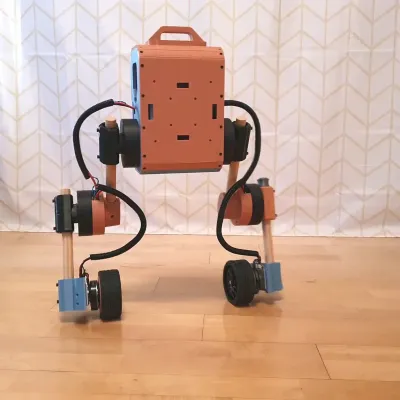
mjbots' own qdd100 servo is built around the moteus controller (its product page lists the moteus repository as its open-source motor driver and firmware), and Upkie uses those servos. The moteus is also common in DIY quadrupeds and robot arms built from hobby BLDC motors.
Sources moteus r4.11 (store, specs) ↗ · moteus-c1 (store, specs) ↗ · moteus-n1 (store, specs) ↗ · moteus firmware and docs (GitHub) ↗ · qdd100 servo ↗
Buying mjbots online store, a US company (shipping origin and times unconfirmed).
VESC (VESC 6 MkVI and VESC Labs controllers, e.g. VESC Minim)
VESC Labs store, October 2026 check, prices in euros before VAT (€159.99 for the Minim 100V up to €949.99 for the Maxim+ 150V), converted at about $1.12 per euro (ECB rate of October 2, 2026). Trampa lists the VESC 6 MkVI at £185 each before VAT, which Trampa itself shows as about $249.75.
VESC began around 2015 (unconfirmed) as Benjamin Vedder's open-source electronic speed controller for electric skateboards and grew into a large ecosystem of compatible controllers from many makers. The VESC 6 MkVI, made by Trampa in the UK, was long the reference hardware and is still sold. VESC Labs, a Swedish company that describes itself as the official VESC ecosystem with Vedder on its team, now sells its own line from the Minim to the Maxim+, and many third-party VESC-based boards (Flipsky, Makerbase and others) also run the firmware.
- Weight
- 115 g including cables (VESC Minim)
- Size
- 72 × 43 × 28 mm (VESC Minim); 75 × 70 × 18 mm box (VESC 6 MkVI)
- Voltage
- 12–92.4 V input, 4–22 Li-ion cells, 100 V absolute max (VESC Minim); up to 12S, 60 V max (VESC 6 MkVI)
- Current
- 50 A continuous, 65 A pulsed for 10–30 s motor current, up to 3 kW continuous with adequate cooling (VESC Minim); 80 A continuous, 120 A peak (VESC 6 MkVI)
- Feedback
- Hall sensors, ABI encoders and some SPI magnetic encoders, or sensorless with high-frequency injection at zero speed (VESC Minim)
- Interface
- USB, CAN, SPI, I2C, UART, PWM (servo PPM) and ADC inputs (VESC Minim)
- Other
- single-motor FOC on an STM32F405 running open-source VESC firmware; current, duty-cycle, speed and position control; 30–50 kHz PWM switching; onboard 3-axis accelerometer and gyroscope; three 1.5 A low-side switches for lights; LispBM scripting; configured with VESC Tool (VESC Minim). VESC 6 MkVI adds 5 V 1 A and 3.3 V 0.5 A outputs for external electronics. VESC Labs models range up to 150 V and 660 A continuous (Maxim+).
High-power wheel and drive motors on large rovers and vehicles, where its battery management, regenerative braking and huge power range matter.
Small robot joints, since the boards are large and heavy next to moteus-class controllers and the firmware is tuned for vehicle drive rather than precise joint torque control.
Mainly used in electric skateboards, e-bikes and scooters, and in robots that need large wheel motors, such as DIY rovers and combat robots (unconfirmed for specific robots).
Sources VESC Minim datasheet (VESC Labs) ↗ · VESC Labs store ↗ · VESC Project ↗ · Trampa VESC 6 MkVI ↗
Buying VESC Labs ships all orders from Sweden (transit time to the US unconfirmed). VESC-based boards from other makers are on Amazon US and AliExpress (unconfirmed).
Toshiba TB6612FNG dual DC motor driver (Pololu carrier and clones)
Pololu store, October 2026 check, single unit ($3.85 at 100+). Generic clone boards are also common on Amazon (prices not checked).
The TB6612FNG is the modern small replacement for the L298 in hobby robots. Its MOSFET outputs waste far less voltage and heat, so it fits on a tiny board without a heatsink. Pololu's carrier and SparkFun's breakout made it standard in beginner car kits.
- Size
- small 16-pin breadboard-friendly carrier (Pololu); surface-mount SSOP chip (unconfirmed package name)
- Voltage
- motor 4.5–13.5 V recommended (works down to 2.5 V with reduced performance), 15 V absolute max (unconfirmed); logic 2.7–5.5 V
- Current
- 1 A continuous per channel on the Pololu carrier (2 A with both channels paralleled), 3 A peak per channel; the chip itself is rated 1.2 A average per bridge
- Feedback
- none
- Interface
- per channel two direction pins plus one PWM pin (up to 100 kHz), standby pin
- Other
- 2 brushed DC motors or 1 bipolar stepper; MOSFET H-bridges, so much lower voltage drop than the L298; CW/CCW/short-brake/stop modes; thermal shutdown; Pololu carrier adds reverse-battery protection on the motor supply (not on the logic supply) and filter capacitors
Small 3–12 V robot cars with TT or N20 gear motors drawing about 1 A each, from a 3.3 V or 5 V microcontroller.
Motors that draw more than about 1 A continuous or run above 13.5 V, such as larger 12 V gear motors under load.
Robots in the guide that use it
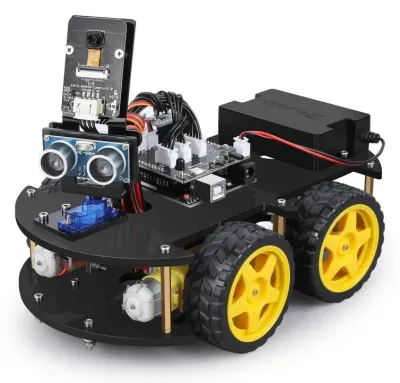
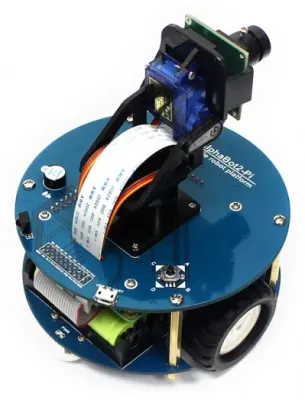
The original NVIDIA JetBot used Adafruit's DC Motor + Stepper FeatherWing, which has two TB6612 chips behind a PCA9685.
Sources Pololu TB6612FNG carrier ↗ · Toshiba TB6612FNG datasheet (PDF hosted by Pololu) ↗ · Toshiba TB6612FNG product page ↗ · Adafruit DC Motor + Stepper FeatherWing (PCA9685 + TB6612) ↗
Buying Pololu ships from Las Vegas, Nevada (unconfirmed transit time). Clone boards on Amazon US (Prime) and AliExpress (1–3 weeks, unconfirmed).
L298N dual H-bridge module (STMicroelectronics L298 chip)
Amazon US, October 2026 check, in multipacks such as HiLetgo 4 for $11.49, BOJACK 4 for $9.99, WWZMDiB 2 for $6.98, plus a 4-pack at $3.99. Typical price range across these sellers.
The L298 is a decades-old ST bipolar dual H-bridge that became the default hobby motor driver thanks to the cheap red heatsinked module. It is still everywhere in tutorials, but its transistor outputs lose several volts, so newer MOSFET drivers have overtaken it for real robots. It is listed here mainly as history and a point of comparison.
- Size
- 34 × 43 × 27 mm (typical module with heatsink)
- Voltage
- 5–35 V motor supply on the common module (Handson Technology guide); on-board 5 V regulator can power a microcontroller
- Current
- 2 A peak per channel (module rating)
- Feedback
- none (some boards break out the current-sense pins)
- Interface
- IN1–IN4 direction pins plus ENA/ENB enable pins for PWM
- Other
- 2 brushed DC motors or 1 stepper; 20 W max dissipation at 75 °C (module guide); bipolar transistor outputs drop roughly 2–4 V (unconfirmed), which wastes power and lowers motor speed on low-voltage batteries
Learning H-bridge basics and running cheap 6–12 V motors where efficiency does not matter, since modules cost about two dollars and survive abuse.
Battery robots, because the large voltage drop and heat waste power and slow motors on 5–7 V supplies. A TB6612FNG or MOSFET driver is better for nearly any new design.
Found in countless Arduino car tutorials and older beginner robot kits.
Sources Handson Technology L298N module user guide ↗ · STMicroelectronics L298 page ↗ · ST L298 datasheet (PDF mirrored by SparkFun) ↗ · Amazon US search (prices) ↗
Buying Amazon US with next-day or two-day Prime delivery; AliExpress 1–3 weeks (unconfirmed).
Trinamic TMC2209 stepper driver (BIGTREETECH and other StepStick boards)
Amazon US, October 4, 2026 check. BIGTREETECH TMC2209 listings ran from $9.99 for a single driver to $53.99 for multi-packs, generic TMC2209 two-packs $12.99 – $13.99.
The TMC2209 brought Trinamic's silent StealthChop2 drive and StallGuard4 stall detection to the cheap pin-compatible StepStick format, replacing A4988 boards in most 3D printers. Analog Devices now owns Trinamic. Its UART lets firmware set current and read status in software.
- Size
- standard StepStick footprint (about 15 × 20 mm, unconfirmed)
- Voltage
- 5.5–28 V motor supply, 3–5 V logic (Watterott SilentStepStick board)
- Current
- 2 A RMS continuous, 2.8 A peak (BIGTREETECH figures); 1.7 A RMS on the Watterott board
- Feedback
- StallGuard4 sensorless load/stall detection (UART), used for sensorless homing
- Interface
- STEP/DIR, configured by pins or by single-wire UART (up to 500 kbaud, unconfirmed)
- Other
- up to 1/256 microsteps set over UART, or 1/8–1/64 from the pins with MicroPlyer interpolating to 1/256; StealthChop2 (near-silent), SpreadCycle and CoolStep current modes
Quiet stepper-driven axes in arms, plotters and printers, plus sensorless homing without endstop switches.
Steppers needing more than about 2 A RMS, and robots that need true closed-loop position control, since StallGuard only detects stalls.
Standard in 3D printers (BIGTREETECH SKR boards) and used in DIY camera sliders, pen plotters and stepper-driven robot arms (unconfirmed for specific robots).
Sources Analog Devices TMC2209 product page ↗ · Watterott SilentStepStick comparison ↗ · BIGTREETECH TMC2209 GitHub ↗ · Amazon US search (prices) ↗
Buying Amazon US with next-day Prime delivery for BIGTREETECH listings; AliExpress 1–3 weeks (unconfirmed).
Allegro A4988 stepper driver (Pololu carrier and clones)
Pololu store, October 2026 check, single unit ($7.43 at 100). Clone boards are far cheaper in multipacks on Amazon (not checked).
Pololu's A4988 carrier defined the StepStick format around 2010 (unconfirmed) and became the standard driver in early RepRap 3D printers. Trinamic drivers such as the TMC2209 have since replaced it in most printers, but it remains a cheap, well-understood workhorse.
- Size
- StepStick-style 0.1 inch pin carrier
- Voltage
- 8–35 V motor supply; 3–5.5 V logic
- Current
- about 1 A per coil without heatsink, up to 2 A per coil with enough cooling
- Feedback
- none
- Interface
- STEP/DIR; MS1–MS3 pins select microstepping
- Other
- full, 1/2, 1/4, 1/8, 1/16 microstepping; potentiometer current limit; over-temperature, over-current, under-voltage and crossover-current protection
Simple stepper projects driven from an Arduino, where its STEP/DIR pins and huge tutorial base make it easy.
Quiet machines or fine positioning, since it is noisy and stops at 1/16 microstepping, and the 8 V minimum rules out low-voltage packs.
Found in RAMPS-era 3D printers and many Arduino CNC and plotter builds.
Sources Pololu A4988 carrier ↗
Buying Pololu ships from Las Vegas, Nevada, with free standard US shipping on orders over $75 (transit time unconfirmed). Clones on Amazon US and AliExpress.
Pololu Dual G2 High-Power Motor Driver 18v18 Shield for Arduino
Pololu store, October 2026 check, single unit ($58.36 at 100+). Other Dual G2 versions differ in voltage and current ratings (prices not checked).
Pololu's G2 family uses discrete MOSFET H-bridges that run cool at high currents, closing the gap between chip drivers like the TB6612FNG and car-style ESCs. The dual shield version plugs onto an Arduino and adds current sensing and limiting, so the same board handles both control and protection. Cytron's MDD10A (10 A per channel, unconfirmed) is a cheaper alternative in the same class.
- Size
- 65 × 51 mm (2.56 × 2.02 in)
- Voltage
- 6.5–30 V (30 V is the absolute maximum, so Pololu says it is not intended for 24 V batteries)
- Current
- 18 A continuous per channel without heatsink; spikes up to about 100 A for a few milliseconds; active current limiting at about 50 A (adjustable)
- Feedback
- current-sense output, about 20 mV/A per channel
- Interface
- Arduino shield pinout with PWM and DIR per channel (up to 100 kHz PWM); 1.8 V, 3.3 V and 5 V logic
- Other
- 2 brushed DC motors on discrete MOSFET H-bridges; reverse-voltage, undervoltage and short-circuit protection; built-in 7.5 V 1 A regulator that can power the Arduino
Large wheeled robots with 12–24 V gear motors drawing tens of amps, where current sensing and limiting protect the motors.
Small kits, where a TB6612FNG costs a fraction as much, and brushless motors, which need an FOC driver such as an ODrive or VESC.
Used on larger hobby rovers, power wheelchair conversions and student competition robots (unconfirmed for specific robots).
Sources Pololu Dual G2 18v18 Shield ↗
Buying Pololu ships from Las Vegas, Nevada, with free standard US shipping on orders over $75 (transit time unconfirmed).