Overview
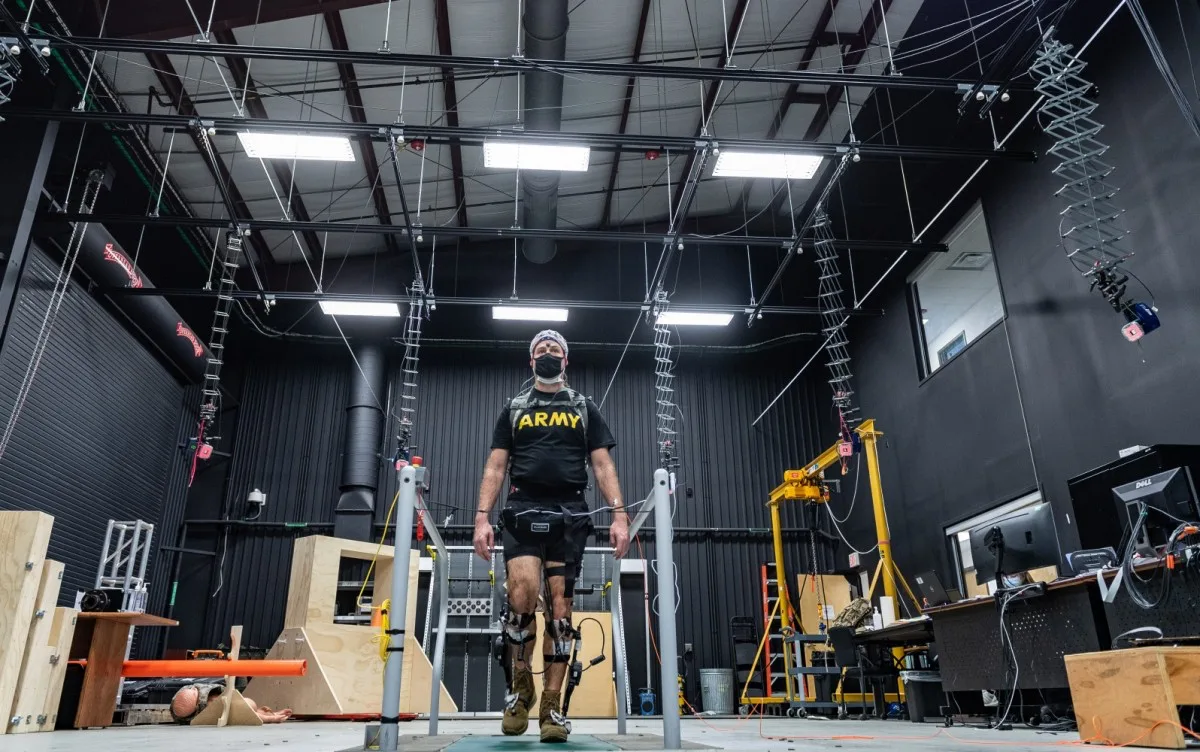
The ExoBoot is Dephy's autonomous powered ankle exoskeleton, a pair of shin-mounted motor units that strap to a boot and add push-off power, built by an MIT Media Lab spinout founded in 2016 in Maynard, Massachusetts. The EB51 and EB60 versions were sold or rented to research labs such as the University of Michigan Neurobionics Lab and to US Army groups, which tested soldiers walking with heavy rucksacks at Aberdeen Proving Ground in 2021. The device needs no input from the wearer and learns the timing of each step on its own, and later work with Boston Engineering aimed to make it lighter and more rugged for soldiers. Dephy's website now shows only the consumer Sidekick that grew out of the ExoBoot, so whether new ExoBoots can still be ordered by labs is unclear (unconfirmed). Rival research platforms include the tethered Humotech Caplex ankle emulators and Stanford's exoskeleton boot.
Specifications
| Category | Exoskeletons & exosuits · Full-body, military & research |
|---|---|
| Released | 2018 |
| Country | USA |
| Availability | Discontinued · unavailable |
| Programmability | Limited SDK |
| Built-in autonomy | Reactive · Responds to its surroundings without a map, such as avoiding obstacles or following a person |
| LLM support | None · No voice assistant or LLM. |
| Vision sensors | No vision sensors |
| Actuators | Brushless / direct-drive motors |
| Audio | No audio |
| Compute type | Proprietary / undisclosed |
| Control | SDK or research mode |
| Weight | ~1.2 kg per ankle (EB60) |
| Assistance | A brushless motor on each shin tightens a flat cable to the boot heel during push-off, adding a burst of ankle plantarflexion power. A 2025 study set the peak at 35 Nm and measured an average of 18 to 24 Nm delivered per step. |
| Joints | Ankles |
| Battery & runtime | Battery on each boot unit, capacity and runtime not published (unconfirmed). |
| Operation | No user controls during walking. An onboard computer uses sensors, human gait models and machine learning to decide when and how hard to assist; researchers set torque profiles from a laptop. |
| Sensors | Onboard sensors log ankle velocity, acceleration and torque at 200 Hz; the full sensor list is not published. |
| Compute | Onboard Dephy controller, chip not published |
| SDK | Research interface for labs to command torque and log data, with open lab controllers on GitHub (e.g. University of Michigan Neurobionics EB-51 code); details not published by Dephy (unconfirmed) |
Ratings & reviews
Ratings and reviews load on the live site.
Similar robots
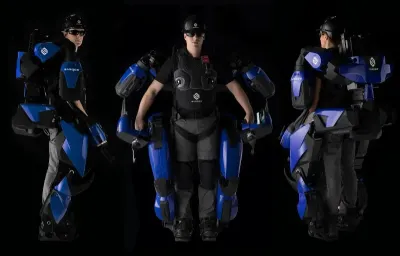 Sarcos Guardian XOSarcos Robotics, now Palladyne AI (USA)$100,000 per year (rental)
 Lockheed Martin ONYXLockheed Martin (USA)Not sold
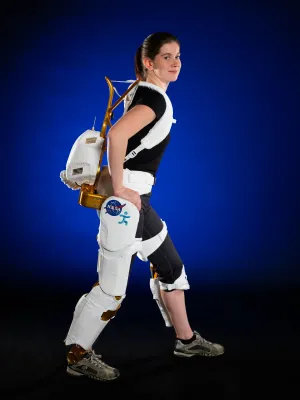 NASA X1 exoskeletonNASA Johnson Space Center with IHMC (USA)Not sold
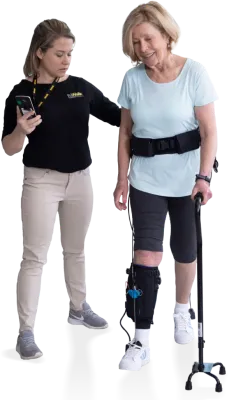 Harvard Soft Exosuit (and ReStore)Harvard Wyss Institute and Lifeward (USA)Quote only
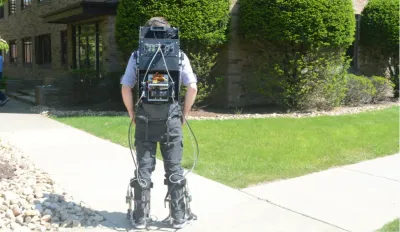 Humotech CaplexHumotech (USA)Quote only
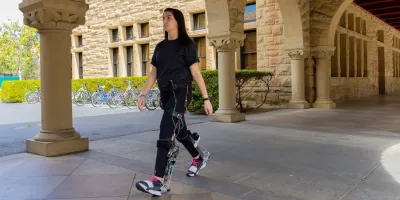 Stanford Exoskeleton BootStanford Biomechatronics Lab (USA)Not sold
Image credits
- Image 1: source (press image, US Army DEVCOM photo)