Overview
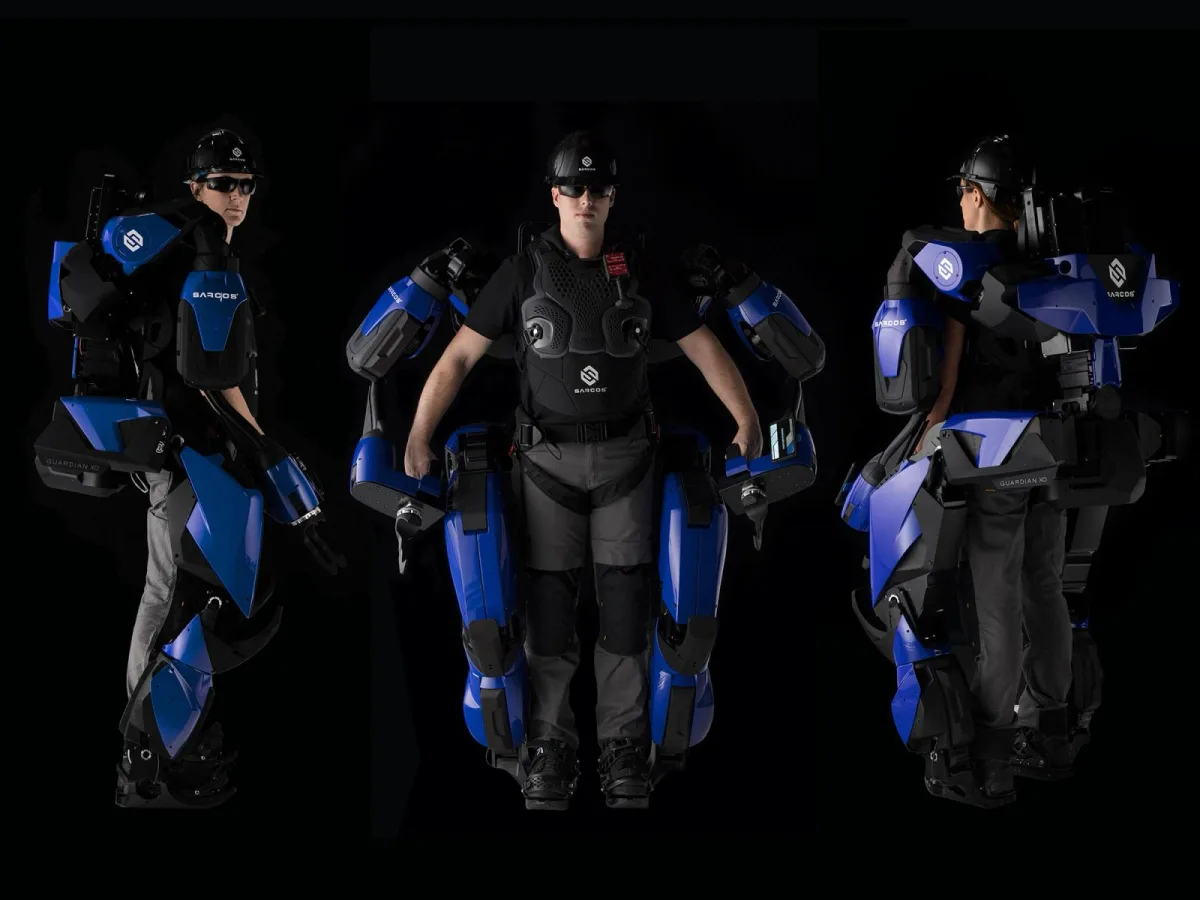
The Guardian XO was a battery-powered full-body exoskeleton from Sarcos Robotics of Salt Lake City, the descendant of the tethered hydraulic Raytheon Sarcos XOS 2 from 2010. Shown at CES 2020 with launch customer Delta Air Lines, it let a worker lift 90 kg as if it were 4.5 kg, with powered arms, 24 degrees of freedom and a self-supporting 68 kg frame, and the US Air Force and SOCOM funded military versions. Alpha units went out in early 2020 and commercial versions were promised for later that year, but launch dates kept slipping, and by October 2023 only two units had shipped. In November 2023 the board voted to leave hardware, and the company became the AI software firm Palladyne AI in March 2024, so the XO was never sold. It remains the most capable strength-amplifying suit to reach customer trials, far beyond back-assist exoskeletons like the German Bionic Apogee.
Specifications
| Category | Exoskeletons & exosuits · Full-body, military & research |
|---|---|
| Released | 2020 |
| Country | USA |
| Availability | Discontinued · unavailable |
| Sales | Only two units had shipped by October 2023, when Sarcos decided to stop hardware work. Wikipedia ↗ |
| Programmability | No programmability |
| Built-in autonomy | Reactive · Responds to its surroundings without a map, such as avoiding obstacles or following a person |
| LLM support | None · No voice assistant or LLM. |
| Vision sensors | No vision sensors |
| Actuators | Brushless / direct-drive motors |
| Audio | No audio |
| Compute type | Proprietary / undisclosed |
| Control | Buttons only |
| Weight | 68 kg (150 lb), self-supporting |
| Assistance | Lets the wearer lift up to 90 kg (200 lb) repeatedly while it feels like about 4.5 kg (10 lb), with powered arms, back and legs and about 450 Nm of peak joint torque, so the suit carries its own weight. |
| Joints | Full body |
| Battery & runtime | Two hot-swappable 500 Wh battery packs of about 5.4 kg (12 lb) each, over 2 hours of normal work per set (Sarcos later claimed up to 8 hours for the XO Max), drawing about 500 W while carrying 73 kg at 4.8 km/h. |
| Operation | Force sensors read every motion of the operator and the suit moves its own limbs in parallel with no noticeable lag, so there are no buttons to drive it; the hands grip end-effectors on the powered arms. |
| Speed | Up to 4.8 km/h (3 mph) |
| Sensors | Force sensors at the operator interface and joint sensors throughout the 24-DoF frame. |
| Compute | Not published |
| SDK | None |
Timeline
- AnnouncedAlpha units announced for industrial and military customers, rental at about $100,000 per year IEEE Spectrum ↗
- Trade showShown at CES 2020 with launch customer Delta Air Lines Exoskeleton Report ↗
- UpdateSarcos board votes to exit hardware development Wikipedia ↗
- UpdateSarcos renamed Palladyne AI, software only Wikipedia ↗
Ratings & reviews
Ratings and reviews load on the live site.
Similar robots
 Lockheed Martin ONYXLockheed Martin (USA)Not sold
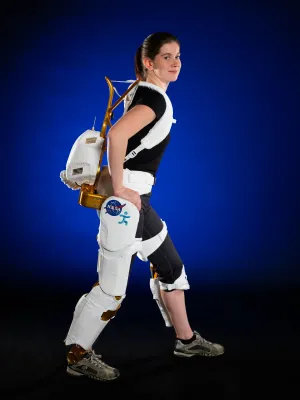 NASA X1 exoskeletonNASA Johnson Space Center with IHMC (USA)Not sold
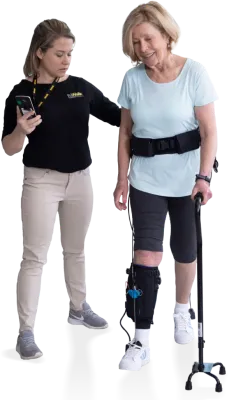 Harvard Soft Exosuit (and ReStore)Harvard Wyss Institute and Lifeward (USA)Quote only
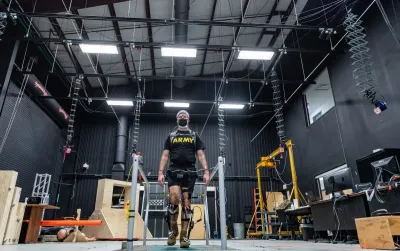 Dephy ExoBootDephy (USA)Was quote only
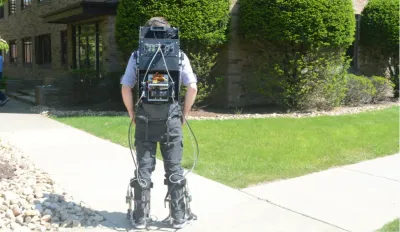 Humotech CaplexHumotech (USA)Quote only
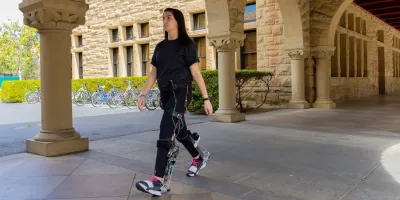 Stanford Exoskeleton BootStanford Biomechatronics Lab (USA)Not sold
Image credits
- Image 1: source (Sarcos press image via IEEE Robots Guide)