Overview
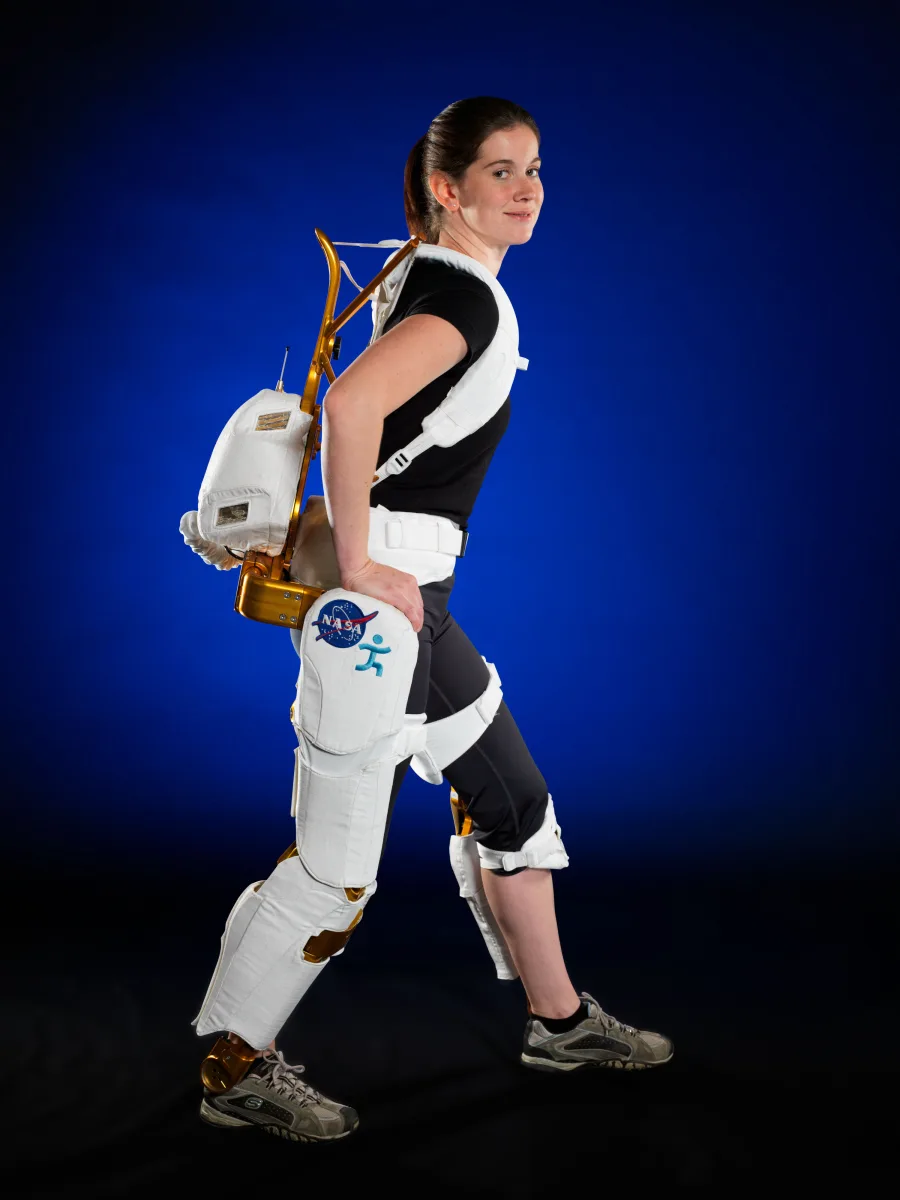
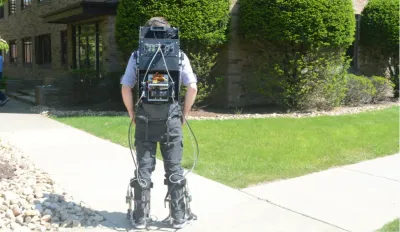
X1 is a 26 kg leg exoskeleton unveiled in October 2012 by NASA's Johnson Space Center, the Florida Institute for Human and Machine Cognition (IHMC) and Oceaneering Space Systems, built from Robonaut 2 humanoid technology and IHMC's earlier Mina exoskeleton. It has ten degrees of freedom, four motorized at the hips and knees and six passive, and was designed for two very different jobs, resisting the wearer's motion as a compact exercise machine for astronauts on long missions, and assisting walking for people with paraplegia on Earth. It stayed a research platform and was never sold. IHMC carried the work into its Mina v2 exoskeleton, which placed second in the powered exoskeleton race at the 2016 Cybathlon.
Specifications
| Category | Exoskeletons & exosuits · Full-body, military & research |
|---|---|
| Released | 2012 |
| Country | USA |
| Availability | Not for sale (research) |
| Programmability | No programmability |
| Built-in autonomy | Reactive · Responds to its surroundings without a map, such as avoiding obstacles or following a person |
| LLM support | None · No voice assistant or LLM. |
| Vision sensors | No vision sensors |
| Actuators | Brushless / direct-drive motors |
| Audio | No audio |
| Compute type | Proprietary / undisclosed |
| Control | Buttons only |
| Weight | 26 kg (57 lb) |
| Assistance | Four motorized joints at the hips and knees can either resist movement as an exercise machine for astronauts or assist walking on Earth, with six more passive joints for sidestepping, turning and ankle flexing. |
| Joints | Hips & knees |
| Battery & runtime | Backpack-mounted battery and electronics (capacity and runtime not published). |
| Operation | Run by researchers in two modes, an inhibit mode that resists the wearer's movement for exercise and an assist mode for walking. |
| Sensors | Joint position and torque sensing derived from Robonaut 2 (details not published). |
| Compute | Not published |
| SDK | None (internal research software) |
Timeline
- AnnouncedNASA, IHMC and Oceaneering unveil the X1 exoskeleton NASA ↗
Ratings & reviews
Ratings and reviews load on the live site.
Similar robots
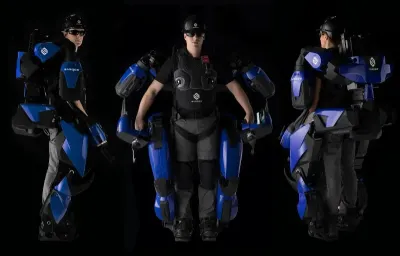 Sarcos Guardian XOSarcos Robotics, now Palladyne AI (USA)$100,000 per year (rental)
 Lockheed Martin ONYXLockheed Martin (USA)Not sold
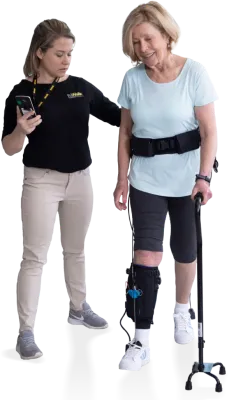 Harvard Soft Exosuit (and ReStore)Harvard Wyss Institute and Lifeward (USA)Quote only
 Dephy ExoBootDephy (USA)Was quote only
 Humotech CaplexHumotech (USA)Quote only
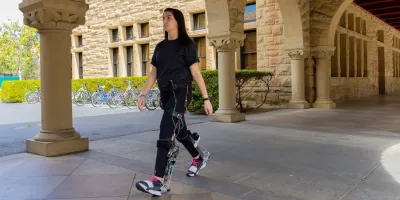 Stanford Exoskeleton BootStanford Biomechatronics Lab (USA)Not sold
Image credits
- Image 1: source (official NASA image)