Overview
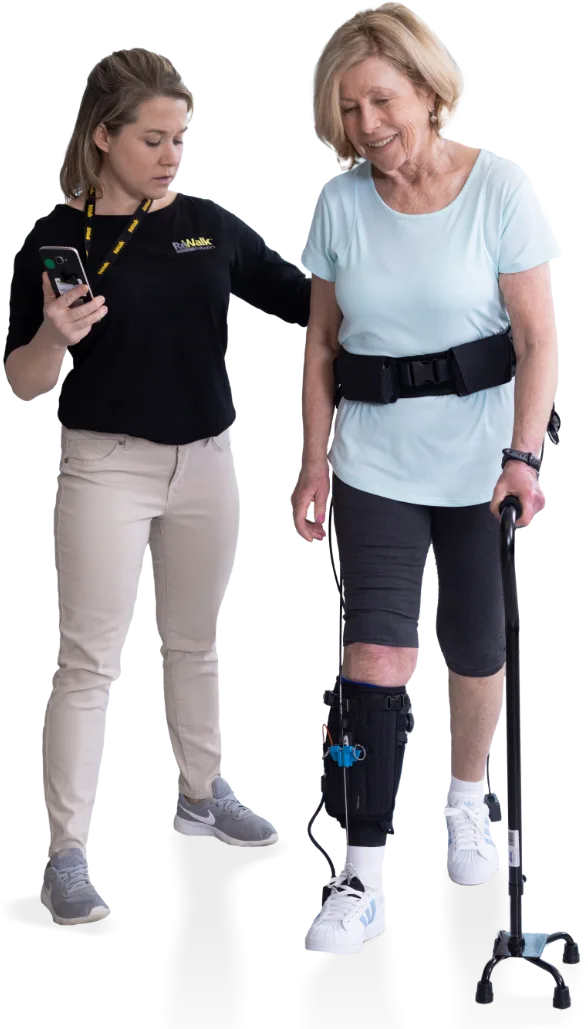
The soft exosuit is the Harvard Wyss Institute and Biodesign Lab's alternative to rigid frames, a textile suit with cables pulled by small motors at the waist, developed by Conor Walsh's group from about 2013 under DARPA's Warrior Web program to help soldiers carry heavy loads. Later versions included a 2019 hip suit of about 2.3 kg that detects the switch between walking and running and lowered the energy cost of both (Science, 2019). ReWalk Robotics licensed the technology in 2016 and turned it into the ReStore, a stroke-rehabilitation suit for the ankle that gained CE marking in May 2019 and FDA clearance on 2019-06-05 as the first soft exosuit cleared for clinics. The ReStore is still listed as a current product by Lifeward (the renamed ReWalk) alongside the ReWalk 7, is used only under a trained therapist and is not meant for stairs or sport. The research suits themselves were never sold, and rigid military designs such as the Guardian XO and ONYX took a different path.
Specifications
| Category | Exoskeletons & exosuits · Full-body, military & research |
|---|---|
| Released | 2013 |
| Country | USA |
| Availability | Available |
| Programmability | No SDK, app / visual programming only |
| Built-in autonomy | Reactive · Responds to its surroundings without a map, such as avoiding obstacles or following a person |
| LLM support | None · No voice assistant or LLM. |
| Vision sensors | No vision sensors |
| Actuators | Other |
| Audio | No audio |
| Compute type | Proprietary / undisclosed |
| Control | App-adjusted |
| Weight | ~2.3 kg (2019 hip research suit), ~5 kg (ReStore system) |
| Assistance | Waist-mounted motors pull Bowden cables anchored in textile straps to add force at the right moment of each step. The 2019 hip-extension research suit cut the metabolic cost of walking by 9.3% and running by 4%, and the ReStore version adds ankle push-off (plantarflexion) and toe-lift (dorsiflexion) help on the paretic leg of stroke patients. |
| Joints | Hips or ankles |
| Battery & runtime | Battery-powered actuation pack on the waist or lower back. The ReStore runs on two rechargeable lithium-ion batteries, runtime not published (unconfirmed). |
| Operation | Research suits run lab controllers that detect walking and running and time the assist automatically. The ReStore is run by a therapist from a handheld controller app over Bluetooth that sets the mode and amount of assistance and records gait assessments. |
| Sensors | Gyroscope and IMU sensors on the legs in the research suits; the ReStore uses an insole sensor system and calf-mounted sensors to time each step. |
| Compute | Not published |
| SDK | None for the public. The ReStore has only the therapist app. |
Ratings & reviews
Ratings and reviews load on the live site.
Similar robots
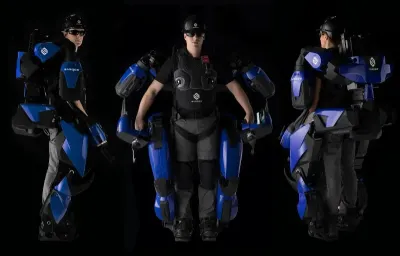 Sarcos Guardian XOSarcos Robotics, now Palladyne AI (USA)$100,000 per year (rental)
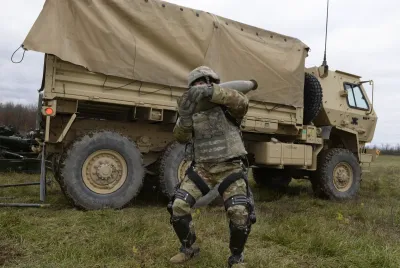 Lockheed Martin ONYXLockheed Martin (USA)Not sold
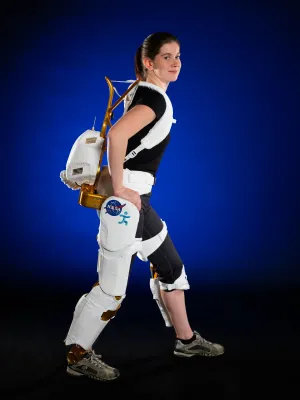 NASA X1 exoskeletonNASA Johnson Space Center with IHMC (USA)Not sold
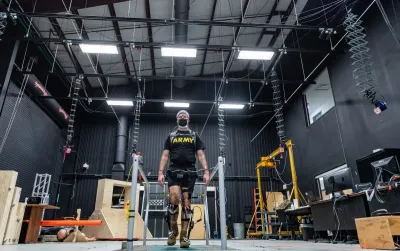 Dephy ExoBootDephy (USA)Was quote only
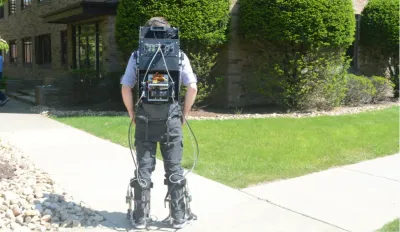 Humotech CaplexHumotech (USA)Quote only
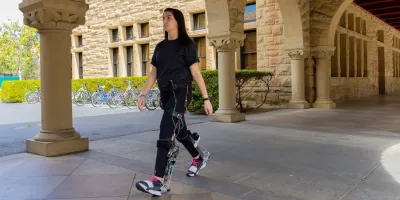 Stanford Exoskeleton BootStanford Biomechatronics Lab (USA)Not sold
Image credits
- Image 1: source (official product image, ReStore)