Overview
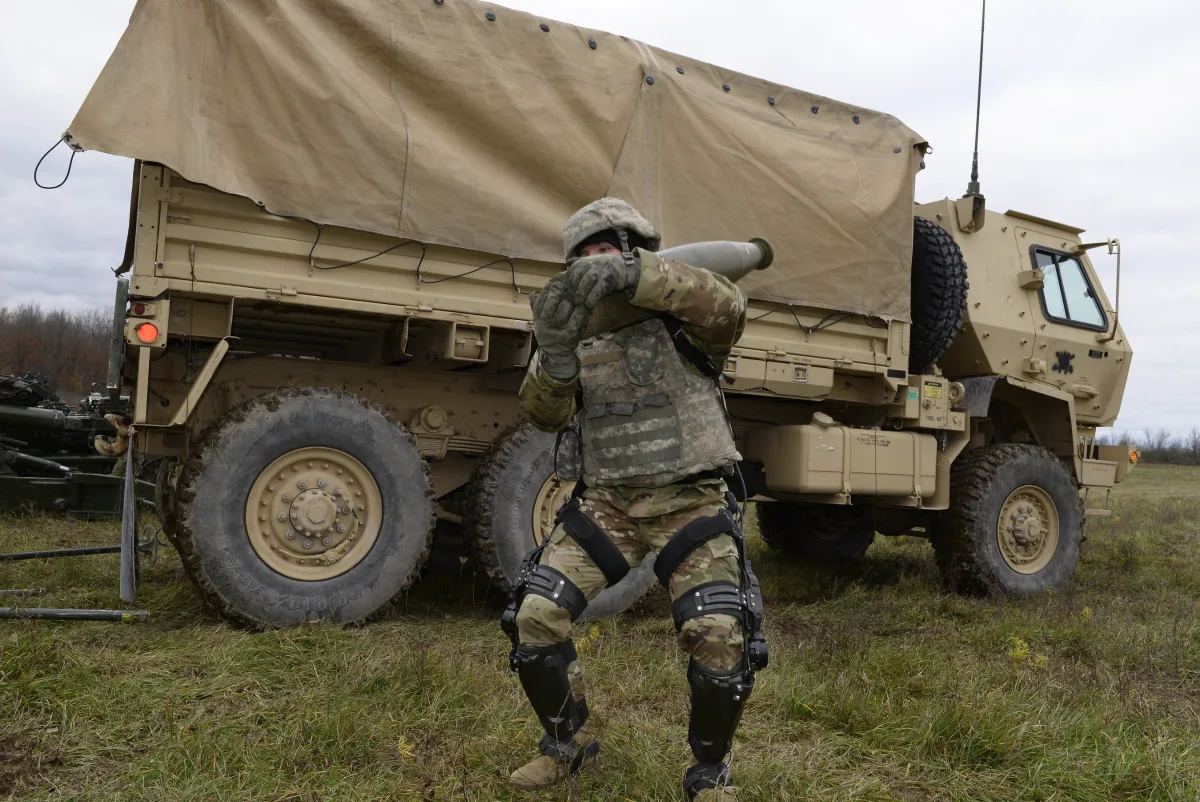
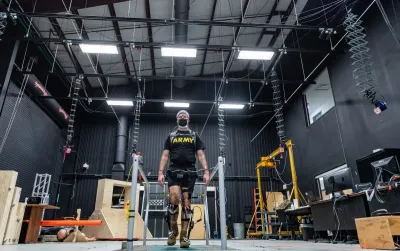
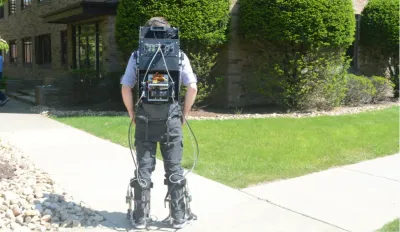
ONYX is a powered knee exoskeleton that Lockheed Martin built for soldiers, using dermoskeleton technology licensed from Canada's B-Temia. Knee actuators, sensors at the feet, knees and hips, and a waist-worn AI control unit assist the legs when climbing, squatting, kneeling or carrying heavy loads, and the system weighs about 9 kg with its battery. The US Army's Natick center awarded a $6.9 million development agreement in November 2018 and the suit was tested in field exercises, with Popular Science naming it one of 2018's best new products. It was still a prototype in 2019, not yet sealed against water, sand or dust, and it was never sold. Lockheed's earlier hydraulic HULC, licensed from Berkeley Bionics (now Ekso), was dropped after Army tests found it hindered movement. The Army also funded the Dephy ExoBoot ankle exoskeleton for similar load-carriage work.
Specifications
| Category | Exoskeletons & exosuits · Full-body, military & research |
|---|---|
| Released | 2018 |
| Country | USA |
| Availability | Not for sale (research) |
| Programmability | No programmability |
| Built-in autonomy | Reactive · Responds to its surroundings without a map, such as avoiding obstacles or following a person |
| LLM support | None · No voice assistant or LLM. |
| Vision sensors | No vision sensors |
| Actuators | Brushless / direct-drive motors |
| Audio | No audio |
| Compute type | Proprietary / undisclosed |
| Control | Buttons only |
| Weight | ~9 kg (20 lb) with battery |
| Assistance | Electro-mechanical knee actuators add power when climbing, squatting, kneeling and carrying loads; in one trial a wearer managed 72 squats holding an 84 kg (185 lb) load against about 25 without it, and a University of Michigan study found lower energy use climbing inclines with a 18 kg (40 lb) pack. |
| Joints | Knees |
| Battery & runtime | External battery packs, about 8 hours with two batteries and up to 16 hours with four (unconfirmed). |
| Operation | Automatic. An AI controller in a waist-mounted module predicts the wearer's next move from body sensors and drives the knee motors, with about 150 ms response time in 2019. |
| Sensors | Sensors at the feet, knees and hips feeding a waist-worn control module. |
| Compute | Waist-mounted control module with an AI motion predictor (chip not published) |
| SDK | None |
Timeline
- AnnouncedUS Army awards Lockheed Martin a $6.9 million ONYX development agreement Lockheed Martin ↗
Ratings & reviews
Ratings and reviews load on the live site.
Similar robots
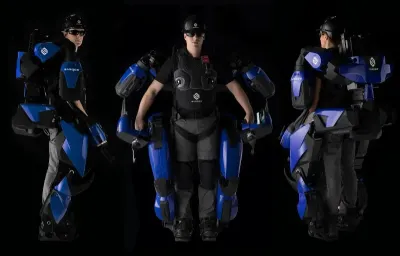 Sarcos Guardian XOSarcos Robotics, now Palladyne AI (USA)$100,000 per year (rental)
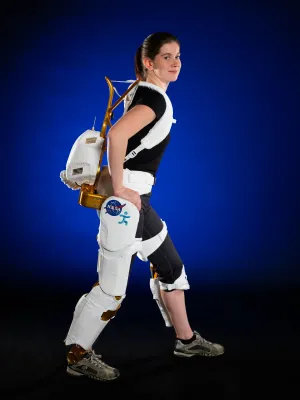 NASA X1 exoskeletonNASA Johnson Space Center with IHMC (USA)Not sold
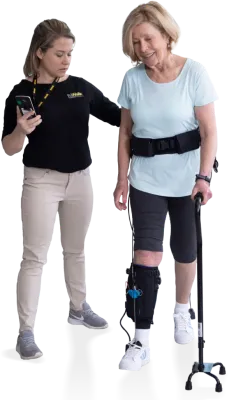 Harvard Soft Exosuit (and ReStore)Harvard Wyss Institute and Lifeward (USA)Quote only
 Dephy ExoBootDephy (USA)Was quote only
 Humotech CaplexHumotech (USA)Quote only
 Stanford Exoskeleton BootStanford Biomechatronics Lab (USA)Not sold
Image credits
- Image 1: source (press image)