Overview
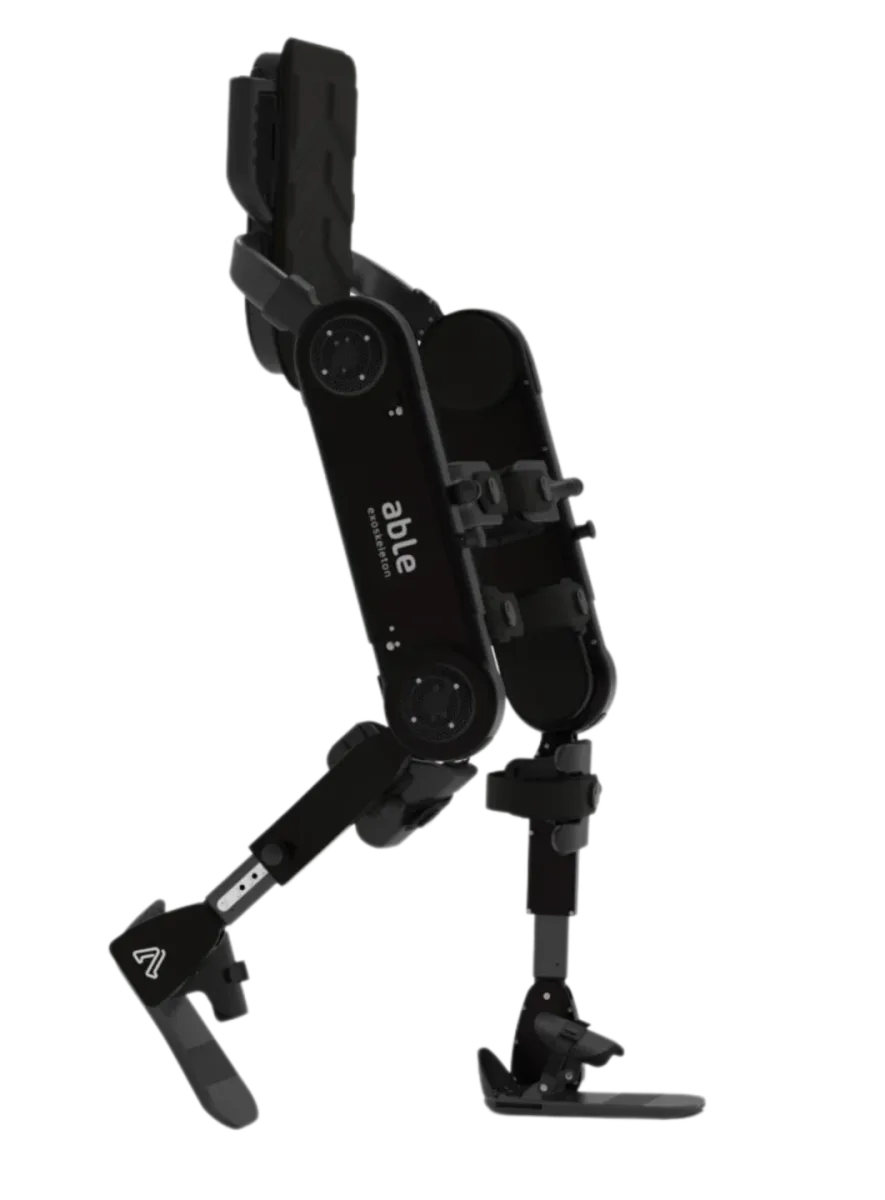
The ABLE Exoskeleton is a Barcelona-made hip-and-knee gait trainer for clinics, built around backdrivable actuators and a frame that a therapist can fit in under 8 minutes with tool-free pin locks and magnetic strap clips. It fits people 150–190 cm tall and up to 100 kg, aged 18 and over, and the wearer transfers into it from a wheelchair and balances on crutches or a walker. It gained a CE mark under the EU Medical Device Regulation in April 2024 (notified body BSI 2797) for spinal cord injury rehabilitation, with multiple sclerosis and neuromuscular disease added later and a broader neurological gait indication, including stroke, announced in March 2026. It has no FDA clearance and is sold only to hospitals and rehabilitation centres in the EU and associated markets, where more than 200 people have taken over a million steps in it, including six public hospitals in Catalonia since late 2025. A personal version for home use, reported as ABLE Daily and in home trials since 2025, is planned for launch in 2026 but is not yet on sale (unconfirmed). Among clinic gait trainers it is markedly lighter than the EksoNR or Hyundai's X-ble MEX.
Specifications
| Category | Exoskeletons & exosuits · Medical & rehabilitation |
|---|---|
| Released | 2024 |
| Country | Spain |
| Availability | Available |
| Sales | More than 200 people with neurological impairments have walked over 1,000,000 steps in it. (estimate) ABLE Human Motion ↗ |
| Programmability | No SDK, app / visual programming only |
| Built-in autonomy | Reactive · Responds to its surroundings without a map, such as avoiding obstacles or following a person |
| LLM support | None · No voice assistant or LLM. |
| Best for | Ages 18+ (maker rating) |
| Vision sensors | No vision sensors |
| Actuators | Brushless / direct-drive motors |
| Audio | No audio |
| Compute type | Proprietary / undisclosed |
| Control | App-adjusted |
| Weight | 8 kg (per a 2023 SpinalCord.com report, not stated on the official site) |
| Assistance | Backdrivable hip and knee actuators move the legs through a physiological gait so a person with a spinal cord injury (C5–L5), multiple sclerosis or another neurological gait impairment can stand, walk, turn and sit. The wearer balances on crutches or a walker. |
| Joints | Hips & knees |
| Battery & runtime | Battery capacity and runtime are not published. |
| Operation | A therapist starts steps with two buttons on the back of the device, then patients progress to weight-shift triggering and finally pelvis-motion triggering. A wireless remote lets the patient choose Stand, Walk and Sit. Session data goes to the cloud-based ABLE Care app. |
| Sensors | Joint encoders and inertial sensors for weight-shift and pelvis-motion detection (details not published) |
| Compute | Not published |
| SDK | None |
Ratings & reviews
Ratings and reviews load on the live site.
Similar robots
 EksoNREkso Bionics, a Wandercraft company (USA)Quote only
 Ekso Indego PersonalEkso Bionics, a Wandercraft company (USA)Quote only
 ReWalk 7 Personal ExoskeletonLifeward (USA / Israel)Quote only
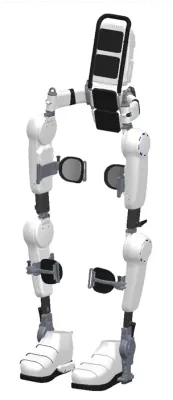 Medical HAL Lower Limb TypeCyberdyne (Japan)Quote only
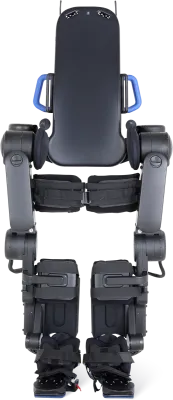 Atalante XWandercraft (France)Quote only
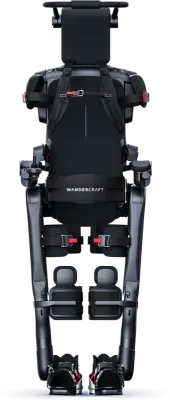 EveWandercraft (France)Quote only
Image credits
- Image 1: source (official product image)