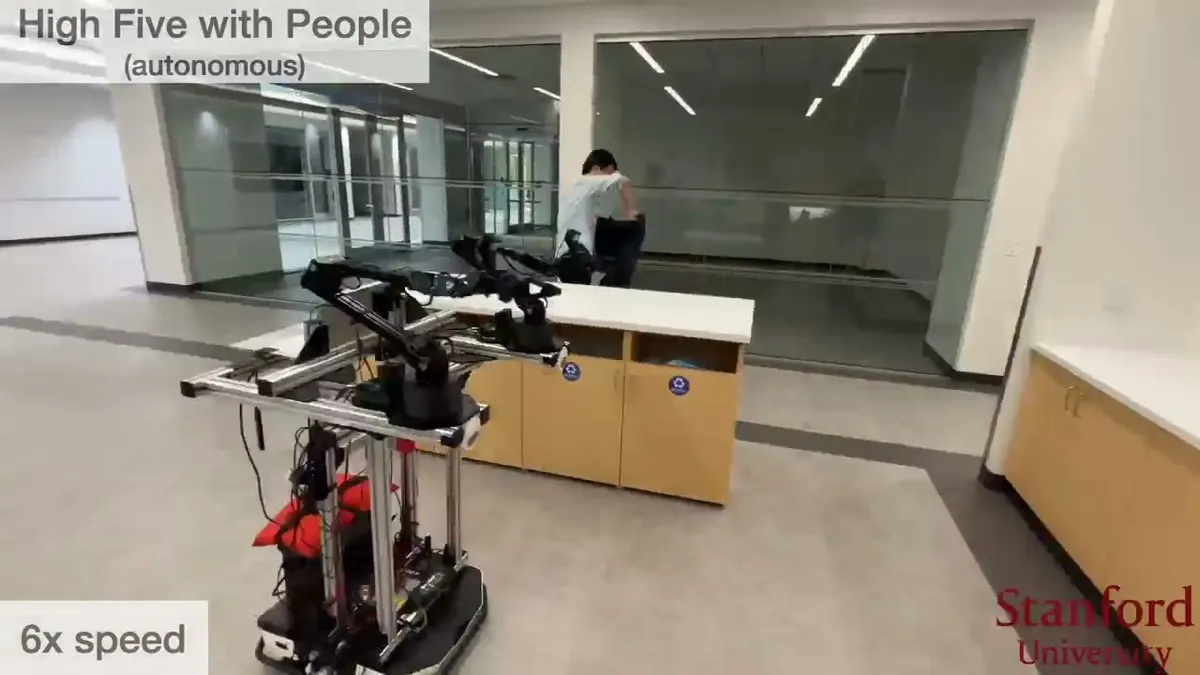
~$32,000 (BOM) / $33,696 (Trossen kit)Stanford's published bill of materials was ~$32k; Trossen's Mobile AI kit is $33,695.95 without laptop (September 2026).
AvailablePython from a laptopBimanualImitation learningOpen sourceLaptop onboard
Weeks+Shipping: 2–3 weeks. Trossen quotes 2–3 weeks production time for the Mobile AI kit.
Remote control: A laptop literally rides on the robot and runs teleoperation, data recording, training and inference in Python.
Overview
The January 2024 Stanford project that went viral for cooking shrimp and taking elevators after learning from ~50 human demonstrations. It made low-cost bimanual mobile teleoperation and imitation learning the template for a wave of home-robot startups. Trossen sells a commercial version, and many labs build their own from the open design.
Specifications
| Category | Wheeled rovers · Research mobile manipulators & platforms |
|---|---|
| Released | 2024 |
| Availability | Available |
| Programmability | Open source (hardware + software) |
| Best for | Professionals & labs |
| Vision sensors | Camera, Depth camera |
| Actuators | Mixed |
| Audio | No audio |
| Compute type | Laptop / PC as the brain |
| Remote control | Python from a laptop |
| Size | Wheeled frame with two ViperX 300 arms reaching 65–200 cm high and 100 cm beyond the base; 1.5 kg lift |
| Drive | 2-wheel differential base (AgileX Tracer in the original) |
| Compute | An on-board laptop with NVIDIA GPU |
| Vision | 3 cameras (2 wrist + 1 top; RealSense D405 on the Trossen kit) |
| Lidar | None |
| Sensors | Joint encoders on leader and follower arms |
| Runtime | 1.26 kWh on-board battery (14 kg, doubles as ballast); paper reports multiple hours of continuous use |
| Speed | Up to 1.6 m/s (AgileX Tracer base) |
| SDK | Open-source ACT / diffusion policy code; Hugging Face LeRobot, ROS 2 (Trossen) |
Ratings & reviews
Ratings and reviews load on the live site.
Similar robots
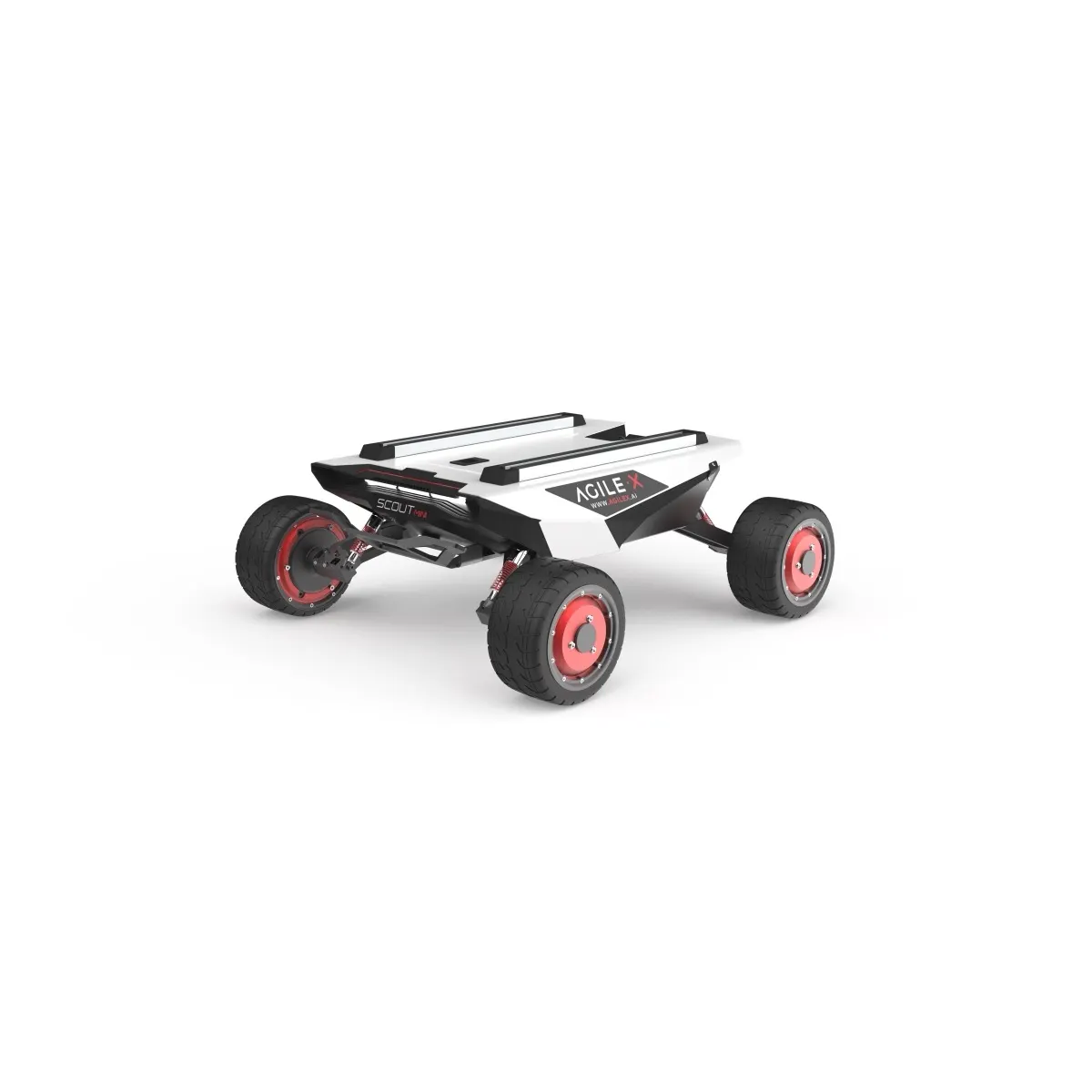 AgileX Scout MiniAgileX Robotics (China)$5,895.95 (Trossen)
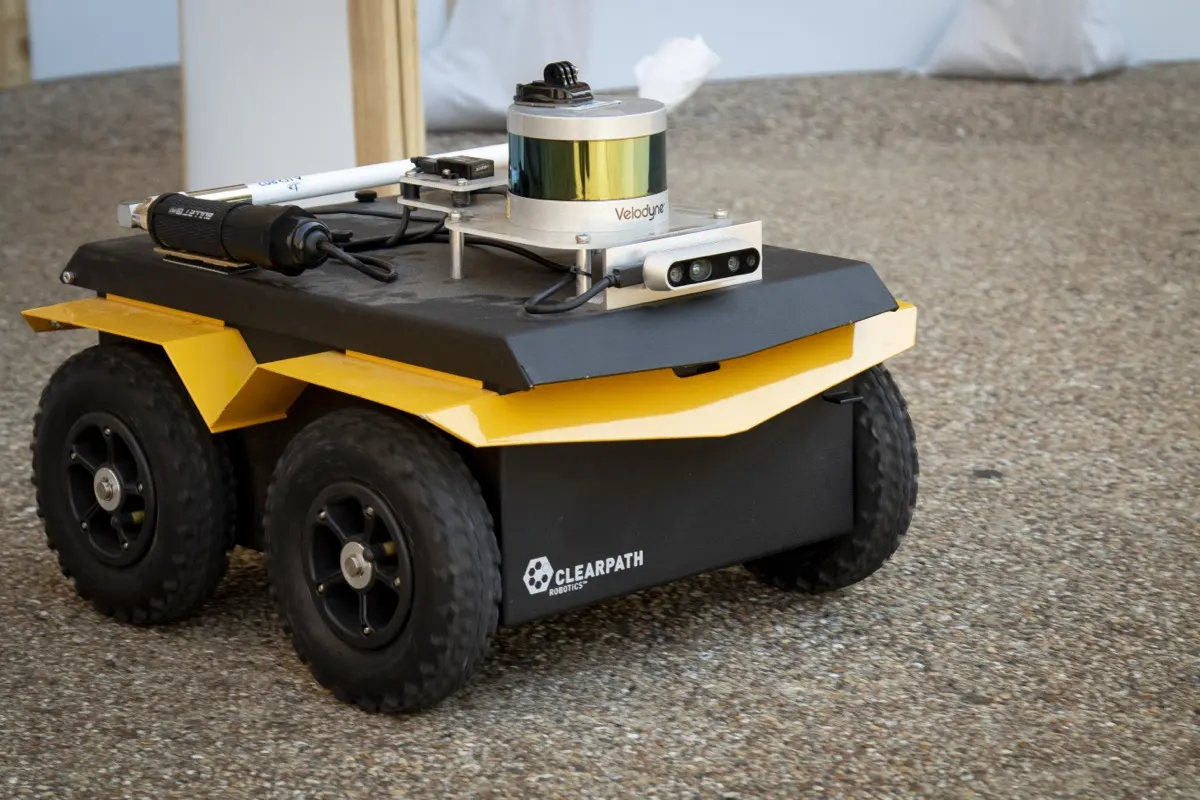 Clearpath JackalClearpath Robotics (Canada; part of Rockwell Automation)Quote (~$20,000+, est.)
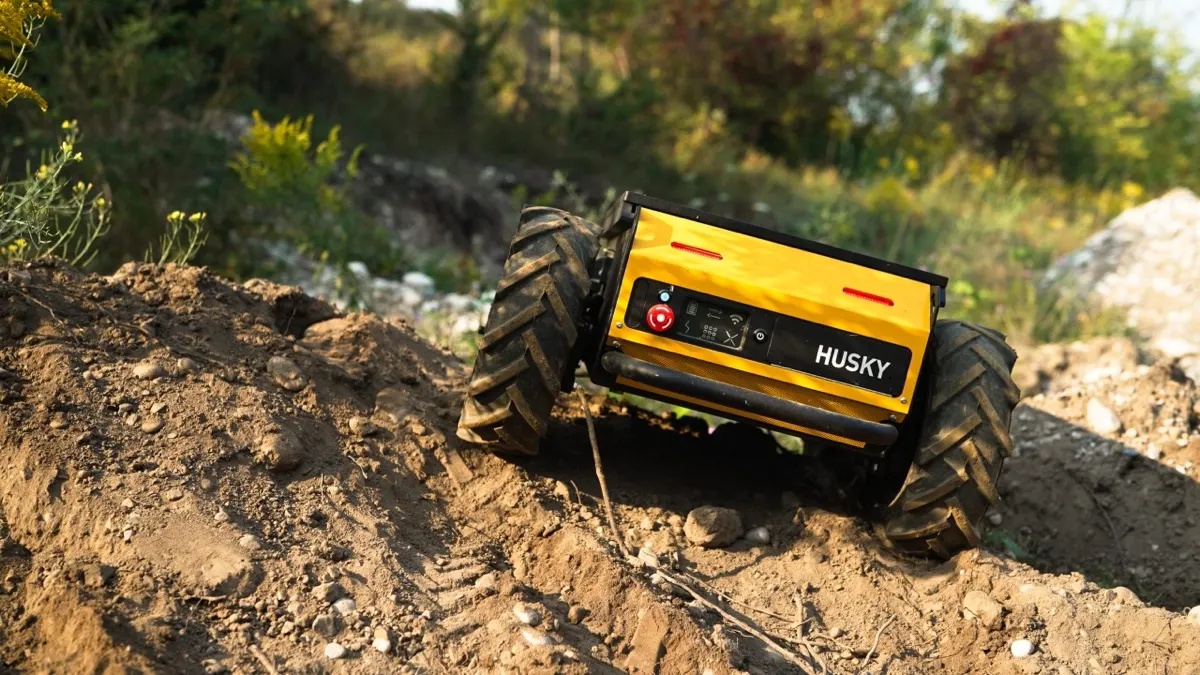 Clearpath Husky (A200 / A300)Clearpath Robotics (Canada; part of Rockwell Automation)Quote (~$30,000+, est.)
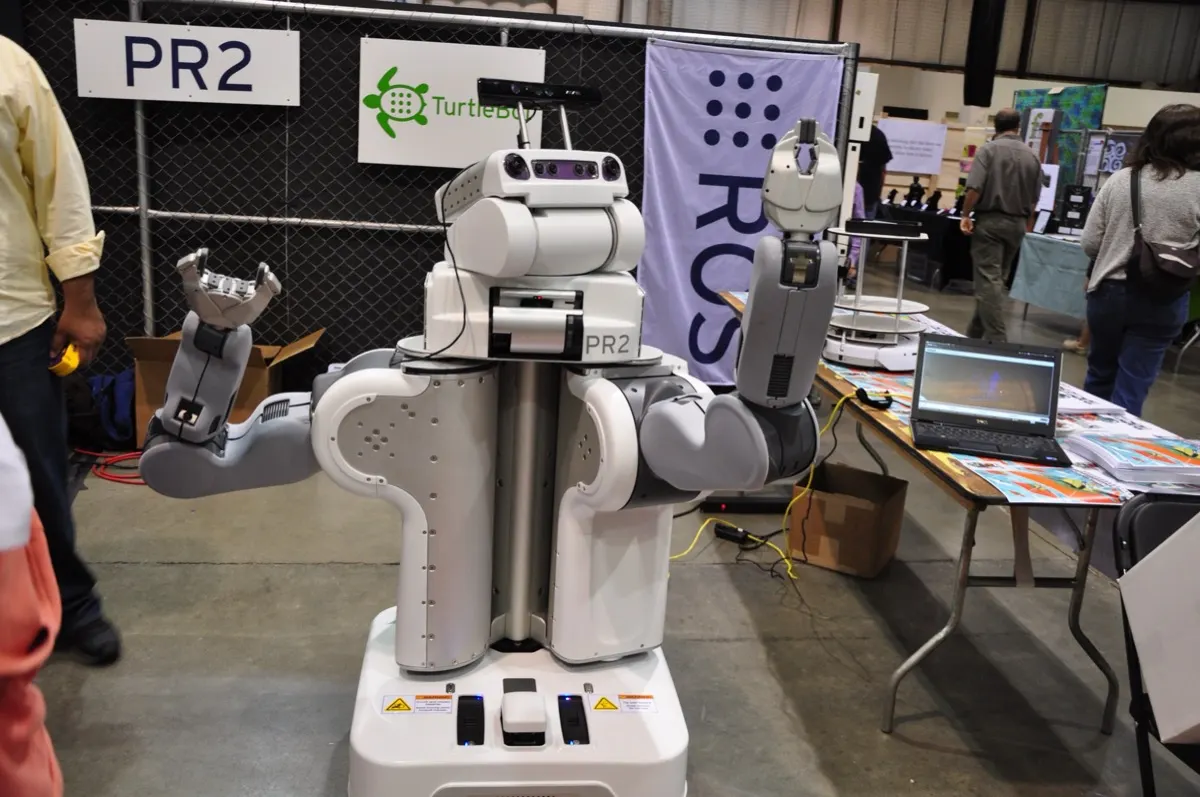 PR2Willow Garage (USA)Was $400,000
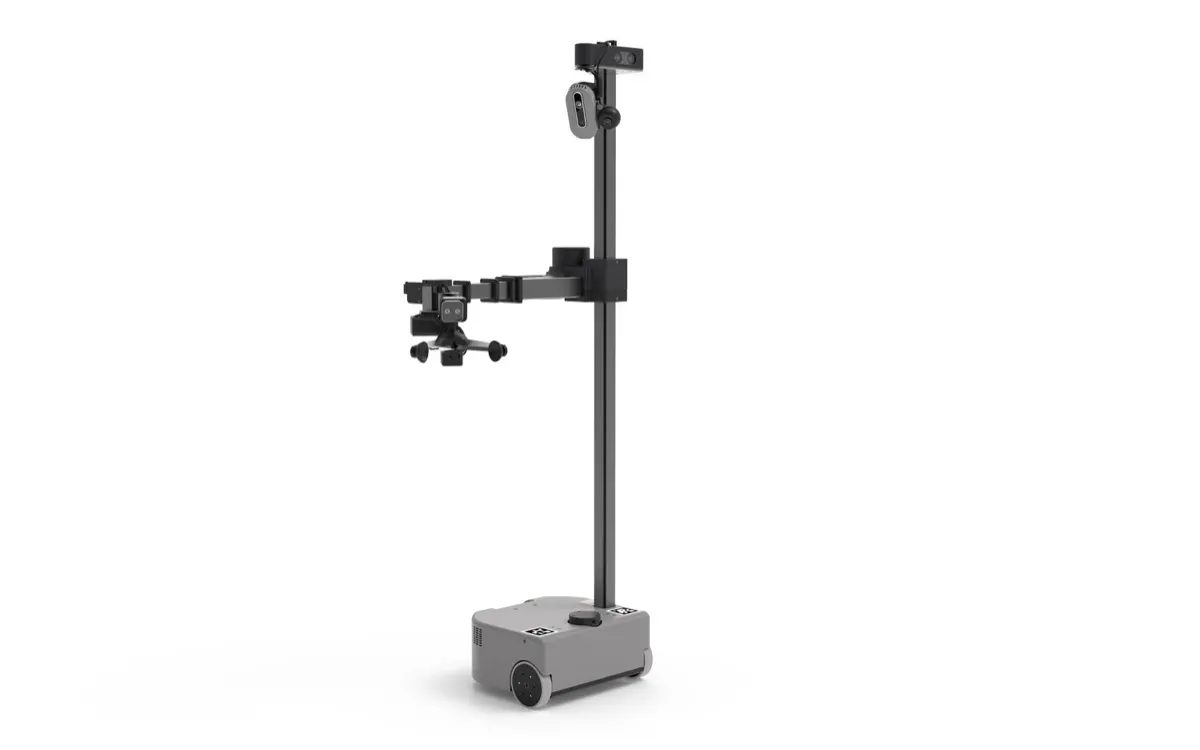 Hello Robot Stretch (RE1 / 2 / 3 / 4)Hello Robot (USA)$24,950 (Stretch 3) / $29,950 (Stretch 4)
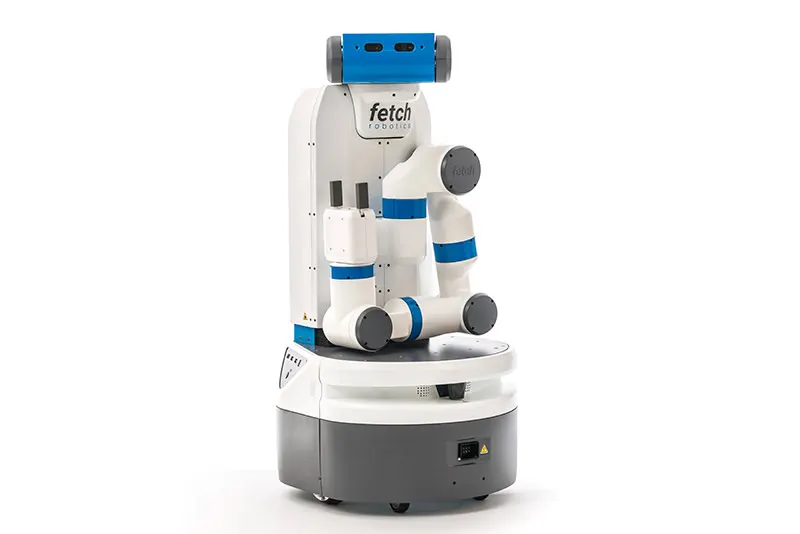 Fetch Mobile ManipulatorFetch Robotics (USA; later Zebra Technologies)Was about $100,000
Image credits
- Image 1: source (frame from project video, Stanford University)