Quick picks
| Goal | Best fit | Cost |
|---|---|---|
| A first course with no robot needed | Introduction to Robotics with Webots (CU Boulder) | Coursera Plus, $59/month or $399/year |
| A first course with a small real robot | Self-Driving Cars with Duckietown (ETH Zurich) | Free to audit, robot optional |
| The core theory of arms and mobile robots | Modern Robotics (Northwestern) | Free book and videos ↗, graded course $49/month or Coursera Plus (the 7-day free trial covers only Course 1) |
| Learning ROS 2 | Official ROS 2 tutorials, then a video course | Free, or $85 on Udemy (often discounted) |
| Mapping and SLAM | Cyrill Stachniss's lectures (University of Bonn) | Free |
| Robot arms and grasping | MIT Robotic Manipulation (Russ Tedrake) | Free |
| AI and robot learning | Hugging Face LeRobot and NVIDIA's Physical AI path | Free |
| University credit | Georgia Tech OMSCS, CS 7638 | About $893 per course |
Learning paths by background
Robotics mixes mechanics, electronics, programming and math, so the best starting point depends on what a learner already knows.
- New to programming and engineering. A hands-on kit such as an Arduino car teaches the basics faster than lectures (see the Arduino Guide). Beginner courses in a simulator, like the Webots course ↗ or MathWorks Robotics Playground ↗, come next.
- Programmers. Start with the ROS 2 tutorials ↗ and a simulator. Then add the math through Modern Robotics ↗ or the Siciliano courses on edX ↗.
- Engineers. Electrical and mechanical engineers can skip the electronics and much of the control theory. The new material is mostly kinematics, ROS 2, state estimation and SLAM, and motion planning. Modern Robotics ↗ alongside a ROS 2 robot build such as Articulated Robotics ↗ covers most of it. Stachniss ↗ for mapping or Tedrake's Manipulation ↗ and Underactuated ↗ courses for arms and legged robots come next.
- Machine learning people. LeRobot ↗, NVIDIA's Isaac courses ↗ and Berkeley's CS 285 ↗ lead into robot learning. A short course on kinematics and control fills in the robotics side.
Many university courses on Coursera can no longer be taken for free. Coursera now sells most of them through a subscription, with Coursera Plus at $59 a month or $399 a year, and offers financial aid. Most edX courses are still free to audit, with a paid certificate. Recorded university lectures on YouTube and course websites are free but have no grading or certificate.
Beginner courses
| Course | From | Length | Cost |
|---|---|---|---|
| Introduction to Robotics with Webots ↗ | CU Boulder (Coursera) | 3 courses, about 15 weeks | Coursera Plus, $59/month or $399/year |
| Self-Driving Cars with Duckietown ↗ | ETH Zurich (edX) | 7 weeks | Free to audit |
| Basics of Robotics ↗ | Siemens (Coursera) | About 6 hours | Coursera Plus, $59/month or $399/year |
| Robotics Playground ↗ | MathWorks | 8 lessons | Free, needs MATLAB |
| Robot Academy ↗ | Peter Corke (QUT) | 200+ short videos | Free |
- Introduction to Robotics with Webots. Nikolaus Correll's three courses build a mobile robot with an arm in the free Webots simulator, using Python. They cover odometry, mapping, path planning with Dijkstra and A*, and behavior trees. No robot is needed, but solid Python is.
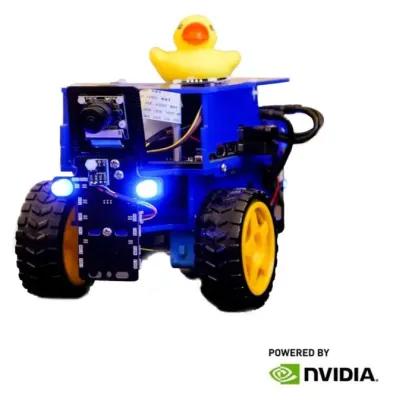
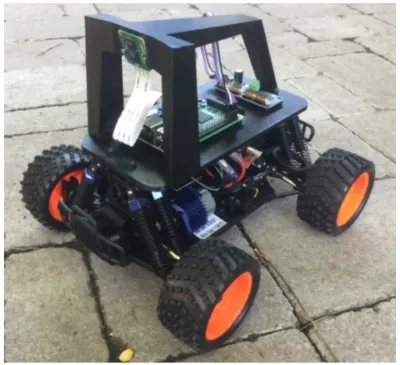
- Self-Driving Cars with Duckietown. Students program small self-driving cars, either a real Duckiebot or a virtual copy, through computer vision, localization, PID control, planning and reinforcement learning. edX calls it introductory, but it expects Python, Linux and some linear algebra and probability. The next run starts November 1, 2026.
- Basics of Robotics. A short overview of industrial robots, covering their parts, programming principles and safety standards. It needs no experience and suits anyone curious about factory automation.
- Robotics Playground. Eight lessons with virtual robots in MATLAB and Simulink, ending in a maze-solving project. It was written for high school students. The lessons are free, but MATLAB needs a license, which many schools provide.
- Robot Academy. Peter Corke's short university-level video lessons on spatial math, kinematics, dynamics and robot vision. They come from his 2015 and 2016 courses, so no new lessons are being added. His free Robotics Toolbox for Python ↗ is still maintained and pairs well with the videos.
Kinematics, dynamics and control
These courses teach the math behind robot arms and wheeled robots, such as how joints move a hand to a point and how motors follow a planned path.
| Course | From | Length | Cost |
|---|---|---|---|
| Modern Robotics ↗ | Kevin Lynch, Northwestern (Coursera) | 6 courses, about 120 hours | Free book and videos ↗, graded course $49/month or Coursera Plus (the 7-day free trial covers only Course 1) |
| Robotics Foundations I, Robot Modeling ↗ | Bruno Siciliano, Naples Federico II (edX) | 8 weeks | Free to audit, $55 certificate |
| Robotics Foundation II, Robot Control ↗ | Bruno Siciliano, Naples Federico II (edX) | 12 weeks | Free to audit, $55 certificate |
| CS223A Introduction to Robotics ↗ | Oussama Khatib, Stanford | 16 lectures | Free |
| Control Bootcamp ↗ | Steve Brunton, University of Washington | 39 videos | Free |
- Modern Robotics. The most complete single course on robot mechanics, covering configuration space, forward and inverse kinematics, dynamics, motion planning, control, grasping and wheeled mobile robots. It ends with a mobile robot arm project in the CoppeliaSim simulator. The textbook by Lynch and Frank Park, the lecture videos and the code are free on Northwestern's site ↗, so the material can be studied without Coursera. It expects calculus, linear algebra and some programming.
- Robotics Foundations I and II. Taught by Bruno Siciliano, co-author of the widely used textbook Robotics: Modelling, Planning and Control. Part I covers kinematics and statics of robot arms. Part II covers planning and control of arms and mobile robots. Both are open through 2030.
- Stanford CS223A. Oussama Khatib's classic course on transforms, kinematics, Jacobians, dynamics and control, with handouts and six assignments. The recordings are from 2007 and 2008, but the material has not changed much.
- Control Bootcamp. A free video series on modern control theory, from stability and controllability to LQR and Kalman filters, built around the inverted pendulum. It suits learners who never took a controls class.
ROS 2 courses
ROS 2 is the standard software framework for research and hobby robots that map, navigate or use arms. The newest long-term release is Lyrical Luth, out May 2026 and supported until 2031. Jazzy Jalisco, supported until 2029, is still the version most tutorials use. Tutorials written for Foxy or Iron are out of date, since both have reached end of life. The ROS 2 Guide explains how ROS 2 works, from the basics to its internals.
| Course | From | Format | Cost |
|---|---|---|---|
| ROS 2 tutorials ↗ | Open Robotics | Written tutorials | Free |
| ROS 2 for Beginners (ROS Jazzy) ↗ | Edouard Renard (Udemy) | 12.5 hours of video | $84.99, often on sale |
| Articulated Robotics ↗ | Josh Newans | YouTube videos and write-ups | Free |
| Programming for Robotics ↗ | ETH Zurich | Slides and exercises | Free |
| The Construct ↗ | The Construct | Browser courses and remote robots | Free tier, ~$46/month (€39.97) |
| ROS-Industrial Training ↗ | ROS-Industrial | Written exercises | Free |
| 古月·ROS2入门21讲 ↗ (Guyue ROS 2 Introduction in 21 Lectures) | Guyue Home (Bilibili) | 21 videos in Chinese | Free |
- Official ROS 2 tutorials. Text tutorials in Python and C++ covering nodes, topics, services, actions, launch files, tf2, URDF and bag files. They are the reference that every other course builds on. Learners on the newer release can use the Lyrical version ↗.
- ROS 2 for Beginners. The best-rated ROS 2 video course on Udemy, updated for Jazzy in January 2026. It covers the core ideas in both Python and C++ and needs no ROS 1 background.
- Articulated Robotics. A free series that builds a real ROS 2 robot step by step, with a Raspberry Pi, Gazebo simulation, ros2_control, a camera, lidar, SLAM and navigation. It was made on ROS 2 Foxy, so some steps need small changes on Jazzy, especially the move from Gazebo Classic to the new Gazebo.
- Programming for Robotics. ETH Zurich's five-session crash course, now taught in ROS 2, with slides and exercises free to download. The well-known YouTube recordings are from the older ROS 1 version.
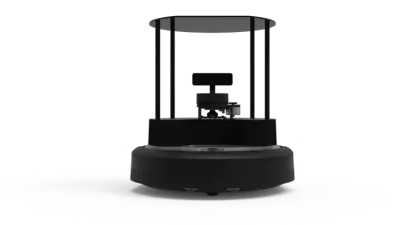
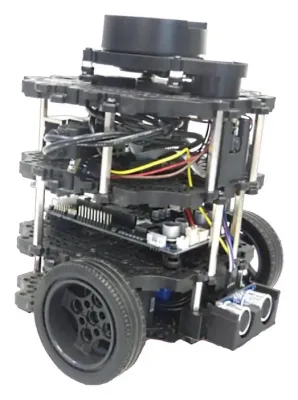
- The Construct. Courses that run ROS in the browser with simulators, so nothing has to be installed, plus remote time on a real TurtleBot 3. The free tier includes the Linux, Python and C++ courses and the first unit of every other course. The yearly plan is ~$509 (€439).
- ROS-Industrial Training. Exercises on factory robot arms with MoveIt, perception and motion planning. The basic sessions use ROS 2, while some later ones still use ROS 1.
- 古月·ROS2入门21讲 (Guyue ROS 2 Introduction in 21 Lectures). The most popular ROS 2 introduction in China, with over a million views, covering everything from installation to Gazebo and RViz.
Mobile robots, self-driving and SLAM
| Course | From | Length | Cost |
|---|---|---|---|
| Self-Driving Cars Specialization ↗ | University of Toronto (Coursera) | 4 courses, about 125 hours | Coursera Plus, $59/month or $399/year |
| Stachniss lectures ↗ | Cyrill Stachniss, University of Bonn | Several full courses | Free |
| Probabilistic Robotics ↗ | Thrun, Burgard and Fox (book) | 672 pages | About $110 |
| RoboRacer (formerly F1TENTH) ↗ | RoboRacer community | 15-week course kit | Free, car optional |
| Visual Navigation for Autonomous Vehicles ↗ | Luca Carlone, MIT OpenCourseWare | Notes and 9 labs | Free |
| Robotics Software Engineer ↗ | Udacity | 81 hours | $249/month |
- Self-Driving Cars Specialization. Four courses on vehicle control, Kalman filters and sensor fusion of GPS, IMU and lidar, visual perception, and motion planning. Assignments are in Python with the CARLA driving simulator. It is rated advanced and suits engineers with linear algebra, probability and some control background.
- Cyrill Stachniss's lectures. Some of the best free lectures on robot mapping anywhere. Robot Mapping ↗ covers Kalman and particle filters and every main type of SLAM. Mobile Sensing and Robotics, Photogrammetry and the short 5 Minutes with Cyrill ↗ videos cover camera geometry, ICP and bundle adjustment. The free Mobile Robotics online training ↗ gathers about 36 of the videos into one path.
- Probabilistic Robotics. The standard textbook on filters, localization and SLAM, from 2005. It has no deep learning, but the estimation methods it explains still run most mobile robots.
- RoboRacer. A free university course kit built around 1/10-scale self-driving race cars, used by over 90 universities. Labs run in ROS 2 and a free simulator, from emergency braking to particle-filter localization, SLAM, pure pursuit, RRT and MPC. Building the real car is optional.
- Visual Navigation for Autonomous Vehicles. MIT's graduate course on visual odometry, place recognition and SLAM with cameras, with labs in ROS, OpenCV and C++. The OpenCourseWare version is from 2020 and has notes but no videos.
- Robotics Software Engineer. Udacity's paid program on Gazebo, ROS nodes in C++, localization, SLAM and navigation, with projects reviewed by mentors. Udacity's page does not say which ROS version it uses.
Robot arms, manipulation and legged robots
| Course | From | Format | Cost |
|---|---|---|---|
| Robotic Manipulation ↗ | Russ Tedrake, MIT | Online textbook and notebooks | Free |
| Underactuated Robotics ↗ | Russ Tedrake, MIT | Online textbook, notebooks and 2024 lectures | Free |
| Optimal Control and Reinforcement Learning ↗ | Zac Manchester, CMU | YouTube lectures and homework | Free |
- Robotic Manipulation. MIT's course on robots that pick things up, from pose estimation and bin picking to motion planning, force control and deep learning for perception. The free online textbook has Python notebooks that run in Google Colab with the Drake toolbox. The course is taught again in fall 2026. The newest public lecture videos, on Russ Tedrake's YouTube channel ↗, appear to be from 2023.
- Underactuated Robotics. The graduate course on robots that walk, run, fly and balance, through LQR, trajectory optimization, Lyapunov analysis and policy search. The spring 2024 lectures ↗ are on YouTube. It is the closest thing to a free course on legged robots.
- Optimal Control and Reinforcement Learning. CMU's graduate course on LQR, MPC, trajectory optimization, rotations, walking (hybrid systems) and reinforcement learning, with lectures on YouTube ↗ and homework on GitHub ↗.
No free online course is dedicated to legged robots. Underactuated Robotics ↗ and CMU's course ↗ cover the control behind walking robots. NVIDIA's Isaac Lab courses ↗ cover training them in simulation. The MuJoCo Guide covers the free simulator behind much of this research, with videos of robot dogs flipping in it.
Robot learning and AI
| Course | From | Level | Cost |
|---|---|---|---|
| Robotics Course ↗ and LeRobot docs ↗ | Hugging Face | Beginner | Free |
| Physical AI learning path ↗ | NVIDIA Deep Learning Institute | Beginner to advanced | Free |
| Deep Reinforcement Learning Course ↗ | Hugging Face | Intermediate | Free, with certificate |
| CS 285 Deep Reinforcement Learning ↗ | Sergey Levine, UC Berkeley | Graduate | Free |
| CS 287 Advanced Robotics ↗ | Pieter Abbeel, UC Berkeley | Graduate | Free |
| CS 237B Principles of Robot Autonomy II ↗ | Bohg, Pavone and Sadigh, Stanford | Graduate | Free slides and notes |
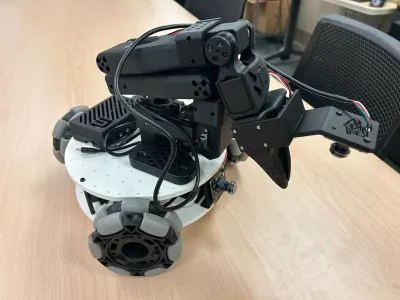
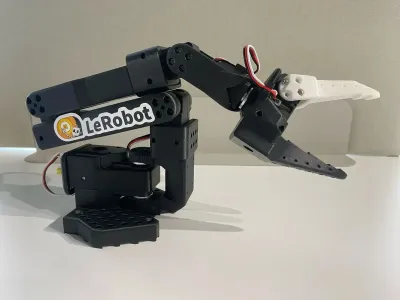
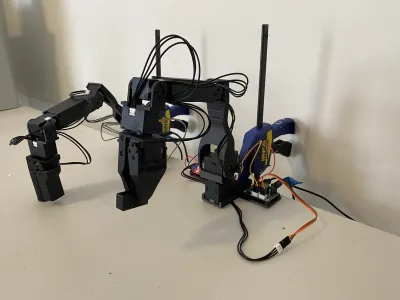
- Hugging Face LeRobot. LeRobot is free software for teaching low-cost robot arms new tasks by imitation learning. A person moves a leader arm, the robot records it and a model learns to repeat the task. The docs walk through the SO-101 arm and LeKiwi mobile robot, with free Colab notebooks and newer VLA models like SmolVLA and pi0. The separate Robotics Course is beginner-friendly, but only its first three units are out, and the units on reinforcement learning, imitation learning and foundation models are still to come.
- NVIDIA Physical AI learning path. Free self-paced courses of 2 to 12 hours on Isaac Sim, Isaac Lab, Isaac ROS and robot training. One course trains an SO-101 arm in simulation and moves it to the real robot. Another builds a humanoid policy with GR00T on a Unitree G1. Running Isaac Sim locally needs an NVIDIA RTX graphics card. Jetson tutorials are on the free Jetson AI Lab ↗ site, and the Jetson Guide compares the boards.
- Deep Reinforcement Learning Course. A free hands-on course on Q-learning, policy gradients and PPO, with robot simulation exercises in Google Colab. Certificates are free.
- CS 285. Sergey Levine's graduate course on imitation learning, policy gradients, Q-learning, model-based and offline reinforcement learning. Slides and homework for spring 2026 are online, and the latest public lecture videos ↗ are from fall 2023.
- CS 287. Pieter Abbeel's 2019 course on optimal control, motion planning, filters and learning, with most lectures on YouTube. It is older but still a strong bridge from classic robotics to learning.
- CS 237B. Stanford's course on reinforcement learning, manipulation and imitation learning. Slides and notes are public, but the videos are only for enrolled students.
University credit and degrees
Most of the courses above give no credit. For a university transcript, Georgia Tech's Online Master of Science in Computer Science ↗ (OMSCS) is one of the cheapest options. Tuition is $227 per credit hour plus a fee each term, about $893 for one 3-credit course. The full degree costs about $7,000 to $9,000 (estimate). Its CS 7638 Robotics: AI Techniques ↗, created by Sebastian Thrun, covers Kalman and particle filters, localization, search, PID control and SLAM in Python projects. Oregon State University also offers an online certificate in mechatronics ↗.
Retired courses
Several well-known courses still appear in older "best robotics courses" lists but are no longer offered.
- Artificial Intelligence for Robotics (Udacity, Sebastian Thrun). The free course behind Georgia Tech's CS 7638 now redirects to Udacity's general AI page.
- Robotics Specialization (University of Pennsylvania, Coursera). Its pages, including Aerial Robotics and Mobility, no longer exist.
- Robotics (ColumbiaX, edX). Archived with no future dates.
- Hello (Real) World with ROS (TU Delft, edX). Archived after its last run ended in October 2024, and it used ROS 1.
- Autonomous Mobile Robots (ETH Zurich, edX). Archived, with the materials view-only.